






B2B Digital Transformation: Best Practices for the Modern Business Landscape
B2B digital transformation is reshaping how businesses operate and deliver value. From automation to AI, B2B companies must embrace these tools to stay…

Jump to section
Introduction
B2B companies face the challenge of adapting to technological advancements while maintaining the traditional values of personalized service and trust-building. Digital transformation is no longer a choice but a necessity for businesses looking to stay competitive in this dynamic market. From automation to generative AI, B2B companies must harness the power of digital tools to improve efficiency, streamline B2B sales, and enhance the customer experience.
This article explores the key components of B2B digital transformation, the challenges faced by established businesses and service providers, and best practices that can drive sustainable growth.
What is B2B Digital Transformation?
B2B digital transformation refers to the integration of digital tools, technologies, and strategies into all areas of a business, fundamentally changing how companies and service providers operate and deliver value to customers. Unlike B2C, B2B companies traditionally rely on direct interactions, long sales cycles, and relationship-building. However, with the rise of digital commerce and shifting customer expectations, B2B businesses must now prioritize digital experiences.
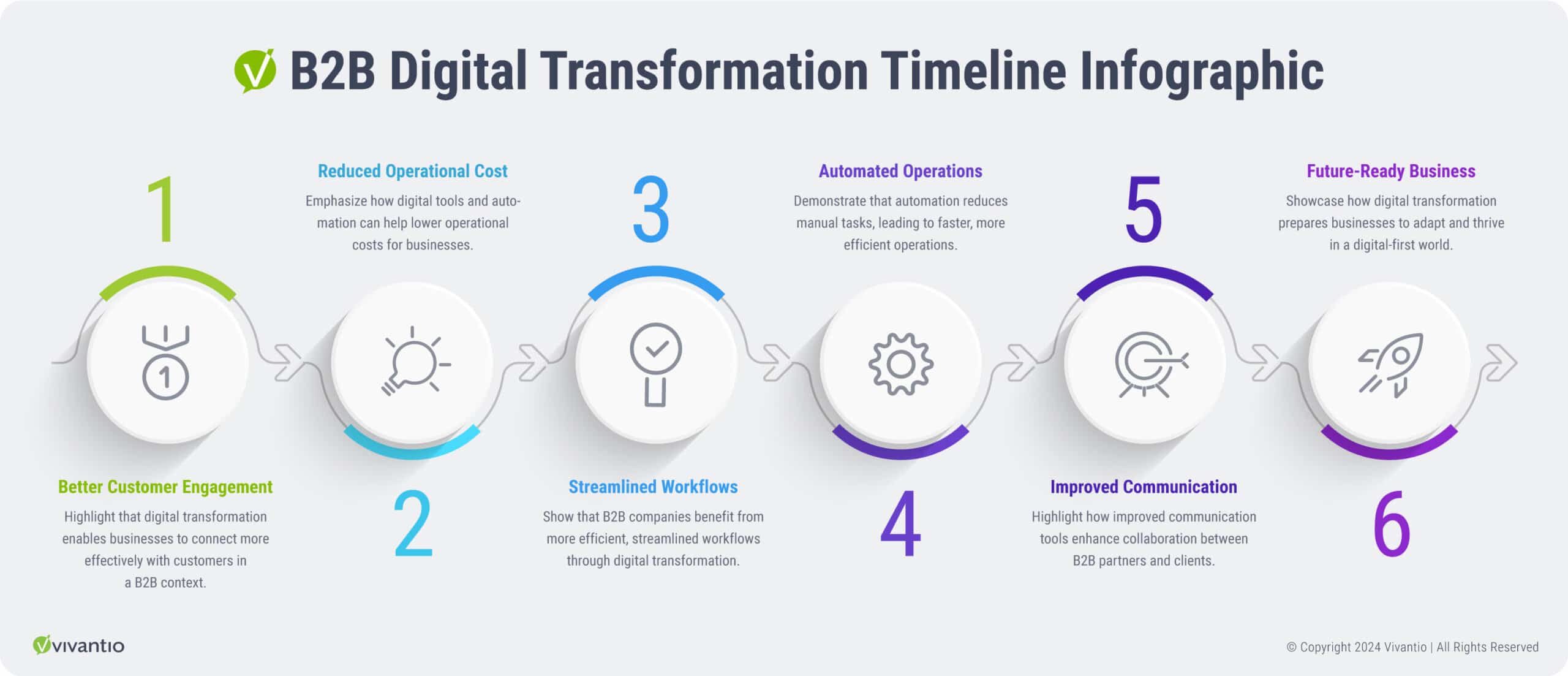
To successfully navigate the complexities of the modern digital landscape, B2B companies are leveraging a suite of transformative technologies that drive both efficiency and customer engagement. These digital elements not only streamline internal operations but also empower businesses and service providers to make more informed decisions, stay competitive, and enhance the overall customer experience. By integrating advanced tools and strategies into their operations, B2B organizations can elevate their traditional business models and stay agile in an increasingly digital-first world. Key elements driving this transformation include:
- Automation for operational efficiency, reducing manual tasks and improving workflow management.
- Data-driven analytics to enhance decision-making, offering insights that lead to more effective strategies and outcomes.
- Omnichannel digital marketing to reach customers across multiple touchpoints, creating a seamless and personalized customer experience.
Key Drivers of Digital Transformation in B2B
The rapid evolution of technology has created an environment where B2B companies can no longer afford to rely solely on traditional methods to meet market demands. The push toward digital transformation is not just a strategic advantage—it has become a critical requirement for businesses seeking to thrive in an increasingly digital economy. A convergence of factors is driving this transformation, compelling B2B organizations to adapt their models and integrate advanced technologies. Whether it’s meeting rising customer expectations or staying ahead of competitors, these drivers underscore the urgency for businesses to embrace innovation and evolve their operations. The most influential factors include:
- Customer Expectations: Today’s B2B buyers expect seamless and personalized experiences similar to their B2C counterparts.
- Automation: Streamlining repetitive tasks such as order processing, data entry, and customer inquiries helps businesses save time and resources.
- Data-Driven Insights: Leveraging data analytics based on customer health metrics provides deeper insights into customer journeys and purchasing behaviors.
Competitive Pressure: To remain competitive, businesses must embrace digital solutions to stay ahead of the curve.
Challenges Faced by Established B2B Companies
Despite the clear benefits, many established B2B organizations struggle to implement digital transformation effectively. Below are some of the common challenges:
- Resistance to Change: Employees and stakeholders in traditional B2B businesses may resist adopting new technologies due to fear of the unknown or discomfort with change.
- Digital Maturity: Some businesses lack the necessary digital maturity, meaning they haven’t yet built the internal capabilities to fully embrace digital tools.
Transitioning Sales Teams: Moving from traditional B2B sales models to an intelligent workflow automation can be daunting. Sales teams may need extensive retraining to work effectively in the new digital landscape.
Best Practices for a Successful B2B Digital Transformation in IT Service Management
Achieving a seamless B2B digital transformation within the context of IT Service Management (ITSM) requires more than adopting new technologies. It demands a strategic, well-structured approach that aligns digital initiatives with overall business objectives, customer expectations, and industry standards. In this realm, Service Level Agreements (SLAs) play a crucial role in driving both operational efficiency and customer satisfaction. SLAs set clear expectations between service providers and customers, ensuring accountability and service quality, which are essential for the success of digital transformation efforts.
For companies looking to optimize their service management implementation and thrive in the digital age, focusing on these best practices can help establish a solid foundation for both customer-centric service delivery and continuous improvement:
- Prioritize Customer Needs: A strong ITSM strategy starts with understanding customer expectations. Use data-driven insights to anticipate and address customer pain points. SLAs can act as a powerful tool to define and measure how well these needs are met by setting clear performance benchmarks.
- Leverage SLAs to Enhance Accountability: Incorporating well-defined SLAs ensures that both internal teams and external customers are aligned on service expectations. By committing to response times, resolution timelines, and performance standards, SLAs improve accountability and transparency, both of which are critical to the customer experience.
- Invest in Automation for IT Operations: Automating repetitive tasks such as ticket management, incident resolution, and service requests can improve efficiency. Automating SLA tracking, for example, ensures that service agreements are consistently met, preventing lapses in service quality that could harm customer relationships.
Key Action Items for ITSM-Driven Digital Transformation Success
Here are specific actions B2B businesses can take to ensure their ITSM-focused digital transformation strategy is both effective and sustainable:
- Create a knowledge base or resource hub that enables customers to find answers quickly. This can reduce ticket volumes while improving service efficiency.
- Use SLAs to monitor and enforce performance standards across all digital platforms and IT services, providing a benchmark for success and an ITSM framework for continuous improvement.
- Automate SLA tracking and reporting to ensure that service-level objectives are met consistently and that any breaches are proactively addressed.
- Implement omnichannel support to enhance the customer experience, allowing for seamless service delivery across various touchpoints such as email, chat, and voice.
By focusing on these best practices, B2B organizations can leverage SLAs to not only set clear expectations but also drive accountability and performance, ensuring their digital transformation initiatives result in tangible improvements in service delivery and customer satisfaction.
Case Study: How Digital Transformation Through Vivantio is Driving B2B Success
One of Vivantio’s clients, a leading managed service provider (MSP), embarked on a journey of digital transformation to address inefficiencies in their service management processes and improve their overall customer experience. Before partnering with Vivantio, the client faced challenges common to many B2B organizations—manual processes, fragmented communication channels, and difficulty in managing customer expectations. By implementing Vivantio’s configurable ITSM platform, they achieved significant improvements across several key business areas, including service delivery and operational efficiency.
Key Results of the Digital Transformation
| ### Aspect | ### Pre-Transformation | ### Post-Transformation |
|---|---|---|
| Service Request Management | Manual ticket handling, prone to delays | Automated workflows with real-time SLA tracking, reducing response times |
| Customer Experience | Inconsistent and disconnected across channels | Unified omnichannel experience with self-service options and enhanced communication |
| Efficiency and Growth | Time-consuming processes limiting scalability | 20% increase in efficiency with scalable processes that support future growth |
| SLA Compliance | Frequent breaches due to lack of visibility and control | 98% SLA compliance through automated tracking and proactive incident management |

How to Implement Digital Transformation in Your B2B Business
For companies and service providers looking to implement B2B digital transformation, it’s essential to take a structured approach. Below is a simple step-by-step guide to help you navigate the process:
| ### Step | ### Description |
|---|---|
| Assess Current Maturity | Evaluate the current state of digital adoption |
| Build a Digital Roadmap | Prioritize key areas such as automation and customer experience |
| Train Sales Teams | Empower teams with digital tools and analytics |
| Measure ROI | Track performance metrics and adjust strategies accordingly |
By following this roadmap, B2B businesses can ensure a smooth transition to a digital-first strategy.
Driving B2B Success with Digital Marketing and Automation
Adopting a comprehensive digital marketing and content marketing strategy is critical for businesses and service providers. As more B2B buyers turn to online research before making purchasing decisions, having a robust digital presence is essential for meeting them where they are. Businesses must focus on delivering value at every stage of the customer journey through educational content, personalized interactions, and data-driven decision-making.
Best Practices for B2B Digital Marketing
To ensure a successful transformation in marketing strategy, B2B companies should implement the following key practices:
- Develop a content marketing plan that educates customers at every stage of the customer journey.
- Create engaging content for a resource hub that addresses common questions and provides valuable insights.
- Utilize analytics to measure marketing performance and continuously refine your strategy.
How Generative AI and Automation Enhance B2B Growth
In addition to a solid marketing foundation, B2B companies can harness cutting-edge technologies like generative AI and automation to further personalize their marketing efforts and improve customer interactions. These tools enable businesses to process vast amounts of data, streamline workflows, and free up human resources for more strategic tasks.
Generative AI is especially valuable for:
- Personalizing customer communications.
- Automating repetitive tasks in sales and marketing.
- Providing real-time insights through predictive analytics.
By integrating AI and automation, businesses and service providers not only enhance the efficiency of their marketing operations but also deliver a more tailored experience to their customers.
Achieving Long-Term Success with B2B Digital Transformation**
**The path to B2B digital transformation is filled with opportunities to innovate and optimize. By prioritizing customer-centric strategies, harnessing the power of data, and adopting cutting-edge technologies like AI, automation, and digital marketing tools, businesses can remain agile and competitive in an ever-evolving marketplace. Embracing digital transformation not only enhances operational efficiency but also enables sustainable growth, positioning your company for long-term success in the digital age.
Ready to accelerate your B2B digital transformation journey?****
Contact Vivantio today to explore how our solutions can help your business thrive in the digital era!
Schedule a Free Consultation: Let’s discuss your unique challenges and uncover how our digital transformation services can streamline your operations and improve customer experiences.
Request a Personalized Demo: See firsthand how our digital solutions can empower your business to:
- Leverage AI and Automation: Optimize processes and reduce manual tasks with intelligent automation solutions.
- Drive Data-Driven Decisions: Unlock valuable insights through advanced analytics, ensuring you stay ahead of market trends.
- Enhance Customer Experiences: Build deeper relationships with customers through personalized digital engagement.
- Increase Efficiency and Agility: Transform your operational processes to respond faster and more effectively to business demands.
With Vivantio, your business can achieve a seamless digital transformation that empowers growth and innovation.
Read more
Browse all resources


Ready to see it?
See Vivantio in action
Step your team up to real service management, without the leap to enterprise. Get a walkthrough tailored to your workflows.