






Understanding Multi-Level SLA Essentials
As businesses strive for excellence, understanding the nuances of multi-level SLAs becomes essential. These agreements allow for more precise management of…

Jump to section
Introduction
M****ulti-level SLAs are key in service level management. As businesses aim for top performance, knowing how to use this agreement is vital. A strong service-level agreement sets clear expectations, making sure service performance meets customer needs. But why just one level? Multi-level SLAs offer more, giving customers experiences that boost satisfaction and loyalty.
Picture a partnership where every service level is set, tracked, and checked. That’s what multi-level SLA strategies offer. By following SLA best practices, providers ensure quality and adapt to different customer needs. This guide to multi-level service level agreements helps you build a service culture that values precision and reliability.
A multi-level Service Level Agreement (SLA) is key for setting clear expectations between a service provider and a customer. It defines the level of service and quality for different aspects of the service offered, whether it’s for various parts of customer interactions or specific services. Understanding how a multi-level SLA works can transform how you manage services, streamline SLA management, and improve the service provider’s performance.
An SLA is an agreement that facilitates clear communication about service levels, ensuring everyone understands the agreed service levels. Whether you’re a service provider or a client, understanding the different types of SLAs—such as customer-based, service-based, and multi-level SLAs—helps you create an SLA that meets the particular needs and expectations of the customer. Every SLA structure is designed to meet these unique demands and ensure quality of service.
A multi-level SLA outlines different service levels for various groups within your company or for different services, addressing the challenges of delivering suitable service to a diverse customer base. This agreement is divided into several conditions, ensuring consistent quality, service availability, and reliability across all service levels. It builds trust and satisfaction among stakeholders, creating a robust service-level SLA structure that supports both the service provider and the client.
So, why does a multi-level SLA matter? For businesses, it’s vital in managing risks and ensuring accountability by setting clear, measurable goals that keep service levels high. This focus on service provider’s performance and the quality of service drives business growth and customer satisfaction. Incorporating a multi-level SLA into your service agreement ensures a more customized, clear, and efficient method for delivering services, catering to the specific needs of the customer.
Decoding the Types of Service Level Agreements
Understanding the various types of SLAs is crucial for selecting the right one for your business. Whether you’re managing a small business or a large enterprise, knowing the distinctions between customer-based, service-based, and multi-level SLAs allows for better SLA management and enhances customer satisfaction.
The Distinctions Between Customer-Based and Service-Based SLAs
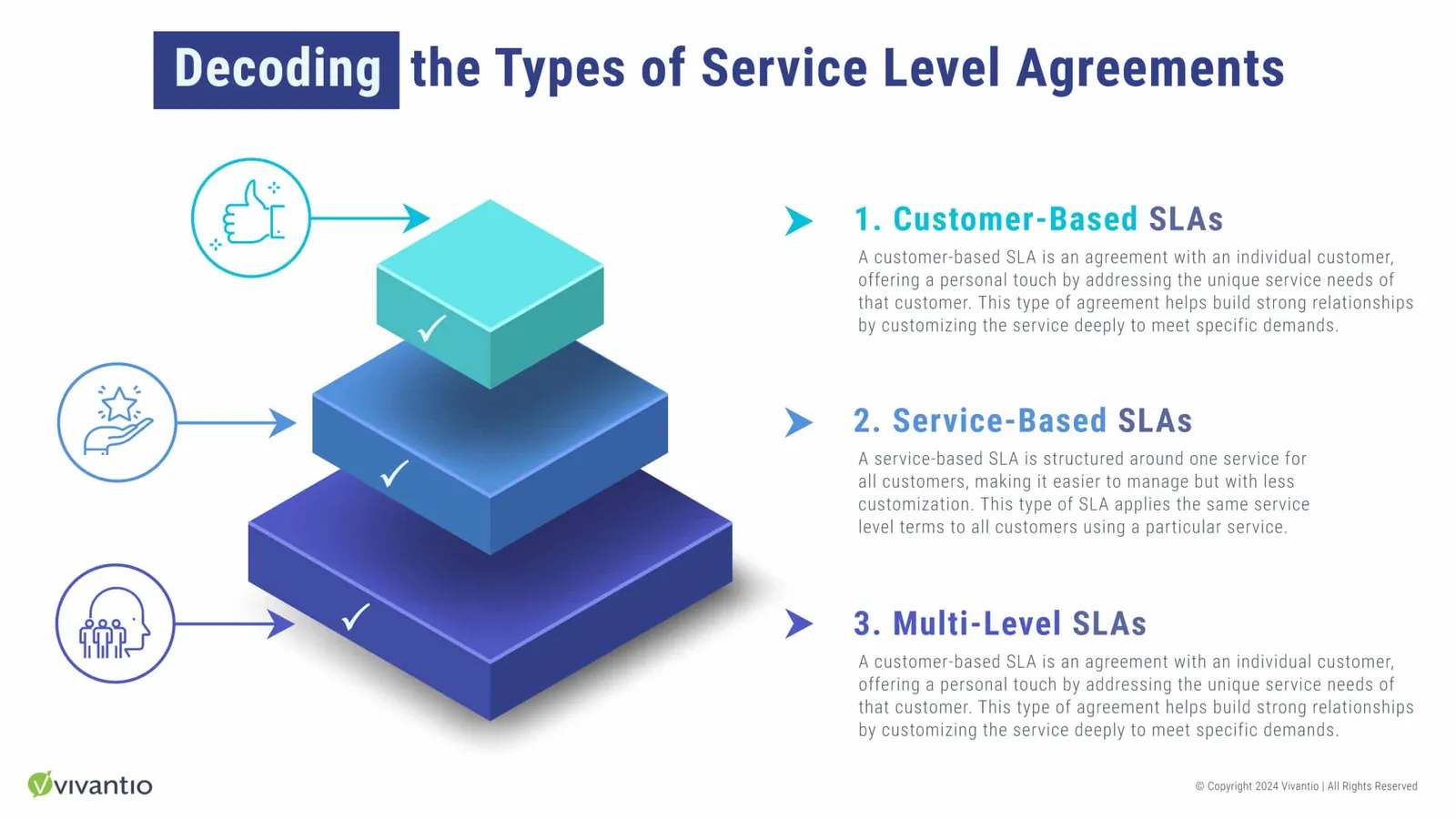
A customer-based SLA is an agreement with an individual customer, offering a personal touch by addressing the unique service needs of that customer. This type of agreement helps build strong relationships by customizing the service deeply to meet specific demands. Conversely, a service-based SLA is structured around one service for all customers, making it easier to manage but with less customization. Both types have their place depending on the service offered and the provider’s service goals.
Multi-level SLAs combine aspects of both customer-based and service-based agreements, creating a flexible SLA structure that accommodates diverse needs while maintaining consistency. This type of SLA is particularly useful in environments where multiple levels of service are expected across different customer groups or services.
Why Multi-Level SLAs Are Important
For businesses, multi-level SLAs are key to ensuring the agreed service levels are met across different departments or services. They address specific metrics such as resolution time, service desk response, and service credits, which are essential for maintaining the provider’s service standards. This helps in managing the service performance as well, ensuring the average time for issue resolution aligns with the service level expectations.
By having a multi-level SLA, you create a more efficient and effective agreement that ensures every aspect of the service is covered, from the expected quality of service to the specific conditions of each service level. This approach minimizes SLA violations and improves overall service delivery, leading to enhanced customer satisfaction and loyalty.
A multi-level SLA is an agreement that not only sets clear expectations but also enhances the overall service performance. By understanding the common types of SLAs and their applications, you can tailor your agreements to meet the specific needs of your business and customers, ensuring a high quality of service across the board.
Exploring the Different Layers of Multi-Level Service Level Agreements
Managing different service expectations from various customer groups can be tricky. A multi-level SLA can help by combining elements of both customer-based and service-based SLAs. Here’s how a multi-level SLA can meet diverse needs:
| ### Level | ### Description | ### Key Features |
|---|---|---|
| Corporate Level | Addresses overall service management across the entire organization. | Includes high-level objectives, aligning with strategic business goals. |
| Customer Level | Focuses on the service requirements of specific customer groups. | Targets relationship management and tailored services. |
| Service Level | Covers specific services provided to all customers under standard terms. | Emphasizes consistent quality and performance metrics. |
Understanding the 3 types of service level in a multi-level SLA shows how they work together to improve service delivery. By looking into each layer’s functions and benefits, you can align better with your goals and make customers happier.
Elements of a Robust Multi-Level SLA
Creating a strong Service Level Agreement (SLA) is key. It must have several important parts for clarity and effectiveness. A good SLA document is the base for checking how well the service provider does their job. It protects you as a client by setting clear service level goals and how to measure service quality.
- Components of an SLA: Start with clear definitions of key terms and who is involved. It should cover the services’ scope, who does what, and the service terms.
- Set SLA Metrics: For clearness and responsibility, it’s important to set good metrics. These can be response times, fix times, system uptime, and work quality. SLA reporting can help show how well the service provider is doing and help in evaluating them.
- Service Level Targets: Your SLA must say what performance goals the provider should hit. These goals are set during talks and are key in checking how they’re doing.
- SLA Document Essentials: A full SLA document clearly states what’s expected and who does what. It also talks about what happens if service levels aren’t met. This could mean fines, ending the contract, or other fixes.
- Performance Reviews and Revisions: The SLA should allow for regular checks on performance and changes if needed. This is important for adapting to new business needs or challenges.
By focusing on these key parts, you can make a good, fair multi-level SLA. This SLA helps keep a strong relationship with your service provider. It makes sure both sides know the details of the services to be given.
Service Provider and Customer Roles in Multi-Level SLAs
When you dive into multi-level service level agreements (SLAs), it’s key to know what each side, the service provider and the customer, agrees to do. Understanding these roles helps make sure customer needs are met within what the service provider can handle. An agreement overview is more than just a formality; it’s a guide for working together smoothly, with each rule aimed at avoiding confusion and setting clear goals.
Defining Responsibilities within Multi-Level Agreements
In partnerships, the rules of SLAs set the pace for both customers and providers. The service provider leads in keeping services running well, managing the tech, and making sure it’s available as promised. Customers also have their part, like giving feedback on time and paying as agreed. It’s important to make each role clear, so everyone knows what’s expected and can act on it.
Collaboration Between Parties Involved for Optimized Service Delivery
For optimized service delivery, it’s not just one person’s job but a team effort between the service provider and customer. A multi-tiered SLA offers a customized way to meet customer expectations while staying within the service provider’s control. Good communication is key to this partnership, making sure services are delivered as promised and building a strong business relationship.
A well-defined multi-level SLA not only clarifies the roles and responsibilities of both the service provider and the customer but also fosters a collaborative environment where both parties work toward common goals. By ensuring that each side understands their duties and expectations, potential misunderstandings are minimized, and service delivery is optimized. This mutual understanding and collaboration pave the way for a stronger, more reliable partnership that benefits both the service provider and the customer, ultimately leading to enhanced service quality and customer satisfaction.
Ready to Optimize Your Service Delivery with Multi-Level SLAs? Contact Vivantio Today!
-
Schedule a Free Consultation: Discuss your unique service management needs and explore how multi-level SLAs can enhance customer satisfaction and streamline your service operations.
-
Request a Personalized Demo: Discover how our multi-level SLA solutions can transform your service management with:
- Tailored Service Delivery: Customize SLAs to meet the specific requirements of different customer segments or services.
- Improved Accountability: Clearly define service expectations and performance standards across multiple levels of service.
- Enhanced Reliability: Ensure consistent, high-quality service delivery across all customer interactions.
- Increased Flexibility: Adapt your SLAs to accommodate diverse needs, ensuring satisfaction across all service levels.
With our multi-level SLA solutions, you can achieve precision in service delivery, build stronger customer relationships, and drive business success.
Read more
Browse all resources
Ready to see it?
See Vivantio in action
Step your team up to real service management, without the leap to enterprise. Get a walkthrough tailored to your workflows.