






The ITSM maturity model explained
An ITSM maturity model is a structured way to describe how developed your IT service management is — from ad hoc, reactive firefighting through to a measured, continually improving operation. Rooted in ITIL and service-management best practice, it gives IT and service leaders a shared language for where they stand today and a realistic path to where they want to be.
Free, about three minutes, and no sign-up needed to see your level.
Leading IT & customer service teams step up with Vivantio



















The five levels of ITSM maturity
Every service operation sits somewhere on this path. As you scroll, each level builds on the last — from reactive firefighting to continuous improvement.
Initial
Work is reactive and ad hoc. Processes are undocumented and depend on individuals, so outcomes vary.
Managed
Core processes like incident and request handling exist and are repeatable, but they're inconsistent between teams and lightly measured.
Defined
Processes are documented, standardised and understood across the organisation, with SLAs in place.
Measured
Performance is tracked against clear metrics, SLAs and OLAs; decisions are data-led and compliance is reportable.
Optimising
The operation improves continuously, using automation, analytics and proactive service to raise performance over time.
Where does your operation sit?
The ITSM maturity benchmark report shows how teams like yours score across all five levels — and the fastest path to the next one.
The six dimensions of service management maturity
Maturity is not a single score. Assessing it dimension by dimension is what turns a label into a plan, because most service desks are further ahead in some areas than others.
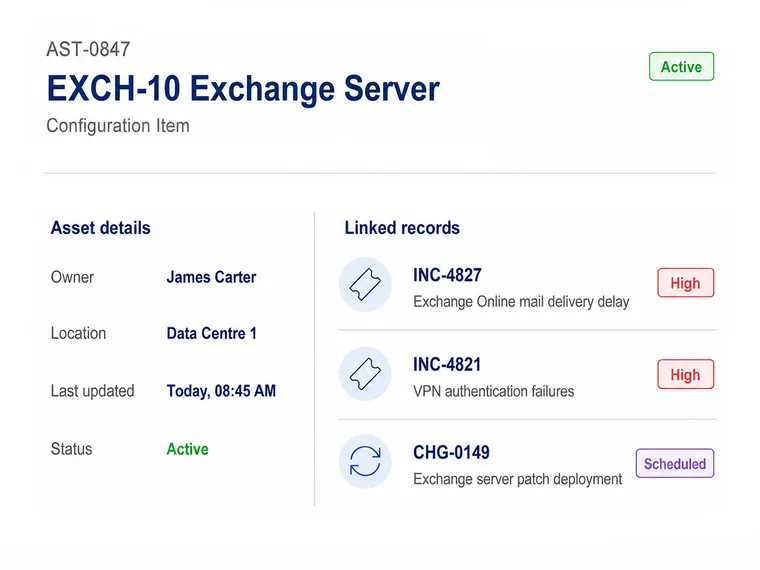
Incident & request management
How consistently you capture, prioritise and resolve work against commitments.
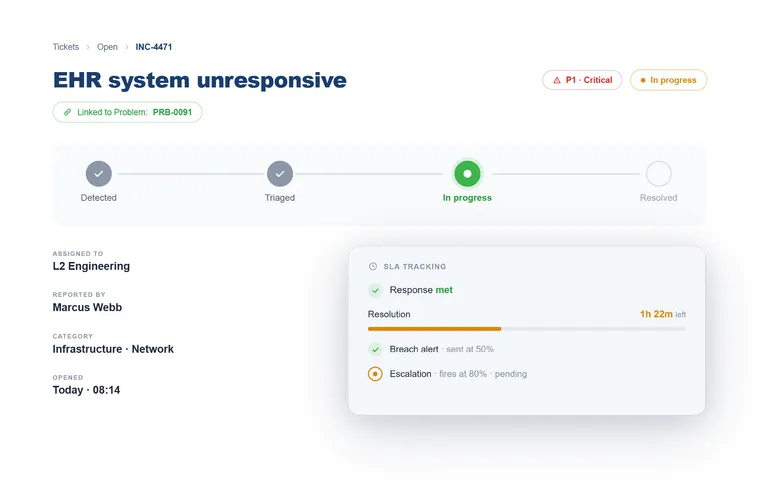
Automation & workflow
How much routine handling runs on rules rather than people.
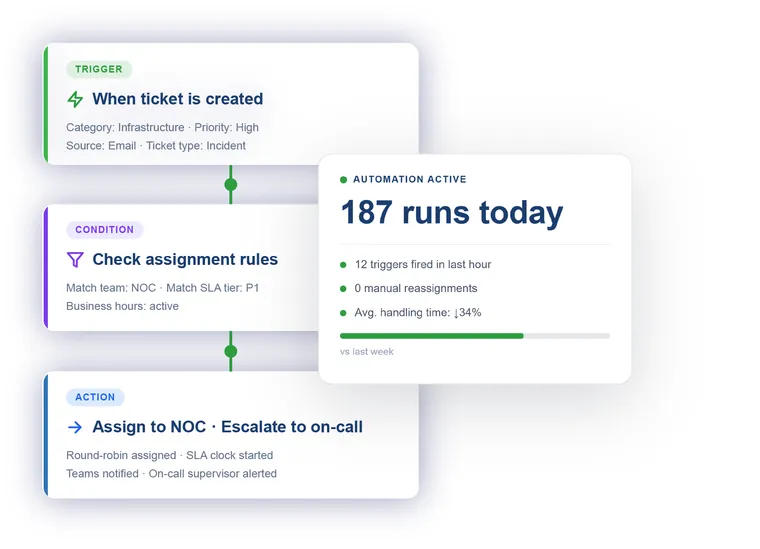
Integration & data flow
How well your service desk connects to the rest of your stack.
Service levels & OLAs
Whether customer SLAs and internal OLAs are tracked and honoured.
Commonly overstated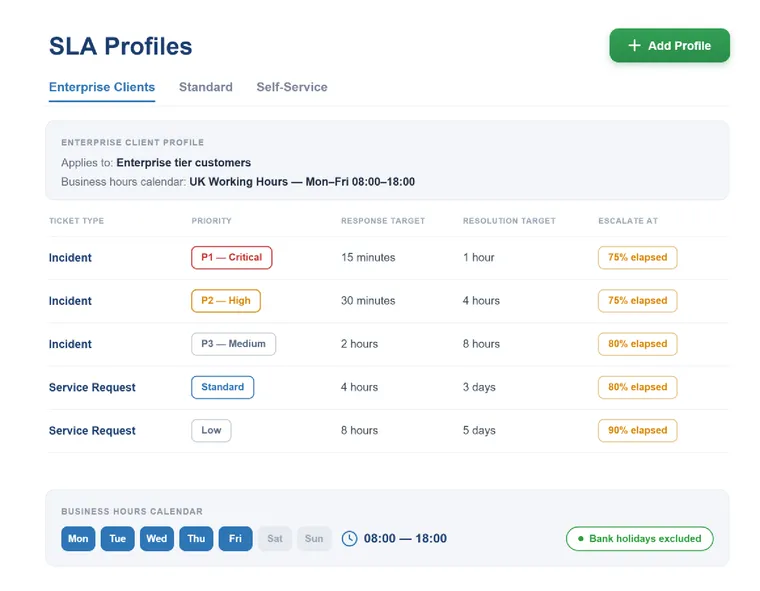
Reporting & analytics
How easily you can prove performance and compliance.
Commonly overstated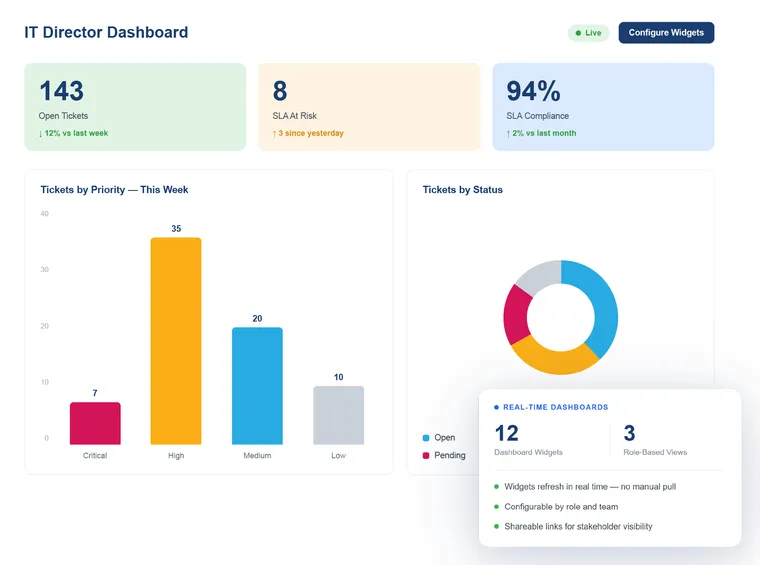
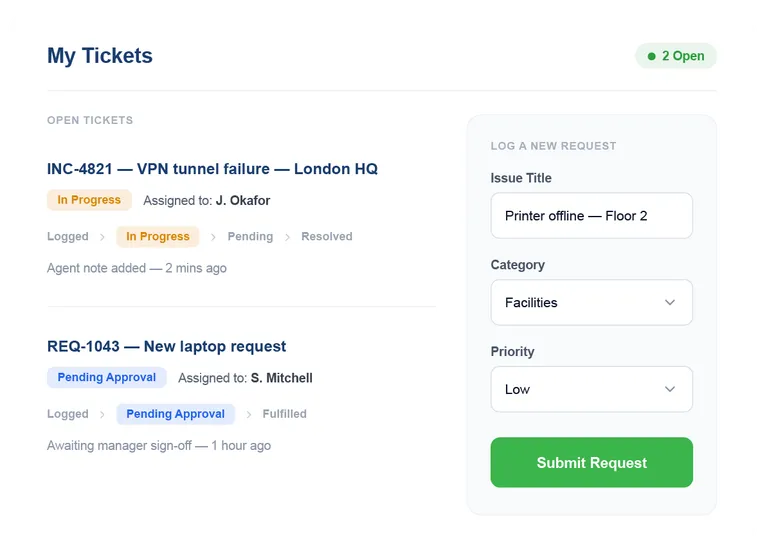
Self-service & knowledge
How much demand is deflected to a portal and knowledge base.
How to assess your ITSM maturity
Our free ITSM Maturity Benchmark scores you across these six dimensions, shows how you compare to peer service desks, and gives you a prioritised improvement roadmap — in about three minutes.
Start the benchmarkNo sign-up needed to see your maturity level.Common questions
- What is an ITSM maturity model?
- A framework that describes how developed your IT service management is across a set of dimensions, from reactive and ad hoc to measured and continually improving.
- What are the levels of ITSM maturity?
- Commonly five: initial, managed, defined, measured and optimising.
- How do I assess my ITSM maturity?
- Rate each dimension against the levels above, or take Vivantio's free ITSM Maturity Benchmark for a scored result, a peer benchmark and a roadmap.