






Essential ITSM Principles for Achieving Effective IT Management
Are your IT services driving business success or holding you back? By embracing ITSM principles and leveraging the ITIL framework, your IT operations can…

Jump to section
Introduction
How well is your current IT management system supporting your business goals and customer satisfaction? Embracing ITSM principles as the foundation of your IT strategy can transform your service management processes into strategic assets. But what exactly does this mean? It means the guiding principles provide a framework for aligning IT with business objectives, not just to manage IT operations but to drive enterprise service management and foster organizational growth. Core ITSM principles such as service availability, service level targets, and effective change management minimize service disruptions and enhance service delivery, ensuring IT consistently supports key business outcomes.
By implementing a robust ITSM framework grounded in these principles, your IT services become powerful assets that drive customer satisfaction and enable sustainable business growth. Discover how leveraging ITSM principles can help your organization transform IT into a strategic advantage, aligning it with broader business objectives and achieving more impactful service delivery.
Understanding ITIL and Its Role in ITSM
The power of Information Technology Infrastructure Library (ITIL) is essential to the ITSM process. ITIL provides a framework for ITSM that guides companies in the effective management of IT services, ensuring they meet business goals and customer expectations. By implementing ITIL, organizations can enhance service delivery, streamline management solutions, and ensure their IT service management (ITSM) strategies align with overarching business needs.
For example, imagine a large multinational corporation that relies heavily on its IT infrastructure to support critical business operations. In the past, the company experienced frequent system outages, slow response times to service requests, and difficulties in managing complex IT projects.
By adopting ITIL, the company was able to implement a structured approach to IT service management. As a result, they defined clear roles and responsibilities, established standardized processes for incident management, problem management, change management, and service level management.
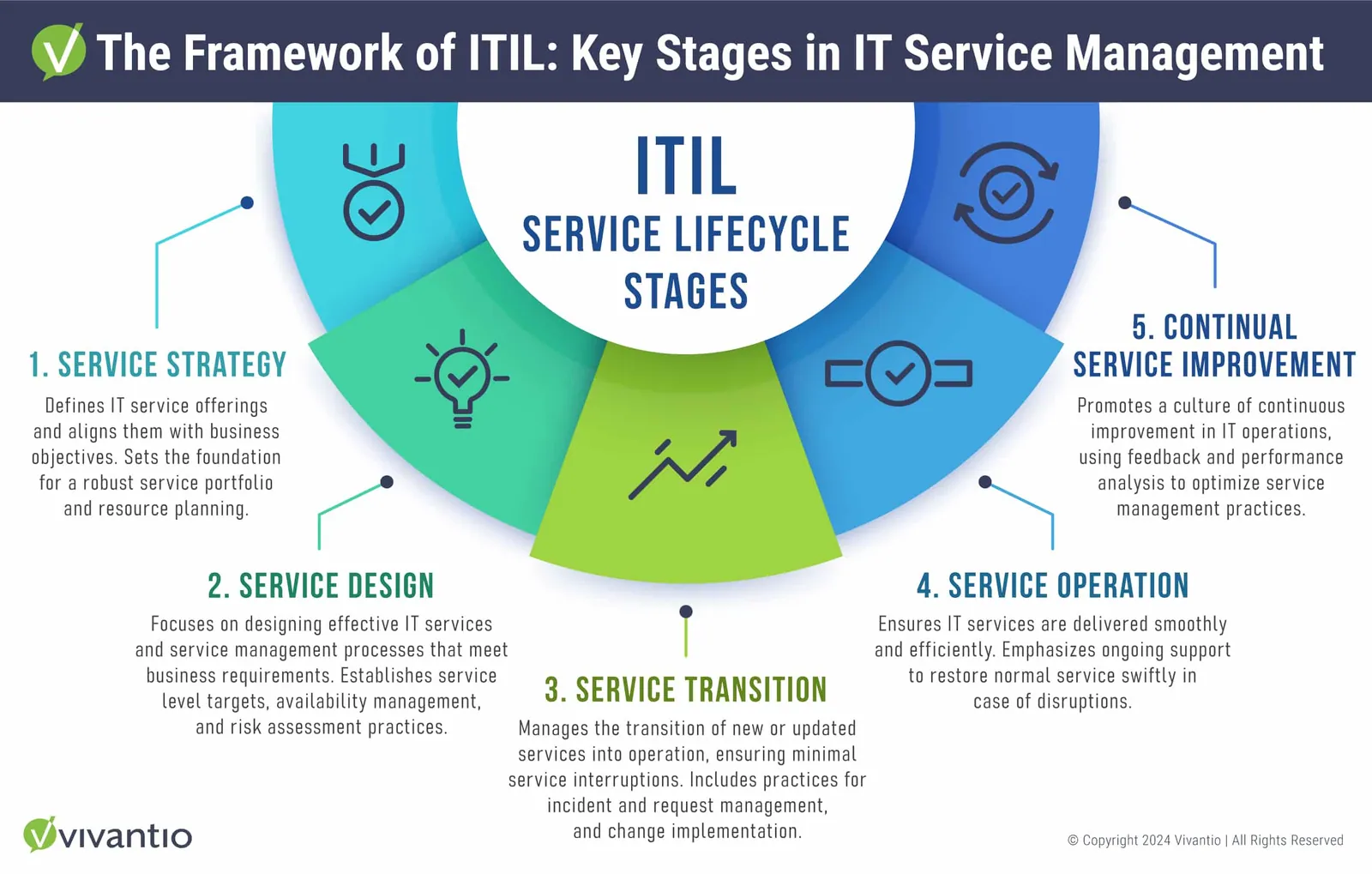
The Framework of ITIL: Key Stages in IT Service Management
ITIL offers a comprehensive framework known as the ITIL service lifecycle****, structured into five stages, each designed to guide the management of IT services from inception to continual improvement. These stages ensure that IT services evolve alongside changing business requirements and support long-term success.
Here’s a breakdown of the ITIL stages in service management:
-
Service Strategy
- Defines IT service offerings, ensuring they align with business objectives.
- Sets the foundation for a robust service portfolio and resource planning.
-
Service Design
- ****Focuses on designing effective IT services and service management processes that meet business requirements.
- Establishes service level targets, availability management, and risk assessment practices.
-
Service Transition
- Manages the transition of new or updated services into operation, ensuring minimal service interruptions.
- Includes practices for managing incidents and service requests and implementing change management.
-
Service Operation
- Ensures IT services are delivered smoothly and efficiently.
- Emphasizes ongoing support to restore normal service swiftly in case of disruptions.
-
Continual Service Improvement
- Promotes a culture of continuous improvement within IT operations.
- Uses feedback and performance analysis to optimize service management practices.
Each stage represents a framework of best practices that guides the management and delivery of IT services, helping companies maintain effective service quality and meet the requirements for service.
Key Benefits of Implementing ITIL
Adopting ITIL provides substantial advantages by embedding best practices for IT service and service management principles that improve efficiency and drive customer satisfaction.
| ### ITIL Benefit | ### Description |
|---|---|
| Increased Efficiency | ITIL streamlines processes and optimizes workflows for faster, more efficient service delivery. |
| Enhanced Risk Management | Identifies potential threats and provides mitigation strategies, crucial for availability management. |
| Improved Service Quality | Ensures consistent, reliable services that align with service management principles. |
| Higher Customer Satisfaction | Achieves superior customer experience through efficient ITSM practices and quick resolution of incidents and service requests. |
| Resource Optimization | Aligns IT services with business needs, enhancing resource utilization and maximizing ROI. |
Aligning ITIL with Business Goals
Aligning ITIL with your business goals enables your IT services to support core strategies and add tangible value to your organization. This alignment allows for better decision-making, efficient resource allocation, and seamless service delivery and support.
-
Strategic Alignment
- Integrate ITIL’s service management frameworks with business objectives to ensure that IT services contribute directly to organizational success.
- Utilize ITSM tools to monitor, analyze, and refine service performance in line with business growth targets.
-
Promoting Continuous Improvement
- ITIL’s focus on continual service improvement fosters a culture of ongoing excellence, encouraging teams to refine services continually.
- Embracing continuous improvement within the context of ITSM ensures that IT services remain competitive, agile, and responsive to industry changes.
-
Risk Mitigation and Governance
- Implement ITIL’s principles in governance and management to anticipate and address potential service disruptions.
- Enhance service availability and reliability by adopting a proactive approach to availability management and effective ITSM.
Why ITIL Matters for Your ITSM Approach
Leveraging ITIL as an accepted approach to ITSM, grounded in core ITSM principles, provides a comprehensive guide to IT service management that supports better decision-making, higher service quality, and enhanced customer satisfaction. With ITIL and its alignment with these foundational principles, IT services transform into strategic assets that drive business growth and innovation, cementing IT’s role as a key contributor to overall success.

Key ITSM Principles for Effective Management
Using strong ITSM principles is essential for maintaining efficient and reliable IT operations. Key areas of focus, such as incident management, change management, and asset management, help ensure that IT services align with business goals and support smooth operations.
Incident Management and Resolution
Incident management is a crucial component of information technology service management (ITSM). Its primary goal is to resolve issues quickly, minimizing disruptions to the business. Effective incident management involves a clear set of best practices:
- Identifying and logging incidents
- Classifying and initiating appropriate support
- Investigating to determine root causes
- Implementing a solution and restoring service
- Documenting and closing the incident
Following these practices and processes ensures a swift response to issues and promotes service management workflows that keep services reliable.
Change Management Best Practices
Change management is critical for implementing changes in IT systems without causing disruptions. Effective practices for IT service management include:
- Conducting thorough assessments and obtaining approvals
- Communicating changes to relevant stakeholders
- Planning and scheduling changes to minimize impact
- Testing changes within a controlled environment
- Reviewing changes post-implementation for continuous improvement
These best practices and recommendations help ensure that changes support organizational objectives and are integrated effectively within the existing IT environment.
Asset and Configuration Management
Asset and configuration management are vital for tracking and maintaining IT assets and their configurations. Key activities within this area include:
- Identifying and cataloging all assets
- Tracking ownership and management of each asset
- Monitoring asset performance
- Maintaining configuration records
- Linking configuration items for streamlined management
A well-managed service management system for assets and configurations supports project management, regulatory compliance, and efficient operations.
| ### ITSM Area | ### Key Activities |
|---|---|
| Incident Management | Identification, Classification, Investigation, Resolution, Closure |
| Change Management | Assessment, Communication, Planning, Testing, Review |
| Asset and Configuration Management | Identification, Cataloging, Tracking, Monitoring, Maintaining Records |
By implementing ITSM effectively, using ITSM software tools, and following these frameworks for IT service, organizations can ensure smoother operations and enhanced alignment between IT and business goals.
Essential Components of an ITSM Framework
Building a strong IT Service Management (ITSM) framework requires understanding and utilizing its core components. Each element contributes to seamless IT operations and supports business objectives. Here are the essential components:
-
- Centralizes all available IT services for users.
- Improves service delivery and request management, ensuring users know what services are accessible.
-
- Creates a centralized database of information, best practices, and processes.
- Facilitates quicker problem resolution and reduces repeat incidents, enhancing decision-making and self-service capabilities.
-
Risk Management
- Proactively identifies, assesses, and mitigates risks to maintain service continuity.
- Supports ITSM best practices by ensuring IT resilience against potential disruptions, contributing to a reliable IT service management environment.
-
- Defines clear performance standards through Service Level Agreements (SLAs), establishing accountability between the service provider and users.
- Ensures consistent service quality, aligning with key service management expectations.
-
Service Desk and Request Management
-
Acts as the primary contact point for user requests, from simple tasks to complex issues.
-
Effective service request management includes prioritizing, tracking, and resolving user problems efficiently, enhancing user satisfaction and trust in IT.
Key Benefits of Effective Service Request Management:- Quick Issue Resolution: Faster response times keep users satisfied and productive.
- Transparency and Tracking: Improves visibility into request statuses and tracking.
- Efficient Resource Allocation: Optimizes IT resource use, promoting operational efficiency.
- Improved User Satisfaction: Builds user trust and confidence in IT services.
-
-
Tools and Technology
- ITSM tools like ticketing systems, knowledge bases, and automated workflows streamline service desk operations.
- These tools are essential for handling high volumes of requests without compromising quality, supporting a modern IT service experience.
ITSM Components and Value
| #### Component | #### Value |
|---|---|
| Service Catalog | Centralizes services, improves request management |
| Knowledge Management | Enhances decision-making, reduces recurring incidents |
| Risk Management | Ensures continuity, mitigates potential service disruptions |
| Service Levels / SLAs | Sets quality standards, maintains accountability |
| Service Desk | Efficiently manages requests, improves user satisfaction |
Effective implementation of ITSM depends on these components working together, making IT operations smoother, enhancing user satisfaction, and optimizing resource utilization. By applying a strong concept of ITSM and leveraging ITSM best practices, your organization creates an adaptable, value-adding IT service framework aligned with business goals.
Implementing a Comprehensive ITSM Framework with the Right Software
A robust ITSM framework isn’t just about managing problems; it encompasses multiple key components grounded in ITSM principles to create a resilient and efficient IT environment. A well-designed ITSM software tool empowers IT teams to implement and maintain these principles effectively, ensuring seamless alignment with business objectives and enhancing customer satisfaction.
Take the Next Step in Implementing Core ITSM Principles with Vivantio
However, building a comprehensive ITSM framework requires a powerful software tool that supports the essential principles behind effective IT Service Management. With Vivantio’s advanced ITSM platform, you can streamline key processes, empower your IT teams, and align IT services seamlessly with business objectives.
Schedule a Free Consultation:
Discover how Vivantio’s feature-rich ITSM tools can support your organization’s IT goals, from effective incident resolution to proactive problem management.
Request a Personalized Demo:
Explore Vivantio’s platform and how it can enhance your ITSM framework by:
- Implementing Core ITSM Principles: From incident tracking to continuous service improvement, Vivantio’s tools enable structured, consistent service management processes.
- Automated Workflows and Knowledge Management: Simplify repetitive tasks, improve issue resolution speed, and provide self-service options that enhance user experience and satisfaction.
- In-depth Reporting and Analytics: Gain insights into service performance to identify areas for improvement and ensure alignment with business priorities.
- Expert Support from Dedicated Success Managers: Get hands-on assistance tailored to your organization’s needs, ensuring you maximize the benefits of Vivantio’s ITSM software.
By choosing Vivantio, you’re investing in a platform that empowers your organization to fully leverage ITSM principles, driving efficient service delivery, improved resource management, and long-term operational success.
Read more
Browse all resources
Ready to see it?
See Vivantio in action
Step your team up to real service management, without the leap to enterprise. Get a walkthrough tailored to your workflows.