





Database Activity Monitoring for ITSM: Stay in Control
Database activity monitoring is a game-changer for ITSM frameworks, offering real-time insights to boost security, ensure compliance, and optimize…

Jump to section
Introduction
Can you afford to lose control of your database and risk your ITSM compliance and security? Complex database systems require a strong monitoring solution in order to keep your database in check, including monitoring queries, setting alerts, and auditing activities. It gives you a clear view of your database’s activity, ensuring your ITSM framework runs smoothly and efficiently.
Implementing database activity monitoring isn’t just a best practice—it’s a critical safeguard against security breaches, compliance failures, and operational downtime that can cripple your ITSM framework. Without real-time insights into database activity, sensitive data can slip through the cracks, leaving your organization vulnerable to attacks, non-compliance penalties, and reputational damage. This tool enables you to track and audit database actions, set up alerts, and maintain full control over your systems to ensure security and compliance. Ignoring this essential monitoring isn’t just risky—it’s a gamble that no organization can afford to take. This article will guide you in safeguarding sensitive data, achieving compliance, and preserving the integrity of your ITSM operations through effective database activity monitoring—a critical and indispensable practice.
Understanding Database Activity Monitoring in Modern ITSM
Imagine a mid-sized healthcare organization, MedTech Solutions, struggling with slow database performance and unexplained anomalies in their system. Their IT team frequently receives complaints about sluggish patient record retrieval, which not only hampers efficiency but also raises concerns about compliance with health data regulations. MedTech decides to implement database activity monitoring to address these challenges.
Database activity monitoring, a cornerstone of effective ITSM, plays a crucial role in ensuring databases run smoothly and securely. By leveraging a robust solution, MedTech gains tools to monitor database performance, resource utilization, and security in real-time. Within weeks, the monitoring system identifies inefficient queries that were slowing down their database. The IT team optimizes these queries, cutting response times by half and drastically improving user satisfaction.
Beyond performance, the monitoring solution alerts the organization to an unusual access pattern from a third-party vendor account. This proactive detection allows the team to intervene before a potential data breach occurs, safeguarding sensitive patient information.
Database monitoring encompasses several critical areas, including:
- Performance monitoring: Tracks query execution times, resource usage, and overall database health.
- Security monitoring: Detects suspicious activity, such as unauthorized access or unusual data retrieval patterns, to prevent breaches.
- Service management: Integrates with ITSM processes to enhance service delivery and ensure databases align with organizational goals.
This fictional example highlights how proactive monitoring is a game-changer for organizations looking to maintain compliance, boost security, and ensure seamless ITSM operations.
Key Components of Database Monitoring
Monitoring databases involves tracking key metrics for optimal performance. These include database performance, query performance, and system resource use. Monitoring tools offer insights into database activity, helping make informed decisions for better service management.
The ITSM Connection
Linking database monitoring with ITSM is crucial for effective service management. It ensures database activity supports ITSM goals, enhancing service delivery and customer satisfaction. With the right tools, service management best practices can be streamlined, maximizing database monitoring benefits.

Essential Benefits of Monitoring Database Performance
Monitoring your database’s performance is key to keeping it running smoothly and can help you spot where things need work and make your database run better.
Here are some main advantages of keeping an eye on your database’s performance:
- Improved database uptime and reduced downtime
- Enhanced system performance and query execution
- Identification of bottlenecks and areas for optimization
- Better decision-making with data-driven insights
To keep your database in top shape, follow these best practices:
- Regular backups
- Updates and security patches
By sticking to these tips and using a good monitoring tool, your database server will perform at its best. It will also be more secure.
Implementing Database Activity Monitoring for Your Organization
To start monitoring database activity, you need the right tools. Look for a solution that handles lots of data and keeps sensitive information safe while providing multiple connectivity options through its integration platform.
When picking a tool, remember the role of database administrators. They will set up and manage the monitoring system.
Setting up monitoring rules is key. This means setting alerts for potential problems. By linking monitoring with ITSM, you can boost system performance and lower data breach risks. System management automation makes monitoring easier, letting admins focus on important tasks.
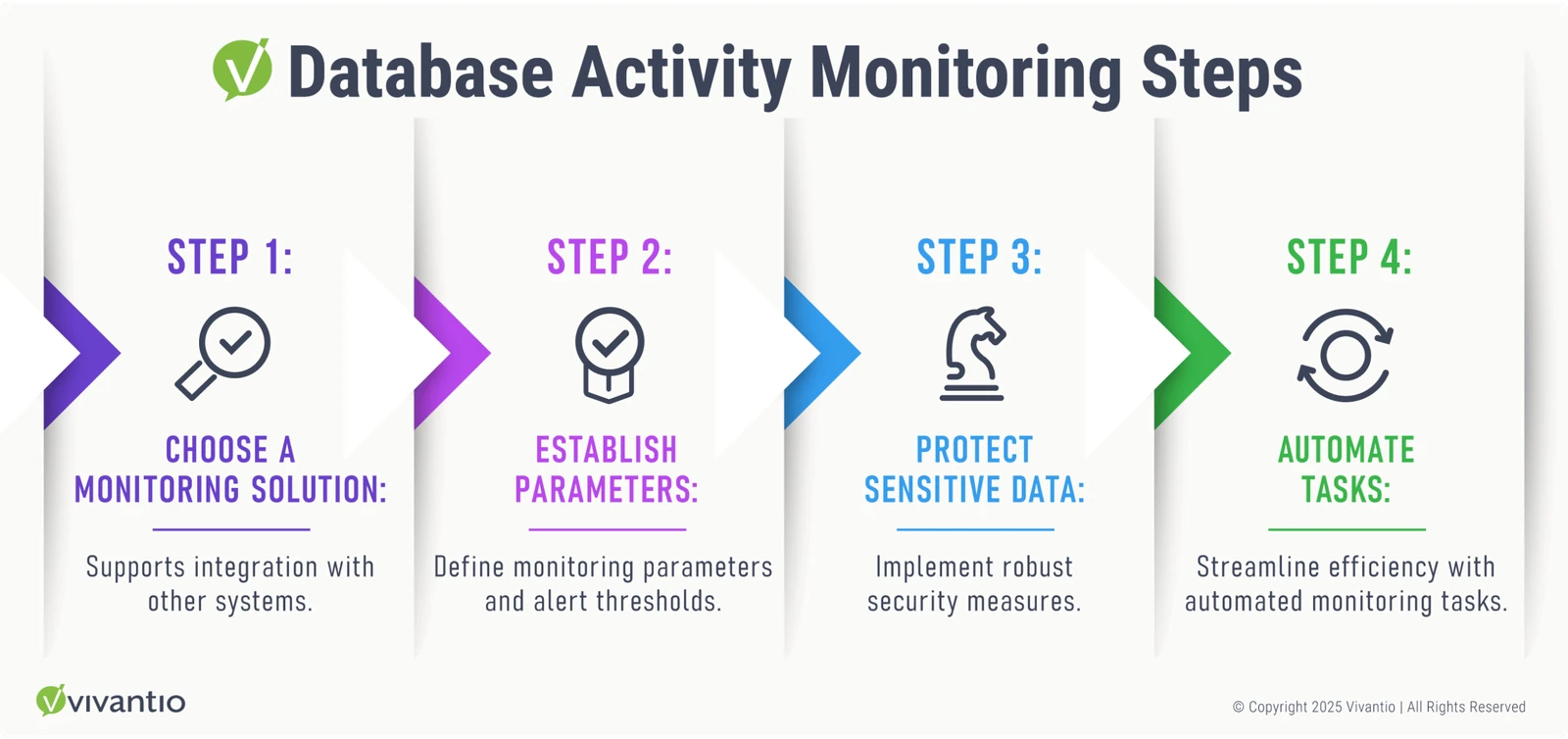
Some important things to think about when starting database activity monitoring include:
- Choosing a monitoring solution that supports integration with other systems
- Establishing clear monitoring parameters and alert thresholds
- Protecting sensitive data through robust security measures
- Automating monitoring tasks to improve efficiency
By following these steps and considering these key factors, you can set up effective database activity monitoring. This will improve your system’s performance and keep sensitive data safe.
Security and Compliance Through Database Monitoring
Improving your database systems means focusing on security and compliance. A good management tool is key. It helps protect sensitive data and stops unauthorized access. This is vital for keeping your systems running smoothly.
Databases come in different types, like relational and NoSQL. Each needs a special monitoring approach. But the main goal is the same: to keep your data safe and sound. A monitoring software can spot vulnerabilities early and help fix them, boosting your system’s performance.
Database monitoring offers many security and compliance benefits. Here are some:
- Real-time alerts and notifications for potential security threats
- Comprehensive monitoring of database activity to prevent unauthorized access
- Improved system performance through optimized database configuration
- Enhanced compliance with regulatory requirements through detailed reporting and auditing
With a solid database monitoring plan, you can keep your systems secure and compliant. This also boosts your application and system performance. The right tools give you insights into your database, helping you make smart business decisions.
| ### Database Type | ### Monitoring Requirements | ### Security Benefits |
|---|---|---|
| Relational Databases | Regular backups, access controls, and query monitoring | Prevents data breaches, ensures data integrity |
| NoSQL Databases | Flexible schema monitoring, data encryption, and access controls | Protects sensitive data, prevents unauthorized access |
Integration with Popular ITSM Platforms
Seamless integration with leading ITSM platforms is essential for optimizing database performance monitoring. The right solution should easily integrate with tools for incident management, real-time analytics, and other service management functions to enhance both your database monitoring and overall IT service management.
When planning an integration, consider your database’s architecture, CPU utilization, and workload. Tailoring the integration to these factors ensures accurate and reliable performance metrics while maintaining efficiency.
Key Integration Features:
- Automated Incident Response and Problem Management: Streamline issue resolution by connecting database monitoring with your incident response workflows.
- Real-Time Performance Analysis: Leverage real-time monitoring and analytics to proactively address performance bottlenecks and anomalies.
- Custom Integration Capabilities: Utilize flexible APIs and connectors to integrate with a wide range of ITSM platforms and tools, adapting to your organization’s specific needs.
By integrating your database monitoring solution with ITSM platforms, you can create a more proactive and efficient system that supports your database’s health and enhances service delivery across your organization.
Best Practices for Database Activity Monitoring
To get the most out of your database activity monitoring solution, it’s key to set it up right. You also need a plan for handling incidents. This means setting up alerts for odd data activity and database queries. Plus, having a way to quickly find and fix problems.
Think about scalability when choosing a solution. It should handle more data and queries without slowing down. This ensures your monitoring keeps up with your growing needs.
Some top tips for monitoring database activity include:
- Regularly check database queries to find ways to improve them
- Keep an eye on data activity to spot security risks
- Have a solid plan for managing incidents to act fast on database problems
By following these tips and thinking about scalability and incident management, your solution will work well. This makes it easier to set up and fix your monitoring. And it helps you get the most from your investment.
Transforming IT Service Management with Database Activity Monitoring
Database activity monitoring offers real-time insights that can revolutionize how you manage your IT services. By continuously tracking service availability and analyzing database logs, you can swiftly detect and address potential issues, ensuring your systems remain reliable and downtime is minimized.
These real-time insights empower you to make informed decisions that optimize database performance and enhance service delivery. By monitoring database activity closely, you can proactively identify areas for improvement, implement efficient solutions, and maintain the smooth operation of your ITSM framework.
Don’t let unseen issues disrupt your operations—stay ahead by keeping your databases secure, reliable, and aligned with your business goals.
Take the Next Step:
- Schedule a Free Consultation: Learn how database activity monitoring can elevate your ITSM framework and improve service reliability.
- Request a Demo****: Explore tools designed to streamline monitoring, protect sensitive data, and boost performance.
Start transforming your database management today with the power of real-time monitoring tailored for ITSM.
Read more
Browse all resources

Ready to see it?
See Vivantio in action
Step your team up to real service management, without the leap to enterprise. Get a walkthrough tailored to your workflows.