






Change and Release Management: Clarifying Key Roles
Change and release management are vital for maintaining business stability and boosting productivity. By understanding the key roles and processes involved,…

Jump to section
Introduction
Change and release management are vital as they help keep business operations stable and boost productivity. These processes deal with changes and software updates in your company. They make sure things run smoothly by reducing disruptions and making deployments more efficient.
Change management focuses on making and handling changes throughout the company. It deals with changes in the organization’s structure, culture, processes, tech, and people. Its goal is to make changes go more easily for everyone. It’s all about lessening pushback, getting everyone on board, and making sure employees are actively involved during changes. Think of it as a way to manage risks that come with changes, using careful plans and strategies.
Release management, on the flip side, is about getting software updates ready and deploying them. It’s a technical task that ensures software updates are rolled out smoothly. This way, it doesn’t cause big problems. It’s more about the step-by-step planning and executing these software updates at the right time.
By using both change and release management well, organization shifts and software updates go much better. Knowing how they work makes the transition process easier and helps meet your business’s goals. Learning about their different roles makes it easier to make changes and updates in your company’s environment successfully.
Understanding Change Management – Steps and Processes
Change management is a carefully thought out way to help organizations and people adapt to new things. Its main goals are to cut down on resistance, make the change process better, and ensure changes are smoothly integrated. For example, it ensures updates to the CMDB cause no issues, helping everything run smoothly.
The change management process involves identifying, assessing, planning, doing, and checking the changes. There are different types of change management, depending on the change, which help meet various needs and goals.
The steps include:
- Identifying Changes – This initial step involves recognizing and documenting the need for a change. Changes can stem from various sources such as new business requirements, technological advancements, or identified inefficiencies in current processes.
- Key Activities:
-
- Collect change requests from stakeholders.
- Document the rationale for each change.
- Assessing Changes – This step evaluates the potential impact and feasibility of proposed changes. The goal is to understand the risks, benefits, and resources required for implementation.
- Key Activities:
-
- Conduct a risk assessment to identify potential issues.
- Evaluate the benefits versus the costs of the change.
- Assess the change’s impact on current systems and processes.
- Involve key stakeholders in the evaluation process to gather diverse perspectives.
- Planning Changes – In this step, a detailed plan is developed for implementing the change. This includes defining the scope, timeline, and resources required.
- Key Activities:
-
- Develop a comprehensive project plan outlining tasks, timelines, and responsibilities.
- Prepare a communication plan to inform all stakeholders about the change.
- Identify any training or support needed to ensure successful implementation.
- Establish metrics and KPIs to measure the success of the change.
- Doing (Implementing) Changes – This is the execution phase where the planned changes are carried out. It is crucial to follow the plan meticulously to minimize disruptions.
- Key Activities:
-
- Execute the change according to the project plan.
- Monitor progress and address any issues promptly.
- Ensure continuous communication with all stakeholders.
- Document the implementation process and any deviations from the plan.
- Checking (Reviewing) Changes – After implementation, the changes are reviewed to ensure they have achieved the desired outcomes. This step involves verifying that the change meets organizational objectives and addressing any post-implementation issues.
- Key Activities:
-
- Conduct post-implementation testing to ensure changes are working as intended.
- Gather feedback from users and stakeholders.
- Review performance metrics and KPIs to assess the impact of the change.
- Document lessons learned and best practices for future changes.
Types of Change Management
Different types of change management cater to various needs and goals within an organization. These include:
- Standard Changes – Routine changes that are low risk and follow a pre-approved process. They require minimal oversight and can be implemented quickly. Examples: Regular software updates, routine maintenance tasks.
- Normal Change – Changes that require a more detailed assessment and approval process due to their potential impact. They follow the full change management process. Examples: Infrastructure upgrades, new system implementations.
- Emergency Changes – Urgent changes that need to be implemented immediately to address critical issues. They bypass some of the usual approval steps to expedite resolution. Examples: Security patches for newly discovered vulnerabilities, emergency system repairs.
Each type of change management process is designed to address specific needs and ensure that changes are managed effectively, minimizing risk and maximizing benefits for the organization.
Impact on Business Operations
Good change management can make business operations run better by making transitions smoother and less disruptive. It also helps improve how incidents due to changes are handled, leading to quicker and better solutions. Plus, it works with release management to make sure new plans are tracked and rolled out well. Strong change management can lead to a more efficient organization, happier employees, and less negative impacts.
Understanding Release Management – Steps and Processes
Release management is the process of planning, creating, testing, and deploying new features or updates to software. An efficient release management process ensures a smooth transition from development to production, minimizing risks and downtime.
- Release Planning (Setting the Stage): Release planning is the foundation for a successful release. It involves defining the scope and objectives of the release, creating a detailed schedule, identifying resources, and establishing clear communication channels. This initial planning stage ensures everyone involved is aligned and the release progresses smoothly.
-
Key Activities:
- Define the scope and objectives of the release (What are we releasing and why?): This initial step clarifies what functionalities or changes will be included in the release and the goals it aims to achieve.
- Create a release schedule with clear timelines (When is it happening?): A well-defined timeline keeps everyone on the same page and ensures a smooth flow throughout the release process.
- Identify resources and team members involved (Who’s on the team?): This involves determining the personnel and skill sets needed for each stage of the release.
- Establish clear communication channels between stakeholders (How do we stay informed?): Effective communication keeps everyone informed and fosters collaboration throughout the process.
- Build and Package (Building the Release): This stage focuses on building the release based on the defined scope. Developers translate the planned functionalities into code, ensuring it adheres to requirements. The build is then packaged for deployment, including all necessary documentation and configuration files for a seamless transition to production.
-
Key Activities:
- Developers build and integrate code according to the defined scope (Building the new features): Developers translate the planned functionalities into functional code, ensuring it adheres to the set requirements.
- The build is packaged for deployment, including documentation and configuration files (Preparing for Delivery): The build is bundled with all necessary documentation and configuration files for a seamless deployment process.
- Version control systems are used to track changes and maintain build integrity (Ensuring Consistency): Version control systems allow for tracking changes made to the code, enabling rollback if needed and maintaining the integrity of the build.
- Testing and Approval (Ensuring Quality): Rigorous testing is crucial in this stage. The build undergoes various tests in a staging environment to identify and fix bugs or compatibility issues before deploying to the live environment. This ensures the release functions as expected and meets user requirements.
-
Key Activities:
- The build undergoes rigorous testing in a staging environment (Putting it to the Test): The build is thoroughly tested in a simulated production environment to identify and fix any bugs or compatibility issues before deploying to the live environment.
- This may include unit testing (individual components), integration testing (how components work together), user acceptance testing (UAT) (real-world user experience): Different testing types are employed to ensure the build functions correctly on an individual component level, how components interact with each other, and how it meets user expectations.
- Any bugs or issues are identified and resolved before deployment (Fixing the Flaws): Identified issues are addressed before deployment to minimize the risk of problems in production.
- Release and Deployment (Going Live): The approved build is carefully deployed to the production environment following the established deployment strategy. Different strategies can be used to minimize downtime for users during the update process. Close monitoring of system performance after deployment is essential to ensure the release functions as expected and identify any potential issues.
-
Key Activities:
- The approved build is deployed to the production environment according to the plan (Pushing the Release): The approved build is carefully deployed to the live environment, following the established deployment strategy.
- Deployment strategies like rolling updates or blue-green deployments can be used to minimize downtime (Minimizing Disruption): Different deployment strategies can be used to minimize downtime for users during the update process.
- Close monitoring of system performance after deployment is crucial (Keeping an Eye on Things): Close monitoring ensures the release functions as expected and identifies any potential issues after deployment.
- Post-Release Support (Keeping it Running Smoothly): This stage focuses on ensuring the smooth operation of the released software after deployment. Any issues that arise are addressed promptly through bug fixes and hotfixes. User and stakeholder feedback is collected to identify areas for improvement in future releases. The release process itself is documented to capture best practices and identify areas for improvement in future iterations.
- Key Activities:
-
- Address any issues that arise after deployment through bug fixes and hotfixes (Resolving Issues): Any problems encountered after deployment are addressed promptly through bug fixes and hotfixes. Bug fixes are more comprehensive code changes that resolve identified bugs or defects in the released software. Hotfixes, on the other hand, are typically smaller, quick fixes that target critical issues requiring immediate attention to maintain system stability or security.
- Gather feedback from users and stakeholders to inform future releases (Learning from Experience): User and stakeholder feedback is actively collected through various channels like surveys, support tickets, or user interviews. This feedback is crucial for identifying areas for improvement in future releases and ensuring the software continues to meet user needs.
- Document the release process for continuous improvement (Capturing Knowledge): The entire release process is documented, capturing best practices, challenges encountered, and lessons learned. This documentation serves as a valuable resource for future releases, enabling continuous improvement of the release management process.
These steps help find a balance between speed and reliability. They work well with agile, continuous delivery, and DevOps.
Key Differences Between Change Management and Release Management
It’s crucial to know the key differences between change management and release management. Change management deals with big organization-wide shifts. This includes changes to how the company is structured, its culture, and its processes. On the other hand, release management is all about the cycle of releasing IT software. This distinction is important for making sure both types of management work effectively.
Scope and Focus
Change management looks at making big, overall changes within the organization. It touches on how the organization is structured, its culture, and its processes. This wide scope ensures that any change fits the organization’s strategic direction. In contrast, release management focuses only on getting software updates out. It includes making, testing, and scheduling releases. The goal is to safely and effectively get new or updated software to users, without causing disruptions.
Scope and Focus
Change management often requires organizations to continually adapt. Making these changes with precision can greatly improve updates to the IT setup and communication with those involved. Release management, however, is more methodical. It sticks to a set schedule, often guided by agile development practices or DevOps. This method aims to bring new features or improvements to users quickly. Since IT is continuing to rapidly evolve, this makes release management very important.
Roles and Responsibilities
Their different goals mean change management and release management have different key players. Change management relies on roles like the change manager and the Change Advisory Board (CAB). They help handle change requests so that they don’t harm the business, linking them to problem management. This makes decisions on needed changes clear and informed. Release management, on the other hand, is more focused on getting software out. It often has a release manager making sure that each release meets the needed goals. This organized way provides a clearer view of the updates being deployed.

| ### Aspect | ### Change Management | ### Release Management |
|---|---|---|
| Scope | Broad organizational changes | Specific IT software releases |
| Focus | Structure, culture, procedures | Building, testing, scheduling |
| Timing | Continuous adaptation | Planned schedule |
| Roles | Change Manager, CAB | Release Manager |
| Objective | Minimize business impact | Safe rollout of software |
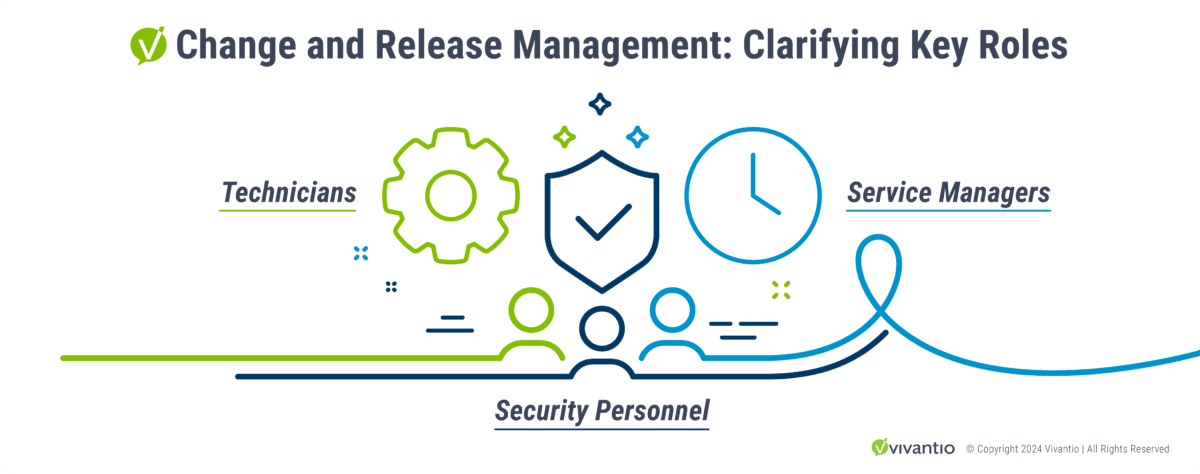
Roles in Change Management
Knowing the key roles in change management helps make changes effective and smooth. These roles guide a team to work together, ensure fewer disruptions, and handle risks well.
Change Manager
The change manager leads the way in making changes work. They set out plans, reach goals, and avoid risks. Working closely with others, they make sure everyone adapting feels supported and goes through the change easily. Good change plans need approval, tests, and clear ways to talk to everyone involved. In some places, one person may do this job and more, especially in smaller teams7.
Change Advisory Board (CAB)
The Change Advisory Board (CAB) is key for making good decisions quickly and managing risks. In the past, CABs faced criticism for being slow and having too many requests to review. But now, they’ve become more helpful, making sure changes are checked well before happening. This change helps big teams work better and faster, says ITIL 4.
Stakeholders and End-Users
Getting stakeholders and end-users involved is crucial for success. People who talk directly with end-users can pick up on their needs and help with change plans. Change managers and key players work together to choose and use strategies that keep things smooth and easy for everyone.
Roles in Release Management
The essential roles in release management play a key part in making sure software moves well from development to live use. Each role, like the release manager or the quality assurance team, is vital. They help in making the release and deployment process go smoothly.
Release Manager
The release manager leads the release management work. They plan and look after the releases, especially in big companies that have dedicated release managers. Their job is to prepare, test, and set the releases for the move to the production stage before deployment. They need to be very organized in handling these tasks. This makes sure everything happens without a hitch.
Development and Operations Teams
The development and operations teams are crucial in the release management process. They work closely together. Methods like Agile development and DevOps have made this partnership strong. They have made the process faster and more valuable. Some development teams even handle their releases. This shows how well they work together in delivering software in modern ways.
Quality Assurance Team
The quality assurance team ensures the software meets high standards before final use. They find and fix issues, making sure the software works well. Their thorough testing reduces the chances of problems. This helps in building trust in the software’s final use.
The work of the release manager, development, operations, and quality assurance teams is key for a successful release and deployment. Working together, they make plans work and follow the best service management methods. This benefits the company by making software delivery more effective.
How Effective Change and Release Management Contribute to Business Success
Change and release management are no longer optional – they’re essential for success. These practices bridge the gap between IT initiatives and business objectives, ensuring smooth and efficient operations with minimal disruption. The IT Infrastructure Library (ITIL) provides a robust framework for both processes, helping IT teams maintain order, mitigate risks, and navigate change effectively.
Ready to unlock the full potential of effective change and release management for your organization? Vivantio offers a comprehensive suite of services designed to help you implement and optimize these critical processes. From tailored consulting to industry-leading training programs, we empower your teams to navigate change with confidence and deliver exceptional results. Contact us today [Link to contact page] to schedule a free consultation and discuss how we can help you streamline your operations, enhance innovation, and gain a strategic advantage in your market. Don’t wait to see the transformative power of effective change and release management firsthand. Schedule a personalized demo [Link to demo page] to experience how our expert guidance and proven methodologies can unlock a new era of efficiency and agility for your business.
Read more
Browse all resources
Ready to see it?
See Vivantio in action
Step your team up to real service management, without the leap to enterprise. Get a walkthrough tailored to your workflows.