






Mastering IT Ecosystem Management
Your IT ecosystem is more than just infrastructure—it’s the foundation of your business. By optimizing integrations, automating workflows, and ensuring…

Jump to section
Introduction
As a software provider, you know your IT ecosystem is the backbone of your business. Mastering its management isn’t just a necessity—it’s your competitive edge. By streamlining this system, you can unlock new levels of efficiency, productivity, and growth that help your software solutions stand out in the crowded marketplace.
Think of your IT ecosystem as your most valuable resource, powering every aspect of your operations. Managing it effectively means understanding how each part connects and contributes to the bigger picture. It’s not just about maintenance; it’s about maximizing your potential and achieving your vision.
By taking a proactive approach, you’re creating a balanced, well-orchestrated digital environment that aligns with your business goals. As you dive deeper into this process, you’ll discover how optimizing these interactions can position your business for long-term success.
Understanding the Modern IT Ecosystem
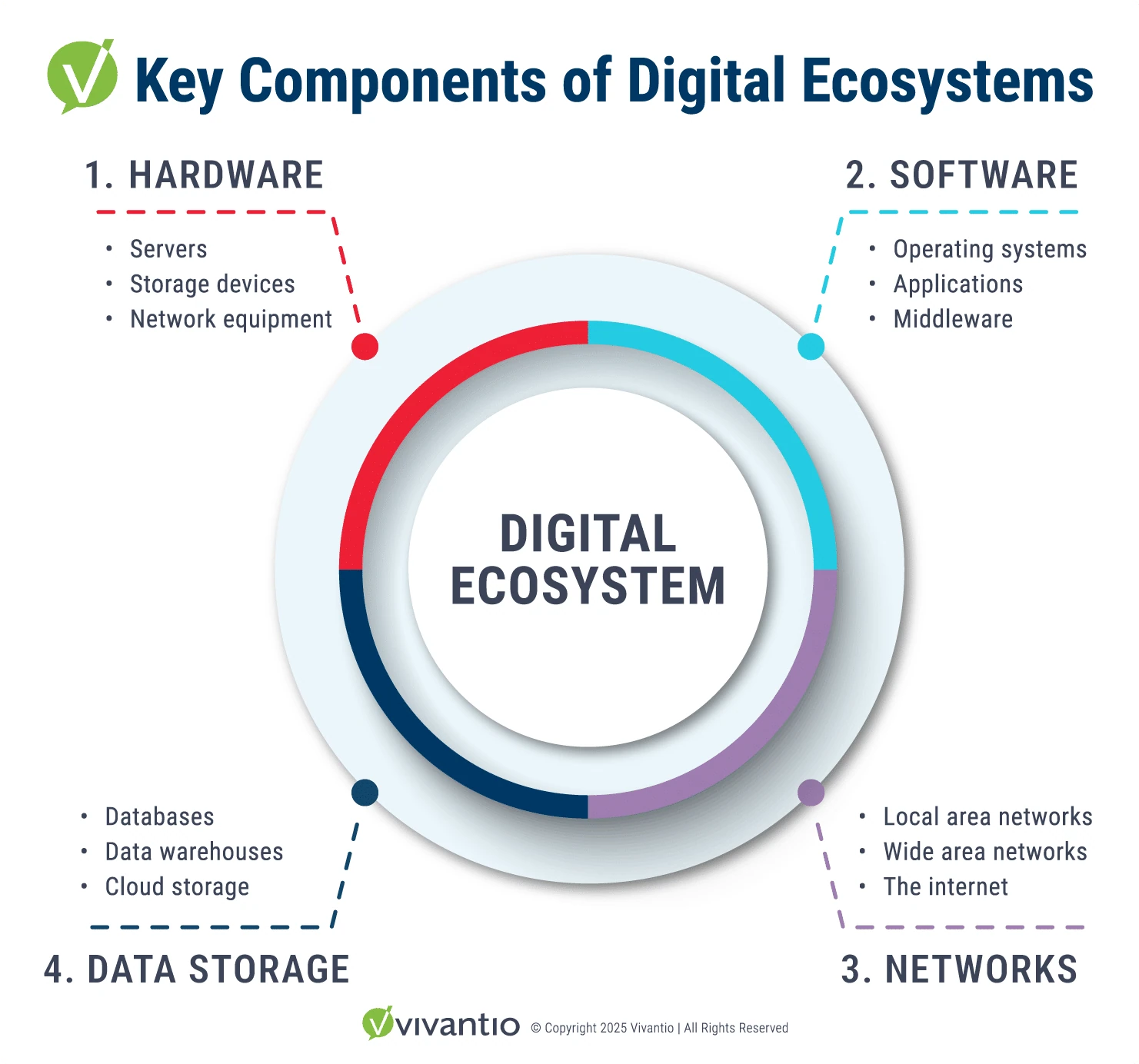
To truly grasp the modern IT ecosystem, we need to appreciate its complexity and interconnected parts. Today’s digital ecosystems have evolved alongside advancements in IT, creating intricate networks where systems depend heavily on one another.
This concept mirrors the principles of conservation biology, where managing natural ecosystems requires understanding each element’s role and how it impacts the whole. Their holistic approach considers every component, from data collection devices to predictive analytics. This same strategy applies to IT ecosystems, where both hardware and software must work in harmony.
In fact, a report by IDC predicts that by 2025, 75% of business leaders will leverage digital platforms and ecosystem capabilities to adapt their value chains to new markets, industries, and ecosystems (source). This emphasizes the growing importance of adopting a proactive approach to digital ecosystem management.
By treating your IT environment as a living environment, you can make smarter decisions that ensure your technology aligns with your business goals—driving sustainability and long-term success, much like conservationists do for our natural world.
The Evolution of IT Infrastructure
As organizations expanded, their IT infrastructure evolved to meet increasing demands. This growth led to the development of complex digital systems capable of supporting a wide array of interconnected applications.
| ### Component | ### Description |
|---|---|
| Cloud Computing | A model for delivering computing services over the internet |
| Big Data | A term used to describe the large amounts of data that are generated by organizations |
| Artificial Intelligence | A field of study that focuses on the development of intelligent machines |
The Strategic Importance of IT Ecosystem Management
As a software provider, the systems and integrations you implement are central to shaping the digital environment your clients rely on. Your work directly determines how effectively these networks operate—not just for internal processes but for the end users who depend on seamless, reliable interactions with your technology. To ensure your strategy is aligned with these goals, it’s essential to ask yourself key questions that will guide your approach and help you build resilient, efficient, and impactful systems.
Key Questions to Guide Your IT Ecosystem Strategy
-
Stakeholder Needs:
- Have I identified the unique needs of all stakeholders, including employees, customers, and partners?
- How do my systems, workflows, and tools enhance their experience and support their success?
- Are there specific pain points I can address to improve stakeholder satisfaction?
-
Integration and Workflow Optimization:
- Are the systems I integrate designed to streamline communication and improve efficiency?
- Is data flowing effortlessly between applications, enabling seamless operations?
- How can I ensure that my integrations promote the overall health and efficiency of the ecosystem?
-
Performance and Resilience:
- Am I regularly evaluating the performance of the IT ecosystem to identify weaknesses or opportunities?
- Are my systems being monitored proactively to prevent risks and reduce downtime?
- What steps can I take to ensure the ecosystem remains resilient and productive?
-
Data and Decision-Making:
- Are my integrations and systems generating actionable insights through data and analytics?
- How can I use these insights to drive better decision-making and align with business objectives?
- Am I enabling businesses to adapt to change, seize opportunities, and foster growth effectively?
-
Strategic Role as a Provider:
- Beyond delivering solutions, am I creating an adaptable ecosystem that evolves with my clients’ needs?
- How can I focus on continuous improvement to ensure the systems I build become strategic enablers of success?
- Am I positioning my solutions as tools that empower businesses and their end users to thrive?
By asking these questions, you can develop a guiding strategy that ensures the ecosystems you manage are not only efficient but also integral to the success of your clients and their stakeholders.
Core Principles of Effective IT Ecosystem Management
Once you’ve asked and answered the key questions to guide your IT strategy, the next step is turning insights into action. This is where core principles become essential—they provide the foundation for implementing effective solutions and ensuring your systems work together seamlessly. These principles act as a compass, helping you prioritize decisions that drive collaboration, efficiency, and long-term success.
Understanding the core principles of IT service management (ITSM) isn’t just a best practice—it’s critical to creating a cohesive ITSM framework. These principles enable you to connect various systems, ensuring smooth processes across departments and platforms. When applied thoughtfully, they help maintain consistency and foster collaboration, making it easier for stakeholders to access the tools and information they need.
Why is this important? Without guiding principles, the implementation process can become fragmented, leading to inefficiencies, misaligned resources, and systems that fail to deliver their full potential. By embracing core principles, you’re not only building a well-integrated technology environment but also setting the stage for adaptability and growth. This approach ensures your IT solutions don’t just meet today’s demands but are equipped to evolve with the future needs of your business and its users.
Effective IT ecosystem management has several key principles. These include:
| ### Principle | ### Description | ### Benefits |
|---|---|---|
| Integration and Interoperability | Enabling different systems to work together seamlessly | Improved efficiency, reduced costs |
| Scalability and Flexibility | Allowing the ecosystem to adapt to changing business needs | Increased agility, improved responsiveness |
| Security and Compliance | Protecting sensitive data and ensuring regulatory compliance | Reduced risk, improved reputation |
| Resource Optimization | Ensuring that resources are used efficiently to support business operations | Improved productivity, reduced waste |
Leveraging advanced digital tools and a well-designed technology framework enables you to optimize workflows****, enhance operational efficiency, and drive cost savings. But what happens when core principles are overlooked? Imagine systems being deployed without clear alignment—processes become disjointed, integrations fail to communicate effectively, and resources are wasted. The result? Frustration for stakeholders, diminished productivity, and a poor end-user experience.
This is why having a strong foundation rooted in core principles is critical. These principles act as a guide, ensuring every decision and implementation supports a cohesive, efficient, and user-centered environment. By prioritizing these fundamentals, you can create a digital landscape designed to adapt, scale, and thrive alongside your business and its goals.
Building a Resilient IT Infrastructure: A Framework for Success
Building a resilient IT infrastructure starts with the strategic questions we outlined earlier—these serve as the foundation for informed decision-making. This framework provides actionable steps to help you design, implement, and maintain a high-performing IT environment that aligns seamlessly with your business goals and adapts to future needs.
1. Start with Core Principles
Before implementing solutions, define the principles that will guide your decisions. Reference the table above for detailed considerations. These foundational guidelines will ensure consistency and keep your IT infrastructure aligned with long-term objectives.
- Ask yourself: Are all components of the IT environment working together effectively to meet business needs?
- Why it matters: Without clear principles, fragmented systems lead to inefficiencies, miscommunication, and missed opportunities.
2. Engage Stakeholders Early and Often
Stakeholder collaboration is crucial to the success of your IT strategy. Understanding their needs ensures that your solutions address key challenges and improve the user experience.
Steps to Effective Stakeholder Management:
- Identify key players: Employees, partners, vendors, and customers.
- Map stakeholder relationships to understand dependencies.
- Establish clear communication channels (e.g., regular meetings, open feedback loops).
- Use tools like stakeholder maps and defined communication frameworks to ensure transparency.
💡 Pro Tip: A well-communicated plan fosters trust and aligns all parties toward common goals.
3. Optimize Platform Integration
A well-integrated IT environment is the backbone of operational efficiency. Focus on connecting systems, managing data flows, and ensuring seamless collaboration.
Key Areas to Address:
- Cloud Services Integration: Leverage scalable and adaptable cloud platforms.
- API Management: Streamline data sharing between systems through secure APIs.
- Service Level Agreements (SLAs): Set clear expectations for service delivery and performance standards.
✅ Actionable Tip: Regularly review and update integrations to ensure they remain relevant and effective.
4. Manage Resources Wisely
Resource allocation is a critical aspect of IT infrastructure management. Maximize efficiency and minimize waste through proactive strategies.
Practical Steps for Resource Optimization:
- Conduct regular audits to uncover inefficiencies.
- Automate repetitive processes to save time and improve accuracy.
- Develop a detailed resource management plan with clear objectives.
- Monitor and analyze resource usage trends to make data-driven adjustments.
5. Measure and Improve Performance
To ensure your IT infrastructure continues to meet evolving demands, establish and monitor KPIs that reflect your business priorities.
Essential KPIs to Track:
- System Uptime: Ensure reliability with a target of 99.9%.
- Response Time: Strive for rapid responses, targeting 2 seconds or less.
- User Satisfaction: Aim for 90% or higher satisfaction levels.
Best Practices for Success Measurement:
- Use monitoring tools to gather real-time data.
- Regularly evaluate performance against benchmarks.
- Identify areas for improvement and adjust strategies accordingly.
Building for the Future: Your IT Playbook for Success
Creating a resilient IT environment is like coaching a championship-winning sports team—it requires a detailed, well-drafted playbook. Each move, from thoughtful planning to seamless integration, must be carefully coordinated to achieve your goals. Stakeholder collaboration serves as your team’s strategy sessions, ensuring everyone understands their role and works toward a shared objective. Efficient resource management is your team’s conditioning, keeping everything running at peak performance, while ongoing performance measurement is the game tape, helping you assess and refine your strategy for future challenges.
With this comprehensive playbook, you’re not just preparing for today’s business needs; you’re building a system that can adapt and thrive in the face of tomorrow’s challenges. Like a winning team, your IT environment will be equipped to deliver immediate victories and sustain long-term success.
Addressing Common IT Ecosystem Challenges
As time goes on, you’ll inevitably encounter challenges that can affect the health, efficiency, and adaptability of your systems. Is there a way to prepare for these future challenges? If so, how? The answer lies in recognizing potential obstacles early and adopting strategic actions to address them.
Action Items to Tackle Key Challenges
-
Ensure System Integrity Across Diverse Platforms
- Regularly audit your systems to identify and address gaps in performance or integration.
- Establish clear processes for maintaining consistency across all components of your IT environment.
-
Maintain High Service Levels Amid Growing Demands
- Automate repetitive tasks and optimize workflows to improve efficiency and responsiveness.
- Allocate resources strategically to meet increased demands without compromising service quality.
-
Leverage Advanced Digital Tools
- Invest in tools for real-time monitoring, predictive analytics, and seamless integrations.
- Use these technologies to improve decision-making and enhance user experiences.
-
Protect Against Cyber Threats
- Implement strong security measures, such as multi-factor authentication and encryption.
- Conduct regular vulnerability assessments to stay ahead of potential risks.
-
Build Resilience Through Continuous Improvement
- Evaluate your systems regularly, using performance metrics and stakeholder feedback.
- Adapt your strategies to meet evolving business needs and industry trends.
By addressing these challenges proactively, you can think of your IT environment as a well-tuned orchestra. Each component, from integrations to tools, must play its part in harmony to create a symphony of efficiency and resilience. When guided by strategic action, advanced technology, and a dedication to constant improvement, your digital framework becomes more than just functional—it becomes a masterpiece. With this level of orchestration, your business is not only prepared to meet immediate demands but also poised to adapt and thrive in the future.
Preparing Your IT Ecosystem for Future Growth
Managing your IT environment effectively requires foresight and adaptability. By this point, you’ve explored the critical elements of IT ecosystem management, and you can clearly see how vital it is to understand your system’s components and identify areas for improvement. This awareness ensures your systems remain strong and ready to adapt to change.
Take the Next Step in Future-Proofing Your IT Ecosystem** **Building a flexible, scalable IT environment is essential for driving long-term success and resilience.
How You Can Get Started:
- Schedule a Free Consultation: [Link to contact page] – Learn how proactive management and smart solutions can strengthen your IT systems for sustained growth.
- Request a Demo: [Link to demo page] – See how advanced tools and best practices can help you create a more adaptable and efficient IT setup.
Start building an IT infrastructure that supports your goals, adapts to change, and positions your business for future growth today. Schedule a free demo today!
Read more
Browse all resources
Ready to see it?
See Vivantio in action
Step your team up to real service management, without the leap to enterprise. Get a walkthrough tailored to your workflows.