






Why Does ITIL 4 Break Apart Release Management vs Deployment Management
Ever wondered why ITIL 4 separates release management from deployment management? This key distinction enhances software delivery, boosts reliability, and…

Jump to section
Introduction
Ever wondered why ITIL 4 splits out release management from deployment management? These terms used to be the same, but now they’re different. Why? This change is big and shows how ITIL 4 wants to make service management better.
In this article we’ll explain why making these two roles clear is key. You’ll learn how it helps in delivering software more reliably and efficiently. What if this one ITIL 4 insight could take your IT service management framework to the next level? Now you can discover how this key change in ITIL 4 can revolutionize your IT service management approach starting as early as today.
Understanding ITIL 4 Framework: An Overview
To fully understand ITIL 4, we need to explore its core concepts and components. ITIL 4 builds on the foundation of earlier versions, incorporating insights gained from decades of practical implementation and feedback across industries. By analyzing what worked and what didn’t in previous iterations, ITIL 4 refines best practices to address the complexities of modern IT environments. The result is a more comprehensive and adaptable framework that evolves with your organization’s needs, providing greater flexibility and relevance compared to its predecessors.
What is ITIL 4?
ITIL 4 is the latest evolution of the ITIL framework and it’s specifically designed to address the demands of increasingly dynamic and interconnected service environments. Unlike previous versions that primarily emphasized process adherence, ITIL 4 shifts the focus toward delivering value in a holistic, customer-centric way. This modern approach aligns seamlessly with the challenges organizations face in balancing technical efficiency with business outcomes.
ITIL 4 introduces a more flexible and iterative methodology, making it highly compatible with frameworks like Agile, Lean, and DevOps. By integrating these principles, ITIL 4 enables IT teams to embrace continuous improvement and adapt quickly to new challenges, whether that means implementing cutting-edge technologies or responding to shifting business priorities. This adaptability not only enhances collaboration across departments but also ensures that IT services remain aligned with the broader strategic goals of the organization.
Key Components of ITIL 4
The ITIL 4 framework has two main parts: the Service Value System (SVS) and the Four Dimensions model.
- Service Value System (SVS): The SVS is the heart of ITIL 4. It shows how different parts and actions help create value.
- Four Dimensions Model: This model covers four key areas: Organizations & People, Information & Technology, Partners & Suppliers, and Value Streams & Processes. It offers a balanced way to manage services.
Benefits of ITIL 4 in Service Management
Using the ITIL Framework brings many benefits to service management.
- Improved Service Delivery: ITIL 4’s main parts make services better and more efficient.
- Enhanced Responsiveness: Working with Agile and DevOps makes the organization more agile.
- Facilitated Value Co-Creation: ITIL 4 helps create better service relationships. This leads to more collaboration and value.
In short, ITIL 4 raises the bar for service management.

Release Management: An Essential Aspect of Software Development
Release management is crucial in software development. It makes sure each release is well-planned and deployed safely. A good release management process reduces risks and ensures new features or updates work well for users.
The Role of Release Management
Release management oversees the whole release process, from planning to deployment. It works with teams like development, QA, and operations. This ensures the release meets standards and is on time. Good release management improves software quality, making users happier and reducing problems.
Steps in the Release Management Process
The release management process has several steps to reduce risks and make deployment smoother. Key steps include:
- Release Planning: Set the scope, timelines, and needed resources for the release.
- Build and Test: Make and test the release in a controlled setting to find and fix problems.
- Release Acceptance: Get approvals from stakeholders and check if the release meets quality standards.
- Deployment: Put the software release into production while watching for any issues.
- Post-deployment Review: Review the release process to see what worked and what can be improved.
By following these steps, we get a well-organized and efficient release management process. This helps the software development lifecycle succeed.
Common Challenges in Release Management
Release management faces several challenges. Some common ones include:
- Version Control: Managing many software versions is complex and takes a lot of resources.
- Compliance with Timelines: Keeping to strict release schedules is hard but very important.
- Cross-team Coordination: Working well together between teams is tough but necessary for a smooth release.
- Risk Management: Finding and handling risks in new releases needs careful planning and action.
Overcoming these challenges is vital for a successful release management process. This can greatly improve the success of software releases.
Deployment Management: Ensuring Smooth Software Delivery
Deployment management is key in ITIL 4. It focuses on smoothly moving new or updated software into use. This makes sure things run smoothly and cuts down on downtime.
What is Deployment Management?
It’s about making sure software gets to users without a hitch. It covers all the technical steps from development to when it’s live. The goal is to keep the process smooth and avoid problems.
Key Steps in the Deployment Process
The deployment process has several important steps. Each step is vital for a successful software delivery that meets user needs.
- Planning: Set the scope, goals, and timeline for deploying software.
- Build: Put the software together for deployment.
- Testing: Test the software well to find and fix problems before it’s live.
- Deployment: Move the software to the live environment with little disruption.
- Verification: Make sure the software works right in the live environment.
- Maintenance: Fix any issues after deployment and keep the software running well.
Technologies and Tools for Deployment Management
There are many tools and technologies to help with deployment. They make the process smoother and ensure software is delivered well.Using these technologies can improve your deployment strategy. It ensures a reliable and smooth software delivery process.
| ### Technology/Tool | ### Description |
|---|---|
| Automation Tools | Automate tasks to save time and cut down on mistakes. |
| Configuration Management Systems | Keep configurations the same across different environments. |
| Container Orchestration Platforms | Efficiently deploy, manage, and scale containerized apps. |
Release Management vs Deployment Management: Key Differences
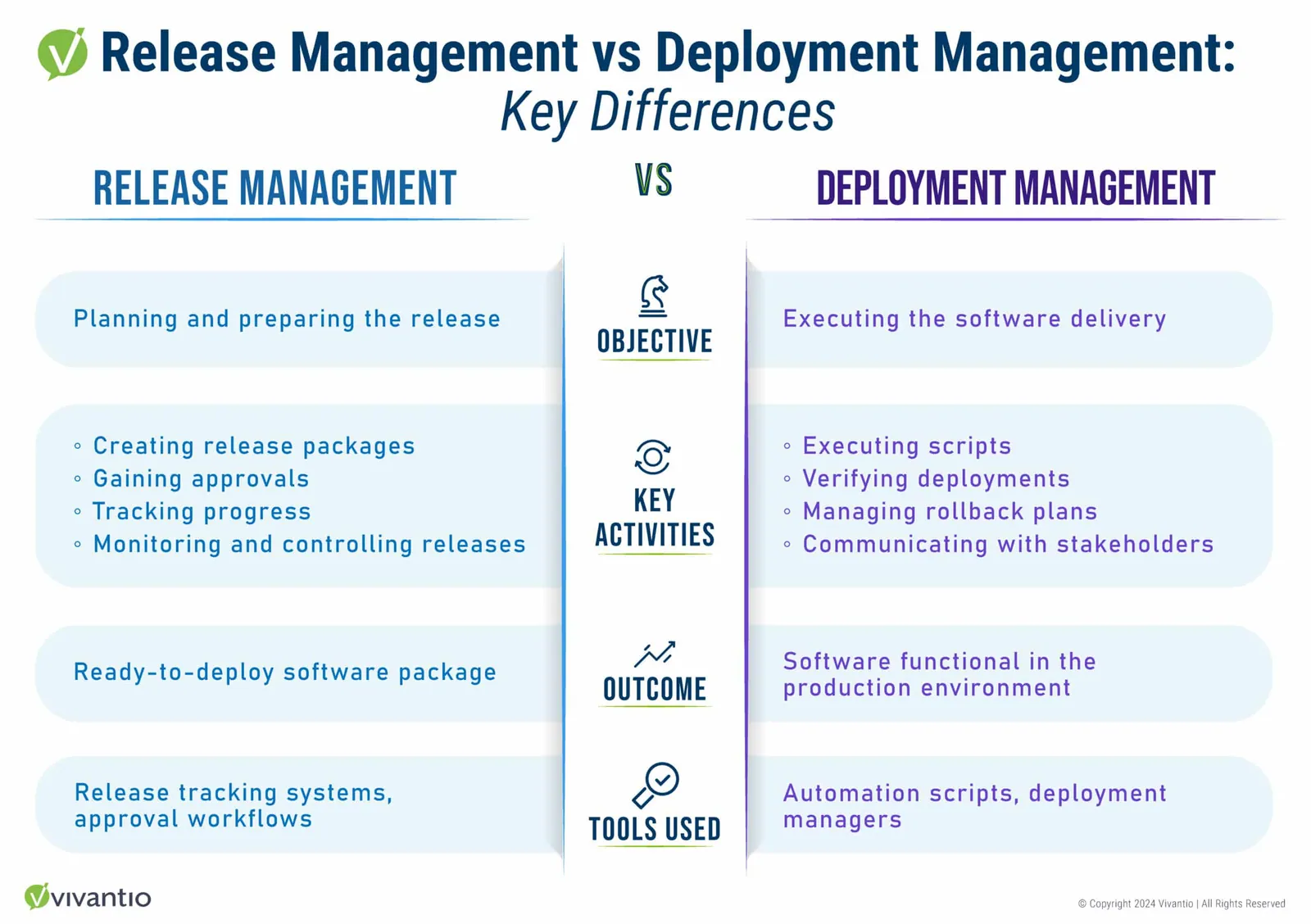
It’s important to know the difference between deployment and release in ITIL 4. Release management and deployment management have different goals and tasks.
Release management focuses on release planning vs deploying software. It includes making release packages, tracking progress, and getting all needed approvals. The main steps are:
- Planning and scheduling releases
- Creating and assembling release packages
- Gaining necessary approvals
- Monitoring and controlling the release
Deployment management, on the other hand, deals with putting the software into action. It uses deployment scripts to make sure the software works right. The steps are:
- Executing deployment scripts
- Verifying deployment completion
- Managing rollback plans if necessary
- Communicating with stakeholders
Release and deployment have different goals and results. Release management gets the software ready, while deployment makes it work in production. A good release and deployment
Enhance Your Release and Deployment Management with Vivantio
Release and deployment management are critical components of ITIL 4, designed to streamline software delivery and improve service quality. However, achieving these goals requires the right tools to ensure smooth transitions and minimize risks. That’s where Vivantio comes in.
With Vivantio’s advanced ITSM platform, you can simplify and enhance both release and deployment management processes. Our tools are built to support ITIL 4 principles, ensuring your team can deliver reliable, frequent updates while maintaining system stability and improving user satisfaction.
Take the Next Step in Improving Your Release and Deployment Management with Vivantio
Vivantio’s feature-rich ITSM platform empowers your team to:
- Optimize Release Management: Plan, track, and monitor releases with streamlined workflows and automated approval processes to ensure readiness and success.
- Simplify Deployment Management: Use automation and real-time insights to execute deployments smoothly, verify completion, and implement rollback plans when needed.
- Break Down Team Silos: Enable seamless collaboration between development, operations, and service teams to reduce errors and increase agility.
- Leverage Advanced Reporting: Gain actionable insights into release and deployment performance to identify areas for improvement and continuously enhance service delivery.
Get Started Today
- Schedule a Free Consultation: Learn how Vivantio can transform your release and deployment management processes.
- Request a Personalized Demo: See how Vivantio’s ITSM platform can help your organization achieve efficient and reliable software delivery.
Empower your team with the tools to execute effective release and deployment management. Choose Vivantio to simplify your ITSM journey and drive success.
Read more
Browse all resources

Ready to see it?
See Vivantio in action
Step your team up to real service management, without the leap to enterprise. Get a walkthrough tailored to your workflows.