






ITIL Change Management Best Practices: Key Tips
Discover how ITIL change management best practices can streamline your IT processes and reduce service disruptions. Learn how to establish a Change Advisory…

Jump to section
Introduction
Did you know companies with good change management do 6 times better? (WorldMetrics)(Prosci) This statistic highlights the critical role that ITIL change management best practices play in driving business success. A structured change management process not only helps in reducing risks and improving services but also enhances overall service management implementation, making transitions smoother and more effective.
By mastering these best practices, your company can effectively manage change and optimize its service management capabilities. Whether you’re looking to streamline processes or increase organizational agility, ITIL provides valuable guidance. Let’s dive into the main components of successful change management and explore how they can be integrated into your company’s service management strategy to drive resilience and growth.
Understanding the ITIL Change Management Process
By following the ITIL change management process, companies can ensure that changes align with business and client objectives, maintaining the stability of IT services. This approach not only reduces the risk of unplanned outages but also supports continuous improvement, adherence to Service Level Agreements (SLAs), and enhanced business agility. Effective change management helps organizations and service providers meet their commitments by minimizing disruptions, ensuring timely implementations, and maintaining service quality.
Key Benefits of ITIL Change Management:
- Improved Risk Management: By evaluating the potential impact and risk of proposed changes before implementation, organizations can reduce the likelihood of failures and ensure a smoother transition.
- Enhanced Communication and Collaboration: The process requires collaboration between IT, business stakeholders, and other departments, ensuring that everyone is informed and on the same page about upcoming changes.
- Alignment with Business and Client Objectives: ITIL change management ensures that all changes support business and client goals, providing a structured framework for assessing the impact on business operations and customer satisfaction.
- Increased Agility and Flexibility: A well-defined change management process allows organizations and service providers to respond more quickly to changing business needs, regulatory requirements, or technological advancements.
- Audit and Compliance Support: Documenting changes and following a standardized process helps organizations and service providers meet regulatory compliance, provides an audit trail for review and analysis, and ensures that SLA requirements are consistently met.
- Continuous Improvement: Regularly reviewing and refining the change management process allows for ongoing optimization, improving the efficiency and effectiveness of IT services over time.
Having a sound change management process ensures service delivery meets both internal standards and client expectations, ultimately fostering trust and long-term business relationships.
What is Change Management?
Change management controls and manages changes in IT environments by ensuring that any adjustments to systems, processes, or services are implemented in a structured and controlled manner. It involves several key activities, including:
- Planning: Identifying and preparing for potential changes, assessing their impact, and defining the necessary steps and resources required for a successful implementation.
- Coordinating: Collaborating with different stakeholders, such as IT teams, business units, and management, to schedule and communicate changes, minimizing disruptions and conflicts with ongoing operations.
- Assessing and Approving: Evaluating change requests based on their impact, urgency, and alignment with business objectives. This process often involves a Change Advisory Board (CAB) to provide oversight and decision-making authority.
- Implementation and Testing: Executing changes in a controlled environment, testing them thoroughly to ensure they work as intended, and do not negatively impact other systems or services.
- Documentation and Monitoring: Recording all change activities, outcomes, and lessons learned, which is crucial for compliance, audits, and future reference. Monitoring post-implementation to detect any issues or deviations from expected performance.
Change management helps companies adapt to new technologies and business requirements while minimizing risks and ensuring smooth operations. By having a structured approach, organizations can reduce downtime, maintain service quality, and support business agility. This process is integral to IT Service Management (ITSM) frameworks like ITIL, which provide best practices for managing IT services.
Key Components of the Change Management Process
Knowing the key parts of the ITIL change management process is vital. These parts include:
- Request for Change (RFC): The first step, outlining the proposed change.
- Assessment: Checking how the change affects current services and processes.
- Authorization: Getting approval from key stakeholders before making changes.
Communication: Keeping everyone updated on the change’s status and progress.
| ### Key Component | ### Description |
|---|---|
| Request for Change (RFC) | A formal proposal for a change to be considered. |
| Assessment | A process that estimates the potential impact and risk associated with the change. |
| Authorization | Formal consent from management to proceed with the change. |
| Communication | The process of informing stakeholders about the change and its implications. |

ITIL Change Management Best Practices
Using effective change management practices can make your organization more adaptable, resilient, and efficient in delivering high-quality services. The process doesn’t have to be complicated. By focusing on three straightforward steps, you can significantly improve not only your change processes but also your overall service management capabilities, ensuring that changes are implemented seamlessly and in alignment with business goals:
- Establishing a Change Advisory Board (CAB): Create a team of key stakeholders to review and approve change requests. This helps ensure that changes are aligned with business objectives and reduces the risk of negative impacts.
- Documenting Change Requests: Implement a standardized process for submitting and tracking change requests. Clear documentation ensures transparency and accountability, making it easier to assess, prioritize, and manage changes effectively.
- Setting Up a Change Schedule: Develop a clear schedule for implementing changes, including timelines and key milestones. This helps coordinate efforts, minimizes service disruptions, and keeps all stakeholders informed and prepared.
By focusing on these essential steps, you can simplify your change management process, reduce disruptions, and enhance overall service delivery.
| ### Best Practice | ### Description | ### Benefits |
|---|---|---|
| Establishing CAB | A team that evaluates and approves changes. | Diverse perspectives, reduced risk of negative impact. |
| Documenting Change Requests | Creating a clear record of all change proposals. | Enhanced tracking, improved communication. |
| Setting Up a Change Schedule | A structured timeline for implementing changes. | Minimized disruption, optimized resource allocation. |
Types of Change in ITIL
Understanding the different types of change in ITIL is essential for implementing effective change management best practices and optimizing overall service management. ITIL categorizes changes into standard, emergency, and major types, each requiring a unique approach to ensure successful implementation and minimal disruption to IT services. Effectively managing these changes is crucial for maintaining service quality, meeting SLAs, and supporting business objectives.
Standard Changes vs. Emergency Changes:****
Standard changes are low-risk, pre-approved changes that follow a predefined procedure. They are often routine, such as password resets or software updates, and can be implemented quickly with minimal oversight. These changes are streamlined within the service management framework to ensure efficiency without compromising service stability. Emergency changes, on the other hand, demand immediate action due to their potential to significantly impact services and operations. While it’s crucial to act swiftly in emergency situations, maintaining a balance between speed and adherence to structured processes is key to preventing unintended consequences and ensuring service continuity within the broader service management context.
The Major Change Process:****
Major changes involve significant modifications that require extensive planning, coordination, and approval. These changes often have a broad impact, such as implementing new technology or overhauling key systems, which can affect multiple service management processes. Managing major changes effectively is critical to avoiding disruptions and achieving strategic goals. This process typically involves thorough risk assessment, stakeholder engagement, and meticulous planning to ensure that all potential impacts on service management are considered and mitigated.
Managing Different Types of Changes:****
A comprehensive change management strategy must address all types of changes within the service management ecosystem. Establishing a Change Advisory Board (CAB) to review and approve change requests, documenting each change thoroughly, and scheduling changes appropriately are essential steps in managing changes effectively. Training staff and using ITIL-compliant tools can further streamline the process, helping organizations handle all types of changes with confidence and efficiency. Integrating these practices into the service management framework allows for seamless transitions and minimized service disruptions.
Incorporating these ITIL change management best practices enables businesses to align their change processes with business objectives, SLAs, and overall service management goals. This alignment reduces service disruptions and enhances service delivery, making organizations more resilient and adaptable in their IT environments. By mastering these concepts, businesses can build a robust service management capability that supports both operational stability and strategic growth, positioning them for long-term success in a rapidly evolving technological landscape.
Implementing Change Successfully
Changing things in the ITIL framework needs a solid plan. You can make changes smoothly by following a few steps. This helps avoid problems during the change. Here are the main steps to keep in mind:
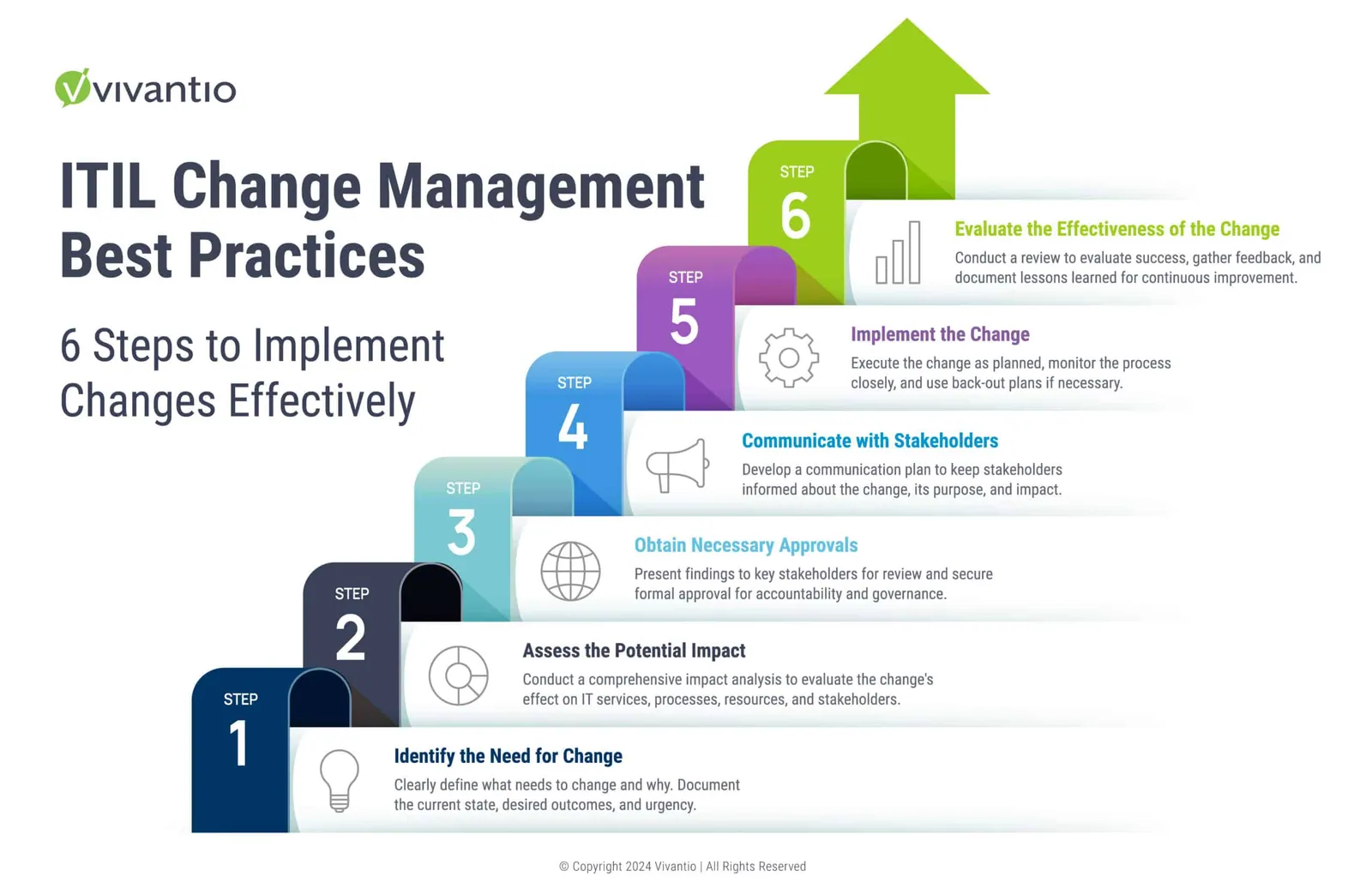
6 Steps to Implement Changes Effectively
Implementing changes effectively in an IT environment requires a structured approach to minimize risks and ensure successful outcomes. Each step in the change management process is crucial for maintaining service stability and achieving business objectives. Here are the detailed steps to guide you through the process:
- Identify the Need for Change
Begin by clearly defining what needs to change and why. This could be driven by various factors such as business goals, customer feedback, regulatory requirements, or technological advancements. It’s important to document the current state, articulate the desired outcome, and assess the urgency of the change. Understanding the root cause and the objectives helps in aligning the change with overall business strategy and ensures that the change is necessary and justified. - Assess the Potential Impact
Conduct a comprehensive impact analysis to understand how the proposed change will affect different parts of the organization. This includes evaluating the potential impact on IT services, processes, resources, and stakeholders. Use tools like a risk matrix to quantify the severity and likelihood of potential issues. This step helps in identifying any dependencies, risks, or conflicts that need to be addressed before proceeding. It’s also a good opportunity to develop a mitigation plan for any identified risks. - Obtain Necessary Approvals
Once the impact has been assessed, present the findings to key stakeholders for review. This is where the Change Advisory Board (CAB) or a similar body comes into play. They will evaluate the proposed change based on the risk assessment, resource availability, and alignment with business objectives. Securing formal approval is crucial to ensure that all parties are aware of the change and agree on the plan moving forward. This step also establishes accountability and governance over the change process. - Communicate with Stakeholders
Effective communication is critical to the success of any change initiative. Develop a communication plan to keep all stakeholders informed about the change, its purpose, timelines, and potential impact. This includes IT teams, end-users, and business units. Use multiple channels such as emails, meetings, and dashboards to ensure that everyone understands their role and what to expect. This step helps in managing expectations, reducing resistance, and preparing everyone for the upcoming changes. - Implement the Change
Execute the change as planned, following the detailed implementation steps outlined during the planning phase. It’s essential to carry out the change in a controlled environment, such as a test environment, before deploying it to the live environment. Ensure that all necessary resources and personnel are available and prepared. Throughout the implementation, monitor the process closely to identify and resolve any issues promptly. Use back-out plans if needed, to revert to the previous state in case of failure. - Evaluate the Effectiveness of the Change
After implementation, conduct a thorough review to evaluate the success of the change. Gather feedback from stakeholders, analyze performance data, and compare the outcomes with the expected results. This step helps in identifying what worked well and what didn’t, providing valuable insights for future changes. Document lessons learned and update change management procedures accordingly. Continuous evaluation and improvement are key to refining the change management process over time.
Embracing these best practices in ITIL change management is a critical step toward building a resilient and adaptable IT environment that supports both operational excellence and strategic growth.
Tools for Driving Successful Change Initiatives
Effective ITIL change management best practices require the right strategies, tools, and mindset to align changes with organizational goals and minimize disruptions. For businesses seeking a comprehensive and tailored solution that integrates seamlessly with their service management needs, Vivantio stands out as an exceptional IT service management (ITSM) platform. Vivantio offers robust support for change management initiatives, ensuring that organizations can manage change processes efficiently and effectively.
Vivantio’s platform excels in automating workflows, centralizing change requests, and providing real-time visibility into the change lifecycle. This comprehensive approach helps businesses maintain service stability, adhere to SLAs, and support continuous improvement—all key components of successful change management.
Ready to Elevate Your Change Management Process?
If you’re looking to enhance your ITSM capabilities and streamline your change management processes, Vivantio is here to help. Our platform offers the tools and support you need to achieve operational excellence and drive successful change initiatives.
Schedule a Free Consultation:
Discuss your unique change management needs with our experts and explore how Vivantio’s solutions can help you align changes with your business goals, reduce service disruptions, and improve IT service delivery.
Request a Personalized Demo:
Experience firsthand how Vivantio can transform your change management process with features like:
- Centralized Change Management: Manage all change requests from a single, unified platform, ensuring consistency and transparency.
- Automated Workflows: Reduce manual effort and accelerate change implementation with automated approval processes and notifications.
- Real-Time Reporting and Analytics: Gain valuable insights into change performance and identify areas for improvement with comprehensive reporting tools.
- Seamless Integration: Integrate change management with other ITSM processes to ensure a holistic approach to service management.
With Vivantio, you can simplify the complexities of change management, enhance your service management capabilities, and achieve both technical excellence and business agility.
Contact us today to learn how our platform can help you manage change confidently and effectively, enabling your organization to stay resilient and responsive in an ever-evolving IT landscape.
Read more
Browse all resources
Ready to see it?
See Vivantio in action
Step your team up to real service management, without the leap to enterprise. Get a walkthrough tailored to your workflows.