






What is Incident Management and How Do Incident Management Systems Work?
Discover the critical role of incident management in IT service management. Learn how an effective incident management system can minimize disruptions,…

Jump to section
Introduction
Disruptions in an IT landscape are inevitable. Whether it’s a system crash, a cybersecurity breach, or a service outage, the ability to respond swiftly and effectively is critical. This is where incident management comes into play—a structured approach to restoring normal service operations as quickly as possible while minimizing the impact on business operations.
Understanding Incident Management: Effective ITSM
Incident management is a process within the broader framework of IT Service Management (ITSM) that focuses on managing incidents—unplanned interruptions or reductions in the quality of IT services. It involves detecting, logging, categorizing, prioritizing, responding to, and resolving incidents through the service desk to ensure minimal disruption to business operations.
The incident management process is the backbone of effective IT service management, with the service desk playing a crucial role in ensuring that any disruption to IT services is managed efficiently. A well-implemented incident management system, supported by a responsive service desk, can drastically reduce downtime, improve service quality, and enhance customer satisfaction.
The Incident Management Lifecycle
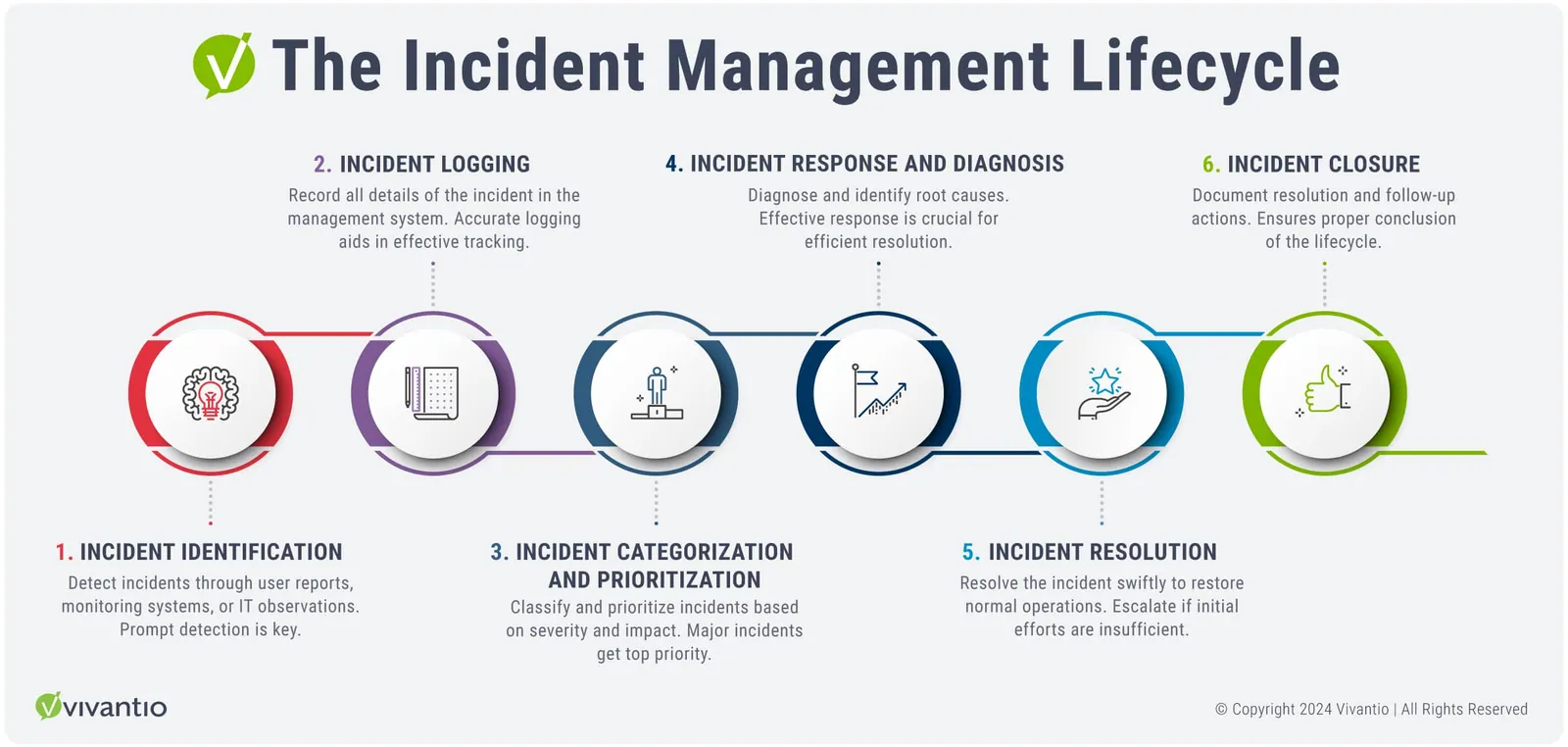
The incident management lifecycle comprises several stages, each designed to streamline the process of incident management from identification to resolution:
- Incident Identification: The process begins when an incident occurs, identified through user reports, automated monitoring systems, or IT staff observations. Incident detection is crucial to ensuring that incidents are addressed promptly.
- Incident Logging: Once identified, the incident is logged in an incident management system. This record includes all relevant details, such as the nature of the incident, affected services, and the severity of the disruption. Log an incident accurately to facilitate incident tracking throughout the process.
- Incident Categorization and Prioritization: Incidents are categorized based on their nature and prioritized according to their severity and impact on business operations. Incident prioritization ensures that major incidents causing significant disruption are handled with the highest priority.
- Incident Response and Diagnosis: The incident management teams then diagnose the incident, identifying the root cause and determining the appropriate response. The approach to incident management at this stage is critical in ensuring that every incident is resolved efficiently.
- Incident Resolution: The goal is to resolve an incident as quickly as possible, restoring normal service operations. This step may involve escalate the incident if the initial response is insufficient to address the problem.
Incident Closure: Once the incident is resolved, it is formally closed. The incident has been closed once documentation of the resolution and any follow-up actions needed to prevent similar incidents in the future are completed. This ensures that the incident management life cycle is properly concluded.
Types of Incident Management
Incident management isn’t a one-size-fits-all approach. There are different types of incident management tailored to specific needs and scenarios, and understanding these can help in creating an effective incident management process.
- Proactive Incident Management: This type of incident management involves anticipating and preventing incidents before they occur. By monitoring systems for potential threats and taking preemptive action, organizations can reduce the likelihood of a service interruption. Proactive management ensures that incident is a single step in a broader incident response and management strategy, aiming to prevent incidents throughout the incident lifecycle.
- Reactive Incident Management: In contrast, reactive incident management focuses on responding to incidents after they have occurred. It involves quickly restoring services and minimizing the impact on the organization. Reactive approaches require the ability to resolve the incident efficiently once the incident is identified. Effective incident communication is crucial in this type, ensuring all stakeholders are informed during the event of an incident.
- Security Incident Management: A specialized form of incident management, this type deals specifically with cybersecurity incident management, such as data breaches or hacking attempts. This approach includes a rapid organization’s incident response to mitigate the threat and secure the IT infrastructure. Security incident management is an essential part of the service that focuses on protecting the organization’s data and systems from cyber threats.
In all these types, incident management is the process that underpins successful IT operations, with roles and practices designed to handle the various stages of an incident from identification to closure. Whether responding to an incident, preventing one, or securing the system after a breach, understanding the processes for incident management is key to maintaining high service levels and minimizing disruptions.

The ITIL Framework and Best Practices in Incident Management
The IT Infrastructure Library (ITIL) is a widely accepted framework for ITSM that provides best practices for managing IT services. Within the ITIL framework, incident management is a critical process that ensures service quality and business continuity.
ITIL incident management emphasizes the importance of restoring normal service operations as quickly as possible while minimizing the impact on business operations. It aligns with the broader goals of ITSM, which focus on delivering value to customers through efficient and effective IT services.
Incident Management Best Practices
Implementing best practices in incident management is essential for ensuring a smooth and efficient response to incidents. Here are some key best practices to consider:
- Implement an Effective Incident Management System: An incident management system is essential for tracking and managing incidents. It should be integrated with other ITSM processes, such as problem management and change management, to ensure a holistic approach.
- Automate Where Possible: Automation can accelerate the incident management process by reducing manual tasks and streamlining workflows. Incident management software can automate tasks such as incident logging, categorization, and notification, freeing up IT staff to focus on more complex issues.
- Define Clear Roles and Responsibilities: Establishing custom roles and responsibilities within the incident management team is crucial for ensuring accountability and efficiency. Each team member should know their role in the incident response process.
- Prioritize Incidents Effectively: Not all incidents are created equal. Prioritizing incidents based on their severity and impact on the organization ensures that critical incidents are addressed first.
- Communicate Clearly and Effectively: Communication is key during an incident. Establish clear lines of communication with all stakeholders, including IT staff, management, and end-users, to ensure everyone is informed and aligned.
Continuously Improve the Incident Management Process: Regularly review and update the incident management process to address any gaps or inefficiencies. Use lessons learned from past incidents to improve future responses.
Benefits of Incident Management and the Incident Management Process
Implementing an effective incident management process offers several benefits to an organization:
- Reduced Downtime: A streamlined incident management process minimizes the time it takes to resolve incidents, reducing downtime and its impact on business operations.
- Improved Service Quality: By quickly addressing and resolving incidents, organizations can maintain a high level of service quality, leading to increased customer satisfaction.
- Increased Efficiency: Automation and clear processes improve the efficiency of the IT team, allowing them to handle more incidents in less time.
- Better Resource Management: An effective incident management system helps organizations allocate resources more effectively, ensuring that critical incidents receive the attention they need.
Enhanced Security: A proactive approach to security incident management helps organizations quickly respond to and mitigate cybersecurity threats, protecting sensitive data and IT infrastructure.
Why Is Incident Management Important for Your Organization?
Incident management is important because it ensures that IT services are delivered without disruption, which is critical for business continuity. Effective incident management reduces the impact of disruptions, improves service quality, and enhances customer satisfaction.
Without a proper incident management plan in place, organizations risk prolonged downtime, lost revenue, and damage to their reputation. By implementing best practices and using the right tools, organizations can ensure a swift and efficient response to any incident that may arise.
Incident management is a crucial component of IT service management that focuses on restoring normal service operations as quickly as possible while minimizing the impact on business operations. By following best practices, using effective tools, and continuously improving the process, organizations can ensure that they are well-prepared to handle any incidents that come their way. Whether it’s a security incident, a service disruption, or a system failure, having a robust incident management system in place is essential for maintaining business continuity and delivering high-quality IT services.
Incident Management Tools and Software
To support the incident management process, organizations can utilize specialized tools and software to automate and streamline their approach, ensuring efficient incident handling. One standout solution in this field is Vivantio.
Vivantio offers a comprehensive incident management platform designed to empower organizations with robust features that enhance every stage of the incident management lifecycle. With Vivantio, users can seamlessly log, prioritize, and track incidents, ensuring minimal disruption to business operations. The platform’s automation capabilities accelerate incident resolution, while its integration with other ITSM processes ensures a cohesive and efficient approach to service management. Vivantio is particularly valued for its flexibility, configurability, and the ability to adapt to the unique needs of various organizations. For businesses seeking a powerful, user-friendly incident management solution, Vivantio stands out as a top choice.
Ready to optimize your IT service management with a comprehensive incident management solution?
Contact Vivantio today!
- Schedule a Free Consultation: Discuss your specific needs and explore how Vivantio can enhance your incident management strategy and align IT with your business goals.
- Request a Personalized Demo: Discover how Vivantio‘s incident management solutions can transform your IT operations with:
- Efficient Incident Handling: Streamline the entire incident management lifecycle, from identification and logging to resolution and closure.
- Automated Incident Resolution: Leverage automation to accelerate incident response, reduce downtime, and minimize business disruption.
- Enhanced Incident Tracking: Utilize advanced tracking features to monitor incidents in real-time, ensuring timely updates and resolution.
- Integrated ITSM Processes: Benefit from seamless integration with other ITIL processes, enhancing overall IT service management and coordination.
- Proactive Incident Management: Implement best practices for proactive incident management to anticipate and prevent disruptions before they impact your operations.
With Vivantio‘s expertise in incident management, you can achieve operational excellence and ensure a resilient, responsive IT environment.
Frequently Asked Questions About Incident Management
__&#xNAN;Q: What’s the difference between incident management and problem management?
A: While incident management focuses on restoring service as quickly as possible, problem management digs deeper to identify and eliminate root causes of recurring incidents. For example, if multiple users report the same software crash, incident management resolves each ticket to restore access. Problem management, on the other hand, investigates why the crashes are happening in the first place—and initiates a longer-term fix.
Want a deeper look at how to scale from reactive to proactive support? Watch how Vivantio connects incidents to problem management →
__&#xNAN;Q: How do I choose the right incident management system for my organization?
A: Choosing the right system depends on your team size, service volume, and existing tech stack. Look for features like:
-
Automated routing and categorization
-
Role-based agent views
-
SLA tracking and escalation workflows
-
Self-service portals and knowledge base integration
-
ITIL-aligned capabilities like change and problem management
A good system scales with you—and simplifies your processes, not adds complexity.
Explore our guide to incident management ticketing systems →
__&#xNAN;Q: When should an incident be escalated—and to whom?
A: Not all incidents require escalation, but you should escalate when:
-
The issue exceeds a frontline agent’s expertise or authority.
-
SLAs are at risk of breach.
-
There are signs of a wider underlying issue (e.g., affecting multiple users or systems).
Escalation can go to technical specialists, problem managers, or senior support staff depending on your team’s structure.
Learn how to structure your team for effective triage and escalation in this guide →
__&#xNAN;Q: What role does automation actually play in the incident lifecycle?
A: Automation enhances nearly every stage of incident management. For example:
-
Auto-logging tickets from user emails or portal submissions
-
Auto-routing based on category, location, or priority
-
Auto-notifications to update users and stakeholders
-
Trigger-based workflows for escalations or status changes
This not only saves time but reduces human error and boosts resolution speed.
See examples of how automation improves service quality →
Read more about incident management automation →
__&#xNAN;Q: How can I tell if our incident management process is working effectively?
A: Look at these key performance indicators (KPIs):
-
First-Time Resolution Rate (FTR)
-
Mean Time to Resolution (MTTR)
-
Ticket backlog trends
-
SLA compliance rates
-
Customer Satisfaction (CSAT) scores
If you’re missing these metrics—or unsure how you’re performing—you may need to assess your process.
Use this quick scorecard to evaluate where you stand and where to improve.
Try the Incident Management Maturity Scorecard →
Read more
Browse all resources

Ready to see it?
See Vivantio in action
Step your team up to real service management, without the leap to enterprise. Get a walkthrough tailored to your workflows.