ITSM Framework: A Service Management System

Introduction
An IT Service Management (ITSM) framework is essential for ensuring your IT services operate efficiently. It helps align IT services with business goals, enhances overall performance, and improves the customer experience by providing reliable and responsive support. Using a strong service management system helps your IT match your business goals. It also makes your operations more efficient and flexible.
Implementing a robust service management system enables your IT infrastructure to adapt more efficiently to evolving business needs. ITSM frameworks refine service delivery and support, optimizing the functionality of your service desk, which in turn enhances both customer and employee satisfaction. Additionally, these frameworks provide clear insights into IT processes, facilitating continuous improvement and operational efficiency.
With these benefits, your business can grow and adapt to new challenges.
Understanding the ITSM Framework
The ITSM framework is a set of practices aimed at improving IT service management in organizations. It ensures IT services meet business needs, boosting efficiency and quality and addresses several key pain points in IT service management by offering structured practices and solutions. Here’s how it helps:
- Inefficient Service Delivery: Without a framework, IT services can be inconsistent and slow. ITSM practices standardize processes, which leads to more reliable and timely service delivery, reducing downtime and enhancing productivity.
- Misalignment with Business Goals: IT services may not always align with the strategic objectives of the organization. ITSM frameworks ensure that IT initiatives are closely aligned with business goals, improving overall strategic cohesion and effectiveness.
- Poor Customer Satisfaction: Unresponsive or inadequate IT support can lead to dissatisfied customers. ITSM frameworks enhance the quality of service delivery by implementing best practices and standardized procedures, improving customer satisfaction through consistent and effective support.
- Lack of Visibility and Control: Organizations often struggle with limited visibility into IT processes and performance. ITSM frameworks provide a clear view of IT operations, including service performance and incident management, which helps in better decision-making and improved management control.
- High Operational Costs: Inefficient processes and resource management can drive up costs. ITSM practices focus on optimizing resource use and streamlining operations, which can lead to cost savings and better management of IT resources.
- Frequent Incidents and Problems: Recurrent IT issues can disrupt business operations. ITSM frameworks implement structured incident and problem management processes to quickly address and resolve issues, reducing the frequency and impact of IT disruptions.
- Inconsistent Quality of Service: Variability in service quality can affect user experience. By standardizing service management practices, ITSM frameworks ensure consistent quality across all IT services, leading to a more reliable and predictable service experience.
- Difficulty in Measuring Performance: Without clear metrics and benchmarks, assessing IT performance can be challenging. ITSM frameworks include performance metrics and reporting tools, making it easier to measure and improve service quality.
- Ineffective Change Management: Poorly managed changes can lead to disruptions and failures. ITSM frameworks provide structured change management processes to ensure that changes are implemented smoothly and with minimal risk.
- Lack of Knowledge Management: Unstructured knowledge management can result in inefficiencies and repeated issues. ITSM frameworks include knowledge management practices to capture and utilize information effectively, reducing the need for repeated problem-solving and improving service efficiency.
By addressing these pain points, ITSM frameworks help organizations improve their IT service management, leading to enhanced efficiency, better alignment with business goals, and higher overall service quality.
Definition and Overview
ITSM stands for Information Technology Service Management. It covers all processes and practices for designing, delivering, managing, and improving IT services. The goal is to align IT services with business goals.
Core Components of ITSM Framework
An effective ITSM framework has key components. These help IT departments manage their tasks well. The main parts are:
- Service Strategy: Sets strategic goals and plans.
- Service Design: Designs quality IT services for business needs.
- Service Transition: Makes sure new or changed services work smoothly.
- Service Operation: Manages daily operations to deliver services well.
- Continual Service Improvement: Improves service quality by assessing and improving it.
ITSM Software and Tools
To maximize the benefits of an ITSM framework, businesses often use ITSM software and tools. These tools support various aspects of service management, including service request handling, configuration management, and knowledge management.
Benefits of ITSM Frameworks
Implementing an ITSM framework provides several advantages, including:
- Improved Service Delivery: Ensures high-quality IT services that meet business needs.
- Increased Efficiency: Streamlines IT processes, reducing redundancy and waste.
- Enhanced Customer Satisfaction: Reliable service delivery leads to happier customers.
Better Flexibility: Adapts easily to changing business environments.

-
ITSM Solutions and Methodologies
Various ITSM solutions and methodologies exist to help businesses implement an effective ITSM framework. One popular methodology is the ITIL process. ITIL (Information Technology Infrastructure Library) provides a comprehensive approach to IT service management. Other methodologies include DevOps, which emphasizes collaboration between software development and operations management to enhance service delivery.
Approach to ITSM and Risk Management in Service Management
A proper approach to ITSM involves understanding and mitigating risks associated with IT service delivery. Effective risk management ensures that IT services are reliable and secure, minimizing disruptions to business processes.
Adopting an ITSM framework is essential for businesses looking to enhance their IT service management processes. By aligning IT services with business goals, improving efficiency, and utilizing advanced ITSM tools, organizations can achieve significant operational improvements. Whether considering ITIL or other management frameworks like DevOps, understanding their unique advantages will help make informed decisions for business success.
Benefits of Implementing ITSM Framework for Enterprise Service
Using an ITSM framework in your company brings big benefits to IT operations. These benefits help improve processes, boost business efficiency, and lead to success.
Improved Service Delivery and Support in Service Management
ITSM makes service delivery and support better. Standardized processes mean service providers can give consistent, high-quality IT services. This makes services reliable, on time, and meet business needs. It cuts downtime and increases productivity.
Enhanced Customer Satisfaction with a Service Desk
ITSM also means happier customers. It makes service delivery better, solving user problems fast and well. This makes users, inside and outside the company, more satisfied. It builds stronger customer relationships and loyalty.
Efficient Resource Management with a Service Catalog
ITSM helps manage resources well by using technology and people smartly. It plans and reviews to make sure resources are used right, cutting waste and costs. This leads to better incident management, fixing problems fast and using resources wisely.
Here’s a table showing the main benefits in different areas:
Area |
Benefit |
|---|---|
| Service Delivery | Consistency and reliability in IT services |
| Customer Satisfaction | Improved response times and issue resolution |
| Resource Management | Optimal use of technological and human assets |
| Incident Management | Swift resolution of IT incidents |
Popular ITSM Frameworks Explained
Frameworks can be key for their usefulness and help in improving IT service delivery. Knowing about these frameworks helps companies pick the best one for their needs and IT plans.
ITIL: The Backbone of Service Management Frameworks
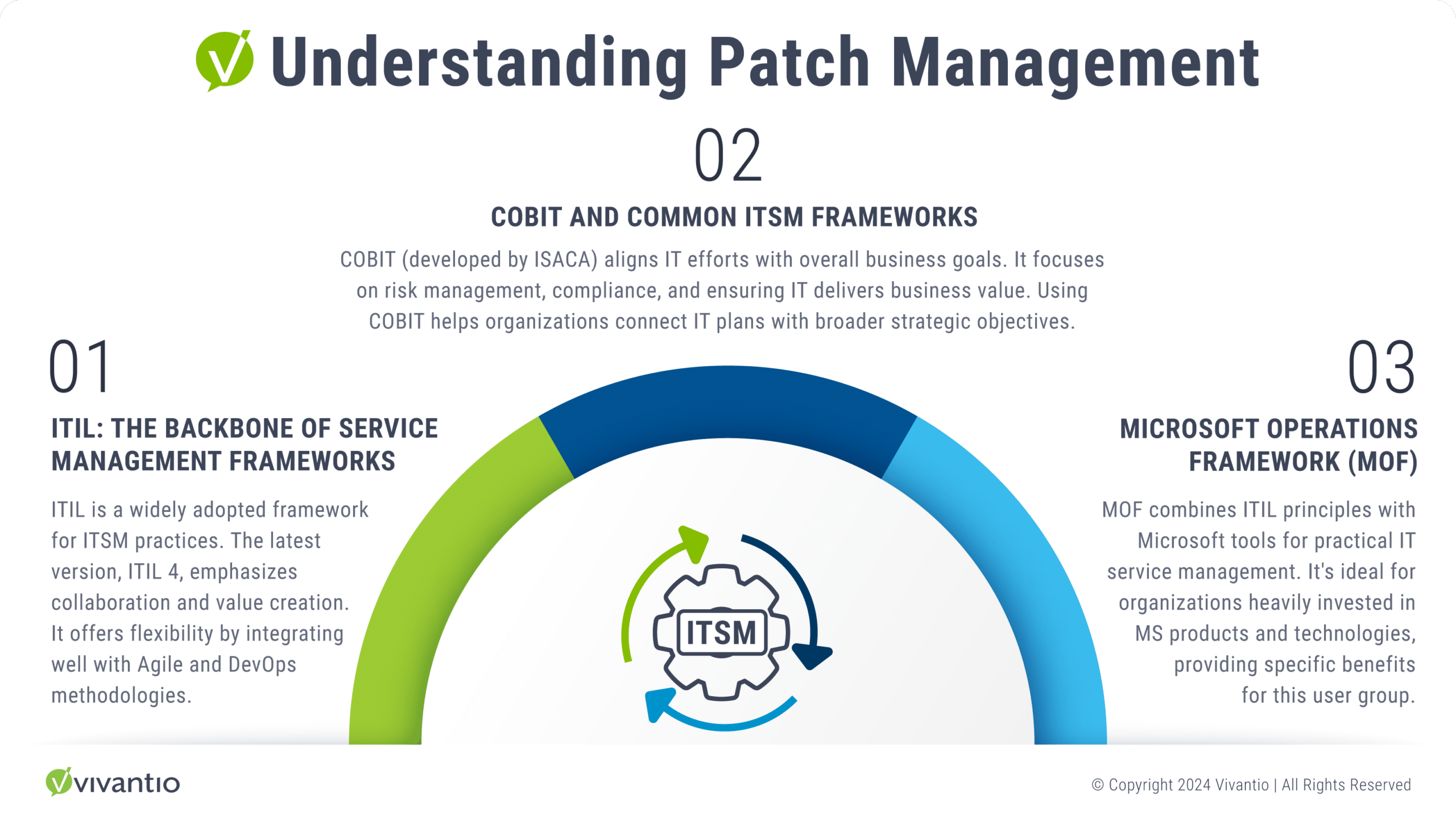
The information technology infrastructure library (ITIL) is a top choice for ITSM practices. ITIL 4, the newest version, focuses more on working together to create value. It also fits well with Agile and DevOps, making it a flexible option.
COBIT and Common ITSM Frameworks
COBIT, made by ISACA, connects IT efforts with business goals. It manages risk, ensures rules are followed, and makes sure IT brings value to the business. Using COBIT helps companies link their IT plans with their overall business aims.
Microsoft Operations Framework (MOF)
The Microsoft Operations Framework blends ITIL principles with Microsoft tools, offering a hands-on way to manage IT services. It’s great for those using Microsoft products and tech, offering specific benefits for this audience.
These ITSM frameworks explained provide tools and methods to improve IT services. Whether it’s ITIL 4’s all-in-one approach, COBIT’s focus on business goals, or MOF’s practical Microsoft insights, each framework has its own benefits. They can be used to make IT service management better and align IT with business goals.
Key ITSM Processes and Practices
IT Service Management (ITSM) focuses on reliable, efficient, and effective IT services. Mastering key processes is vital for IT teams aiming for top-notch service. Knowing about incident and problem management, change and release management, service level management, and configuration and asset management boosts your team’s efficiency.
Incident and Problem Management in ITIL
Incident management quickly fixes IT issues to lessen their impact on your business. Problem management finds the root causes of incidents to stop them from happening again. These practices keep service quality high and reduce downtime through structured workflows and proactive management.
Change and Release Management for Enterprise Service
Change management controls changes to your IT setup, reducing risks and avoiding disruptions. Release management helps in deploying new or updated IT services smoothly. These processes help your team handle complex environments with confidence and stability.
Service Level Management in Service Catalog
Service level management deals with setting and keeping service level agreements (SLAs) with users. It involves monitoring, reporting, and reviewing IT service performance. Meeting or beating SLA goals boosts customer satisfaction and service quality, aligning IT with business goals.
Configuration and Asset Management
Configuration and asset management track IT assets and their setups to support service management. It includes documenting asset relationships to understand their effect on service delivery. Good asset management gives a clear view of the IT infrastructure, making processes smoother and cutting waste.
Laying the Groundwork for ITSM Success
With a solid grasp of ITSM frameworks, your organization is poised to revolutionize IT service management. By carefully considering your unique business objectives, existing IT infrastructure, and desired outcomes, you can pinpoint the framework that best aligns with your goals. Remember, effective ITSM extends beyond framework adoption. It encompasses seamless integration of project management, a meticulously maintained service catalog, and a steadfast commitment to governance and management.
To truly maximize the potential of your chosen ITSM framework, consider incorporating a robust customer management software solution. By integrating this software, you can streamline processes, enhance customer satisfaction, and gain invaluable insights into service performance.
Unlock the full potential of your IT services with a tailored ITSM strategy. Our Vivantio experts can help you select the right framework, optimize processes, and implement the necessary tools to drive efficiency and innovation.
Let’s get started.
- Schedule a Free Consultation: Discover how our ITSM solutions can align with your business objectives and enhance service delivery.
- Request a Personalized Demo: Experience firsthand how our platform can streamline workflows, improve incident management, and boost overall IT performance.
Together, we can build an ITSM solution that empowers your team and delivers exceptional results.