






What is a Service-Based SLA? Best Practices for Service Providers
Learn what a Service-Based SLA is and how it ensures consistent service delivery across customers. Explore best practices that help service providers build…

Jump to section
What is a Service-Based SLA?
A Service Level Agreement (SLA) is a formal contract between a service provider (or independent software vendor) and the customer that defines the service levels to be delivered. A Service-Based SLA specifically refers to an agreement that covers one standard level of service across all customers receiving that service.
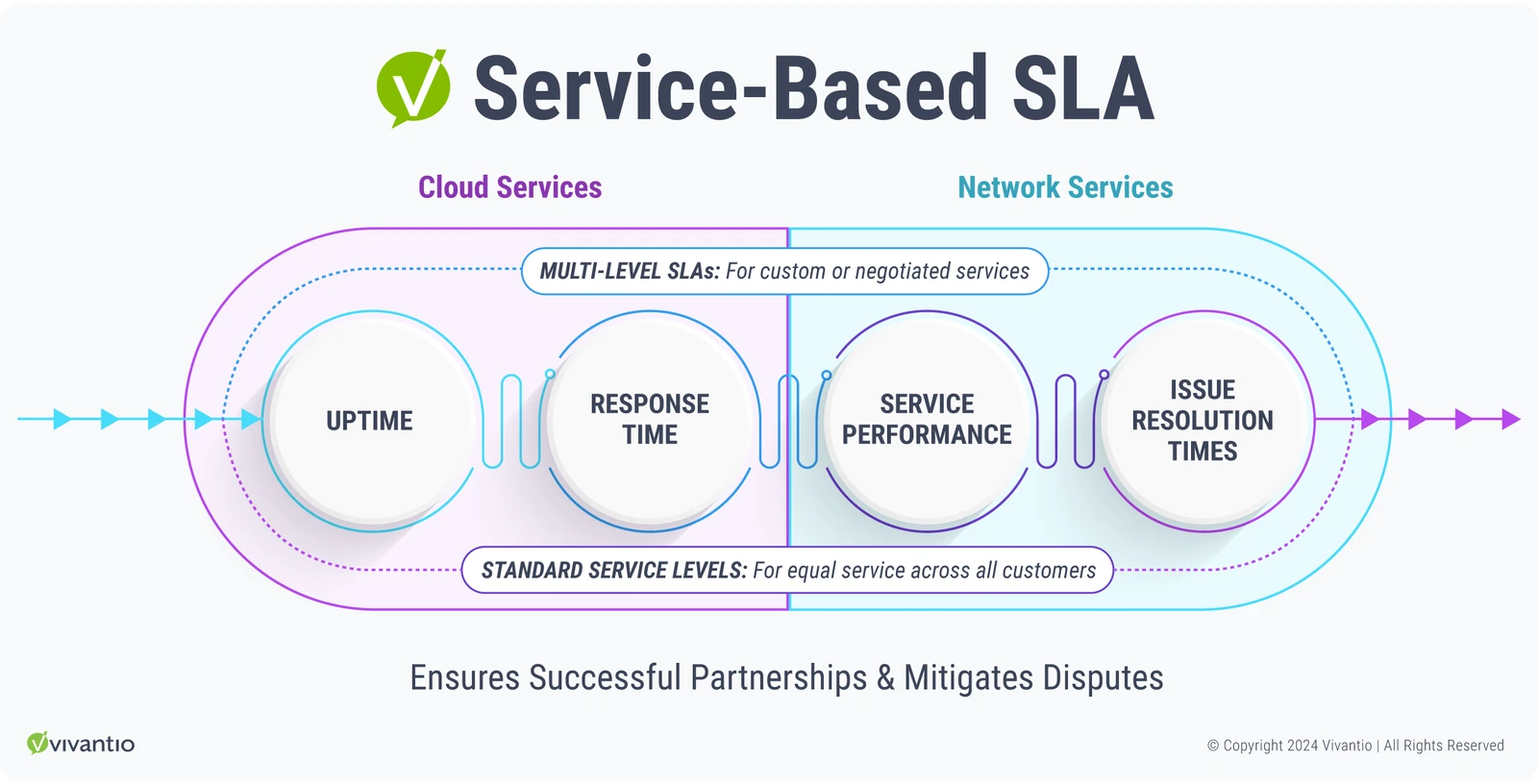
This type of SLA is common in industries where a provider delivers the same service, such as cloud or network services, to multiple clients under similar terms. The SLA ensures that both parties are aligned on expectations for service quality, particularly in industries relying on external providers like cloud or network service providers. SLA obligations help both parties understand their roles within the agreement, reducing the risk of disputes.
A well-crafted SLA establishes key performance metrics such as service performance, uptime, response times, and issue resolution times, ensuring the service provider delivers the agreed-upon level of service. Originally developed for network service providers, SLAs have evolved to cover a wide range of industries, including Software as a Service (SaaS) and other business services. SLA compliance metrics may include standard service levels and key performance indicators (KPIs) to ensure the agreement is met.
Following SLA best practices can help service providers and customers maintain successful partnerships and resolve potential issues before they escalate. The SLA defines ranges that dictate different service levels, allowing the service provider to adjust based on the specific agreement with each client. The agreement overview often highlights the service’s conditions, such as whether the provider offers basic services or more complex, multi-level SLA options that serve multiple business layers.
In some cases, SLAs may involve negotiated agreements where the provider adjusts the service-level SLA based on internal needs. Other SLAs may cover internet service providers or define time service factor metrics that dictate performance. SLA terms can be customized to reflect the level of service expected, whether for a single client or multiple parties.
In case of disputes, the SLA often defines goals and offers protections, including litigation cost coverage for the customer. Overall, an SLA is crucial for establishing trust, ensuring compliance, and delivering the agreed-upon level of service. By adhering to the service delivery expectations outlined in the SLA, both the provider and client can focus on meeting goals and ensuring a successful partnership.
Components of an SLA
Every service-level agreement consists of several essential components that define the relationship between the service provider and its customers. These components include:
- Service Definition: The SLA should clearly define the type of service offered, whether it’s a network service, cloud service, or another specific offering. This ensures both parties understand the scope of the service.
- Agreed-Upon Service Levels: One of the most critical aspects of the SLA is defining the agreed-upon service levels, including availability, uptime, and response times.
- Performance Metrics: SLAs typically include specific metrics the service provider must meet, such as service availability (percentage of time the service is available) and response times to service tickets.
- Terms and Conditions: These outline the legal aspects of the SLA, including limitations, exceptions, and customer agreements.
- Penalties for Non-Compliance: If the provider fails to meet the service levels, the SLA may include remedies like financial credits or penalties.
- Review Periods: Regular review periods ensure the SLA remains relevant and continues to meet evolving business needs. Every SLA should be reviewed annually to address changes in technology or external agreements.

Types of SLAs: Customer-Based, Service-Based, and Multi-Level SLAs
Different types of SLAs cater to varying business needs:
- Customer-Based SLA: Tailored to the specific needs of an individual customer, this SLA defines service levels for all services offered to a particular customer, setting clear expectations.
- Service-Based SLA: Focuses on a specific service rather than an individual customer. For example, it defines performance expectations for a cloud computing or network service that multiple customers use.
- Multi-Level SLA: Incorporates various service levels within a single agreement, covering internal SLAs for teams, external service agreements, and the overall service provided to multiple customers.
SLA Best Practices
To create an effective service-level agreement, it’s essential to follow SLA best practices. These guidelines help ensure that the SLA is fair, measurable, and aligned with the business’s needs. Key SLA best practices include:
- Create an SLA That Defines Clear Expectations: Use an SLA template that clearly outlines the service expected and the level of service that the provider is responsible for.
- Define the Service Provider’s Performance Metrics: Specify measurable benchmarks like uptime, response time, and resolution time. Make sure these metrics align with the service being provided and are realistic for both the client and service provider.
- Ensure Regular Reviews: The SLA should be reviewed regularly to ensure that it continues to meet the changing demands of the customer and the service provider. Changes in technology or business objectives may necessitate updates to the SLA.
- Include Remedies for Non-Compliance: The SLA should include clear consequences for failing to meet the agreed-upon service levels, such as service credits or termination of the contract.
Managing SLA Performance and Compliance
Managing SLA performance is crucial for maintaining a successful relationship between the service provider and a customer. Regular monitoring of SLA metrics ensures that both parties are meeting the established service-levels.
Key strategies for managing SLA performance include:
- Monitor Performance Metrics: Track key indicators such as service availability and response time to identify any potential service failures early.
- Performance Reviews: Conduct regular reviews to assess whether the service provider is meeting the SLA performance goals. These reviews help in identifying areas for improvement.
- Ensure Compliance: Establish clear rules for non-compliance, including financial penalties or service credits if the service provider fails to meet the expected level of service.
- Keep Detailed Records: Document all SLA performance data to track trends and ensure continuous improvement.
The Role of SLAs in Cloud Computing and Network Services
In the context of cloud service providers and network service providers, SLAs are particularly important. As these services are often critical to business operations, a service level agreement ensures that the services provided are reliable, secure, and available.
For instance, in cloud computing, an SLA might specify the service availability percentage to ensure minimal downtime. Likewise, for network services, the SLA could dictate response times for addressing network outages. These agreements protect both the service provider and the customer by clearly outlining what is expected.
The Value of a Well-Defined Service Level Agreement
A well-structured service-level agreement serves as the backbone of successful service management. By clearly defining the service levels, outlining measurable SLA metrics, and including remedies for non-compliance, businesses can ensure smooth interactions with their service providers.
Whether you’re working with cloud service providers, network service providers, or any other type of external service, having a clear service-level agreement in place guarantees that both parties are protected and that services are delivered according to expectations.
By following SLA best practices and conducting regular reviews, businesses can maintain high service standards, ensure compliance, and foster long-term relationships with their service providers.
Call-to-Action: Ready to improve your service agreements and elevate your customer satisfaction? Contact us today to learn more!
-
Schedule a Free Consultation: Let’s discuss how a well-defined Service-Based SLA can enhance your service performance and ensure seamless delivery.
-
Request a Personalized Demo: See how our solutions can help you achieve:
- Consistent Service Delivery: Standardize service levels across all customers to meet expectations.
- Improved Accountability: Track and measure performance with clear SLA compliance metrics.
- Stronger Customer Relationships: Ensure transparency and reliability with well-defined SLAs.
- Reduced Risks: Minimize service disruptions by setting clear expectations and performance thresholds.
By leveraging a robust Service-Based SLA, you can build trust, ensure long-term success, and meet your customers’ evolving needs.
Read more
Browse all resources

Ready to see it?
See Vivantio in action
Step your team up to real service management, without the leap to enterprise. Get a walkthrough tailored to your workflows.