





IT Capacity Management: Optimize Your Tech Resources
Effective IT capacity management helps align technology with business needs, maximizing resource efficiency and reducing waste. Discover the key strategies,…

Jump to section
Introduction
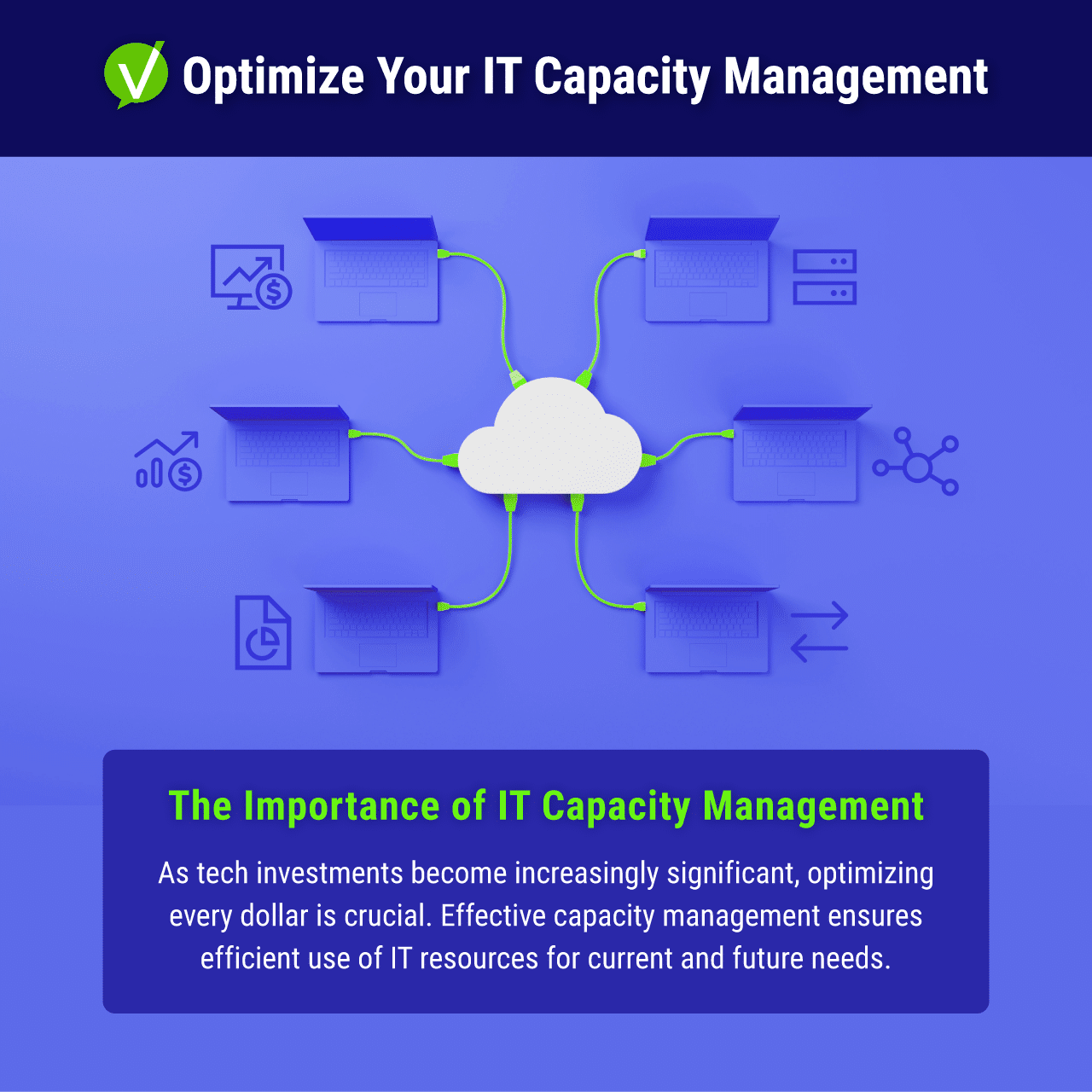
Did you know that nearly 55% of IT leaders say they waste resources because of bad capacity management? Every tech dollar matters in today’s business climate so improving IT capacity management is key. It helps you use your digital assets to their best. This way, you can meet your business needs today and plan for tomorrow’s, keeping your operations efficient and sustainable.
In this article, you’ll learn about the important parts of IT capacity management. You’ll see how good capacity planning can benefit you. And you’ll find out how to make your organization grow smoothly. As technology keeps changing, knowing how to manage resources is crucial for staying ahead.
Understanding IT Capacity Management
Effective IT capacity management is essential for aligning your technology resources with your business needs. By focusing on planning and monitoring, capacity management helps ensure that your IT setup can handle current and future demands efficiently, without excessive costs or operational issues.
Definition and Importance
The capacity management process refers to the systematic approach to managing IT resources, which includes hardware, software, and network infrastructure, to meet both present and anticipated business needs. Successful capacity management and planning mean less downtime, optimized resource usage, reduced financial waste, and improved workflow. With capacity management, senior management can gain a comprehensive view of overall capacity and align technology goals with business objectives.
Components of IT Capacity Management
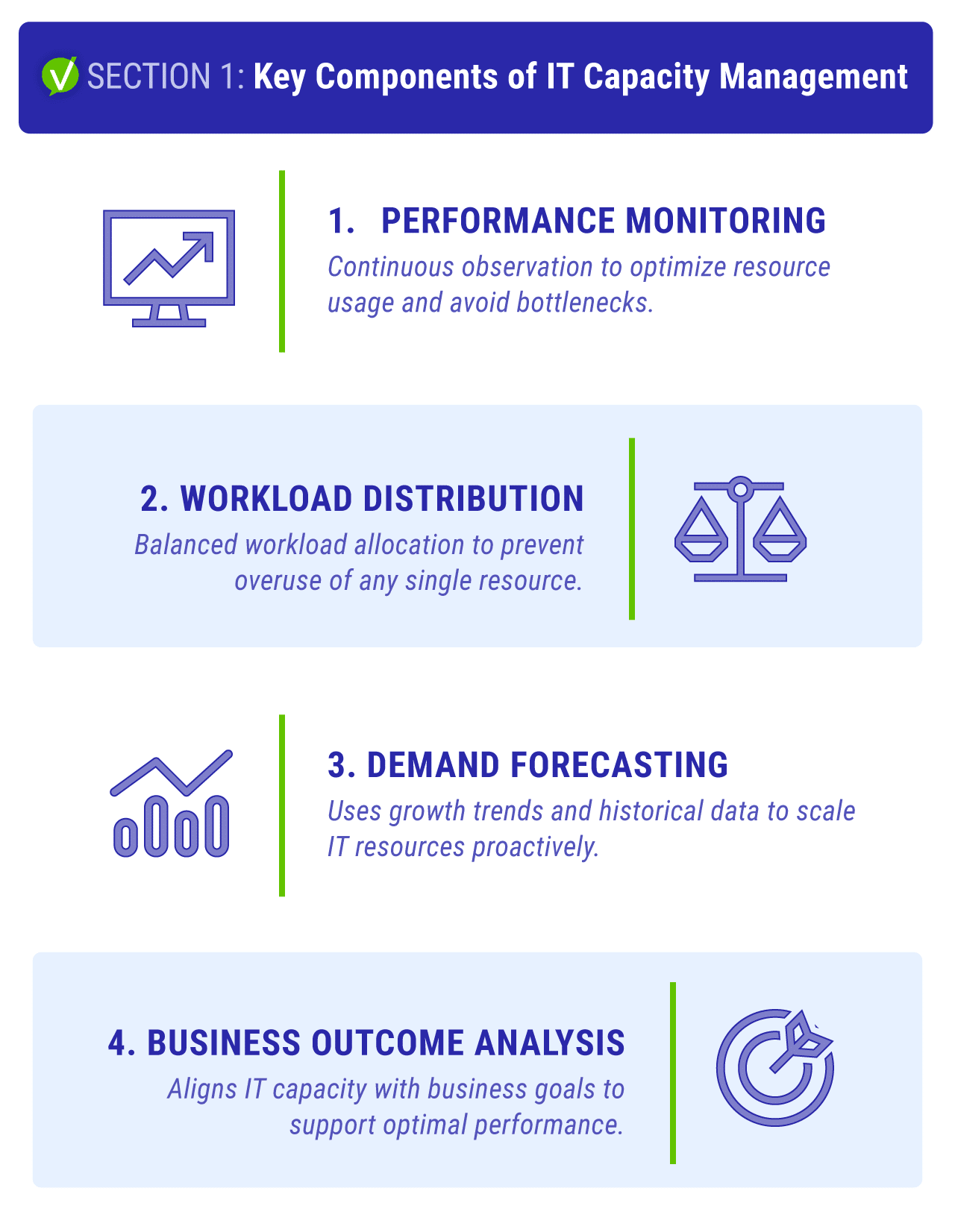
Key components of the IT capacity management process include:
- Performance Monitoring: This aspect of capacity and performance management involves consistently observing how systems operate to ensure that resources are being used efficiently. By regularly monitoring performance, capacity managers can identify capacity gaps and optimize resource allocation to avoid bottlenecks and capacity issues.
- Workload Distribution: Effective resource planning is crucial for spreading workloads across available resources, preventing any one system or network element from becoming overburdened. Capacity management tools help facilitate this by balancing the load to maintain current resource capacity and prepare for future needs.
- Demand Forecasting: A core function of capacity planning is forecasting demand based on expected growth, historical data, and trend analysis. This proactive approach ensures that IT capacity can scale with business expansion and other capacity requirements.
- Business Outcome Analysis: Capacity management must include assessing whether current resource capacities align with business goals. This helps capacity managers to adjust as necessary to maintain sufficient resources for optimal performance.
Current and Future Capacity Needs
To address both current capacity and future capacity needs, IT teams develop a capacity plan that matches business growth expectations. Strategic capacity planning helps organizations maintain enough capacity for smooth operations and scalability while avoiding poor capacity planning pitfalls.
A successful IT capacity planning strategy considers multiple factors:
- Lead and Lag Capacity: Planning for lead capacity involves preparing for higher demand than forecasted, while lag capacity accounts for resources added only as demand increases. Both strategies help manage capacity risk effectively.
- Capacity Adjustments and Gaps: Adjustments ensure that all critical operations run without interruption, addressing potential gaps in capacity before they become an issue.
- Capacity and Financial Management: Capacity planning also includes financial considerations, such as the costs associated with capacity, to maintain an optimal balance between resource availability and budget constraints.
Capacity Management Tools and Practices
Using capacity management tools can streamline the planning process by providing data insights and forecasting capabilities. These tools help with management data collection, overall management of resources, and effective capacity planning.
Capacity planning software can automate much of the process, ensuring that storage capacity, network capacity, and other elements of the IT infrastructure are well-managed and scalable. With dedicated capacity management software, organizations can view associated with capacity metrics, adjust resources as needed, and ensure that their capacity management strategies align with long-term business goals.
Implementing a successful IT Capacity Plan involves comprehensive analysis, continuous monitoring, and the use of capacity management tools to support a resilient and adaptable IT infrastructure.
Benefits of Effective Capacity Management
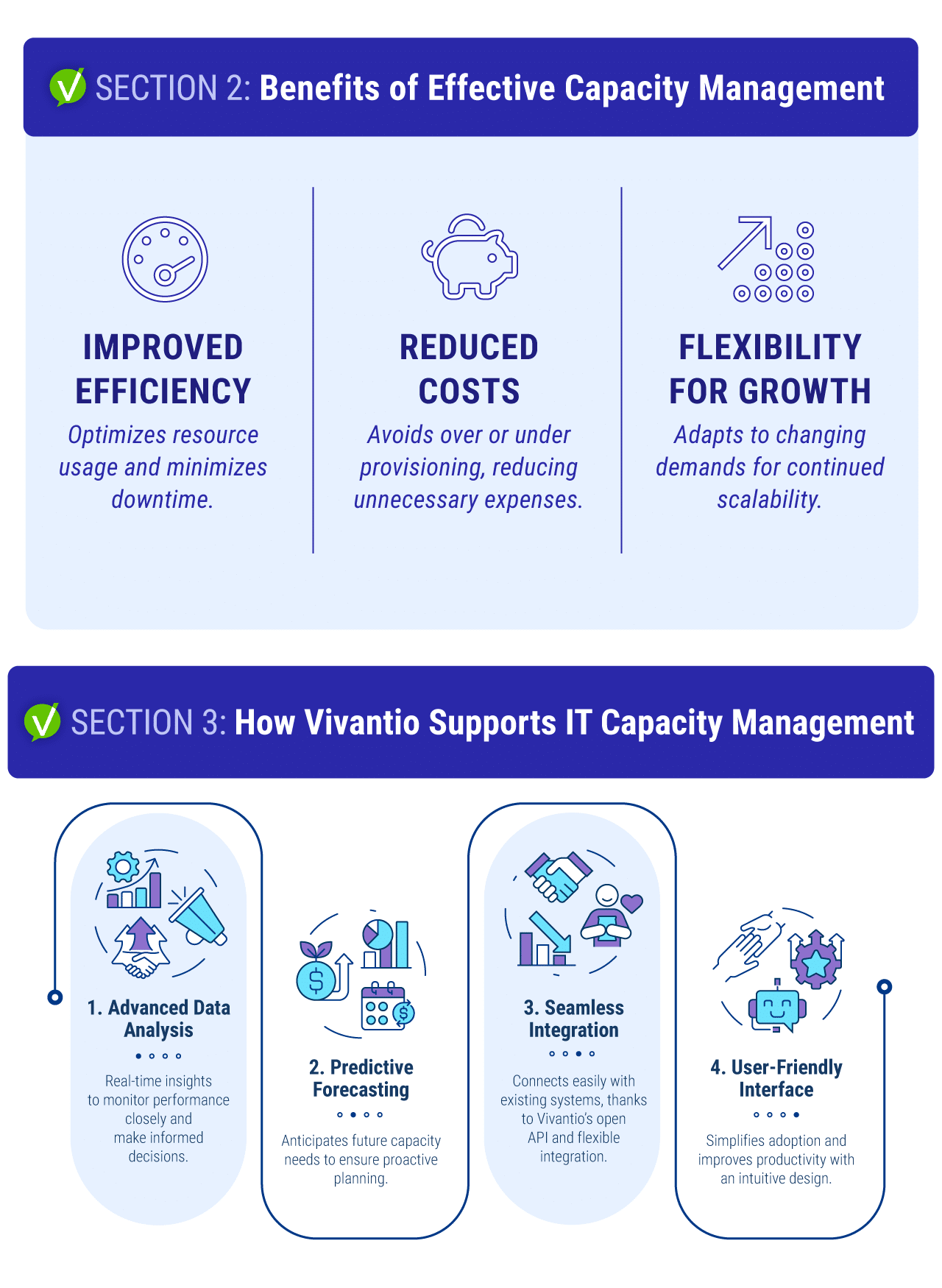
Effective capacity management brings many benefits that boost your work’s efficiency. It improves how well you manage your resources and saves money. One key advantage is making sure your IT resources match your business needs. This keeps your company flexible and ready for market changes.
Good capacity management means planning ahead with resource capacity planning. This helps avoid wasting resources. By using capacity management best practices, you can use your resources just right. They won’t be idle or too busy.
Using these methods makes your services better. It helps use resources well, cuts costs, and improves finances. It also lets your company quickly adjust to changes in demand. This shows how important management practices are for staying ahead.

Key Strategies for Successful IT Capacity Management
Effective IT capacity management involves several core strategies to ensure resources are optimized for both current and future needs. Proper planning prevents overuse or underuse of resources, helping operations run smoothly. Here’s a breakdown:
-
Capacity Planning Process
- Identify and document IT resource needs
- Develop a forward-looking strategy that addresses both immediate and long-term requirements
-
Resource Management Best Practices
- Conduct regular resource utilization assessments
- Plan resource scheduling and allocation to enhance efficiency and avoid waste
-
Implementing Capacity Management Tools
- Use tools to automate the planning process and monitor resources in real time
- Advanced tools provide insights, streamline workflows, and reduce manual tasks involved in managing capacity
-
Monitoring and Adjusting Capacity
- Regularly review and adjust capacity to maintain peak performance
- Make proactive adjustments to adapt to changing demands, ensuring resources are used efficiently
Incorporating these key strategies into your IT capacity management plan ensures that resources are used effectively and can scale with business demands. By prioritizing clear planning, adopting best practices, leveraging management tools, and actively monitoring and adjusting capacity, organizations can avoid costly inefficiencies and improve performance. With a proactive approach, IT systems remain robust and adaptable, ready to support both present and future business goals seamlessly.
Role of ITIL in Capacity Management
The Information Technology Infrastructure Library (ITIL) framework plays a vital role in IT capacity management by guiding organizations to use resources efficiently. ITIL’s structured approach ensures that IT services operate optimally to meet business requirements and user expectations, creating a reliable foundation for capacity planning and management.
ITIL Capacity Management Processes
ITIL defines clear processes for managing service capacity, divided into three essential components:
- Business Capacity Management: Focuses on aligning IT services with current and projected business needs, ensuring the IT infrastructure can support future demand. This strategic approach allows organizations to proactively plan for growth, market changes, or seasonal demands.
- Service Capacity Management: Evaluates whether IT services meet the performance targets specified in Service Level Agreements (SLAs). By monitoring these metrics, organizations can identify potential shortfalls and adjust resources as needed to maintain service quality.
- Component Capacity Management: Manages individual components of the IT infrastructure—such as servers, storage, and network resources—to ensure they meet current and future operational demands. This level of detail helps prevent bottlenecks by keeping each infrastructure element optimized.
Implementing these processes keeps the IT environment well-prepared to support evolving business needs, helping maintain seamless operations and avoiding disruptions.
Integrating ITIL with Capacity Planning
Integrating ITIL’s framework with capacity planning enhances capacity management by establishing standardized methods for resource management, yielding several key benefits:
- Streamlining Processes: ITIL provides best practices for capacity management, creating a standardized approach that ensures all capacity-related tasks are performed consistently across the organization. This streamlining simplifies the planning process and helps avoid resource allocation errors.
- Continuous Improvement: ITIL emphasizes ongoing assessment and refinement. Regular reviews of capacity management plans allow organizations to adapt quickly to shifts in demand, emerging technology, or process improvements, making the IT environment more agile and responsive.
- Resource Optimization: By focusing on efficient resource allocation, ITIL helps reduce waste and ensures resources are fully utilized to meet workloads. This optimization minimizes unnecessary expenses and maximizes the performance of IT assets, aligning capacity with actual usage.
Utilizing ITIL as a foundation for capacity management ensures that resource planning aligns with business goals, leading to higher service quality and an enhanced user experience. By combining ITIL’s structured processes with effective capacity planning, organizations can manage resources more proactively, optimize performance, and support long-term growth seamlessly.
Choosing the Right Capacity Management Software
Choosing the Right Capacity Management Software
Selecting effective capacity management software is crucial to optimizing resources and ensuring smooth operations. Vivantio’s capacity management capabilities align well with the needs of IT service providers by enabling detailed data analysis, streamlined performance monitoring, and seamless integration with existing systems.
Key Features to Consider
When choosing capacity management tools, consider software that provides the following essential features:
- Advanced Data Analysis: The ability to analyze data in real-time helps you monitor performance closely and make informed decisions. Vivantio offers robust analytics, giving organizations clear insights to manage resources effectively.
- Predictive Forecasting: Reliable tools can anticipate future capacity needs, assisting with proactive planning. Vivantio’s forecasting capabilities help businesses plan for demand fluctuations, enhancing responsiveness and preventing resource shortages.
- Seamless Integration: A solution that integrates smoothly with your existing systems reduces implementation challenges. Vivantio’s open API and flexible integration options make it easy to connect with other tools and systems, creating a cohesive IT environment.
- User-Friendly Interface: An intuitive and easy-to-navigate platform increases team productivity by minimizing learning curves. Vivantio’s user-friendly design allows teams to adopt the software quickly, improving operational efficiency.
Evaluating Software Performance
Regularly evaluating the performance of your capacity management tool ensures it continues to meet evolving business needs. Key metrics for evaluation include:
- Data Analysis Accuracy: Assess the tool’s ability to deliver clear insights into capacity trends and utilization.
- User Feedback: Collect input from your team to gauge usability and performance.
- Software Updates: Confirm that the tool receives regular updates to stay current with best practices and technology advances.
Vivantio’s focus on continuous improvement and user-centered design allows IT service providers to stay agile and maintain optimal service levels, ensuring a long-term fit for growing businesses.
Overcome IT Capacity Management Challenges with an Industry Expert
Avoid the common pitfalls of IT capacity management with a trusted partner. With Vivantio, you get proven expertise in forecasting, resource optimization, and strategic alignment—ensuring your IT resources support today’s demands and tomorrow’s growth. Don’t let capacity planning challenges hold back your organization. Instead, align with a partner who understands your industry and is equipped to drive efficiency and agility in your operations.
Take the Next Step Toward Seamless IT Management
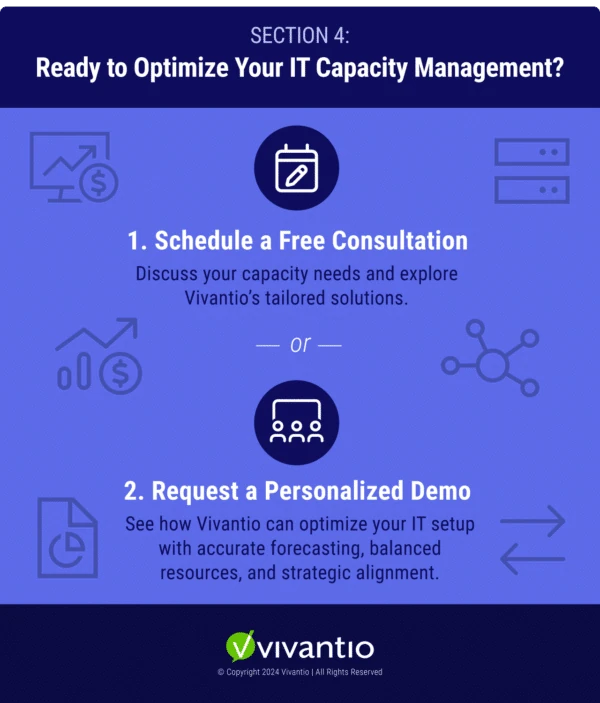
Schedule a Free Consultation: – Discuss your capacity management needs, and explore Vivantio’s tailored solutions that ensure alignment with your business objectives.
Request a Personalized Demo: – See how Vivantio can streamline your IT with features like:
- Accurate Forecasting: Anticipate demand with confidence using advanced analytics and insights.
- Optimal Resource Utilization: Avoid bottlenecks and maximize productivity with real-time capacity adjustments.
- Strategic Alignment: Keep IT and business goals synchronized for continued growth.
Choose Vivantio for a capacity management solution that powers efficiency and prepares your business for the future.
Read more
Browse all resources
Ready to see it?
See Vivantio in action
Step your team up to real service management, without the leap to enterprise. Get a walkthrough tailored to your workflows.