






Boost Time-to-Value: Using Automation to Maximize ROI in Service
Service providers can significantly enhance efficiency and ROI by integrating automation to minimize time-to-value. Let’s explore strategies for quick…

Jump to section
Introduction
As service providers continuously look for ways to optimize their operations and deliver superior value to their clients, one critical metric remains top of mind – the return on investment (ROI), particularly the time it takes to achieve this return—referred to as time-to-value. By strategically integrating automation and focusing on minimizing time-to-value, Technology Service Providers (TSPs) and Managed Service Providers (MSPs) can significantly enhance their service management operations, leading to increased efficiency, customer satisfaction, and ROI. In this blog post, we explore key strategies for leveraging automation to boost ROI, address common challenges in reducing time-to-value, and offer actionable insights to help service providers thrive in a competitive landscape. Let’s learn more about the comprehensive Technology Service Management solutions that enhance efficiency and ROI.
Understanding Time-to-Value and Its Impact on ROI
What is Time-to-Value?
Time-to-value is the period it takes for a customer to realize the full benefits of a product or service after implementation. In service management, it refers to the time it takes for a service provider to implement a solution and start seeing measurable improvements in performance and efficiency. A shorter time-to-value can significantly enhance ROI by reducing the time required to see benefits from an investment. Quick implementations mean that businesses can start reaping rewards sooner, leading to increased satisfaction, loyalty, and profitability.

The ROI Impact of Quick Implementations
Understanding Quick Implementations
Quick implementations refer to the ability of service providers to deploy new solutions rapidly, minimizing the time it takes to start realizing benefits. This agility is crucial in today’s fast-paced business environment, where the ability to adapt and respond quickly can be a significant competitive advantage.
Benefits of Quick Implementations
- Faster Time-to-Market: Quick implementations allow service providers to bring new products and services to market faster, gaining a competitive edge and capturing market share ahead of slower competitors.
- Improved Resource Allocation: By rapidly deploying solutions, organizations can free up resources that were previously tied up in lengthy implementation processes, allowing them to focus on strategic initiatives and innovation.
- Enhanced Customer Satisfaction: Clients benefit from faster access to improved services, leading to increased satisfaction and loyalty. A quicker turnaround can also help meet or exceed customer expectations, reinforcing positive relationships.
- Reduced Costs: Streamlining the implementation process reduces labor and operational costs associated with prolonged deployments, leading to more efficient use of financial resources.
Real-World Examples
- System4u: By implementing Vivantio’s service management solution, System4u enhanced its SLA tracking capabilities beyond its previous in-house solution. This improvement streamlined operations and increased service quality, demonstrating how quick implementations can drive better outcomes.
- SCP Health: As a large healthcare organization, SCP Health used Vivantio’s ITIL-based ITSM platform to standardize processes and improve efficiency. The quick deployment led to adherence to ITIL standards and improved service delivery, showcasing the value of swift implementations in healthcare.
- DriveTime: This auto retailer and finance company utilized Vivantio’s ITSM software to manage increasing incident workloads across multiple departments. By automating key business processes, DriveTime improved efficiency and reduced costs, highlighting the benefits of rapid implementation.
Explore how our service management solutions can streamline your operations and improve customer satisfaction.
Leveraging Automation to Enhance Efficiency
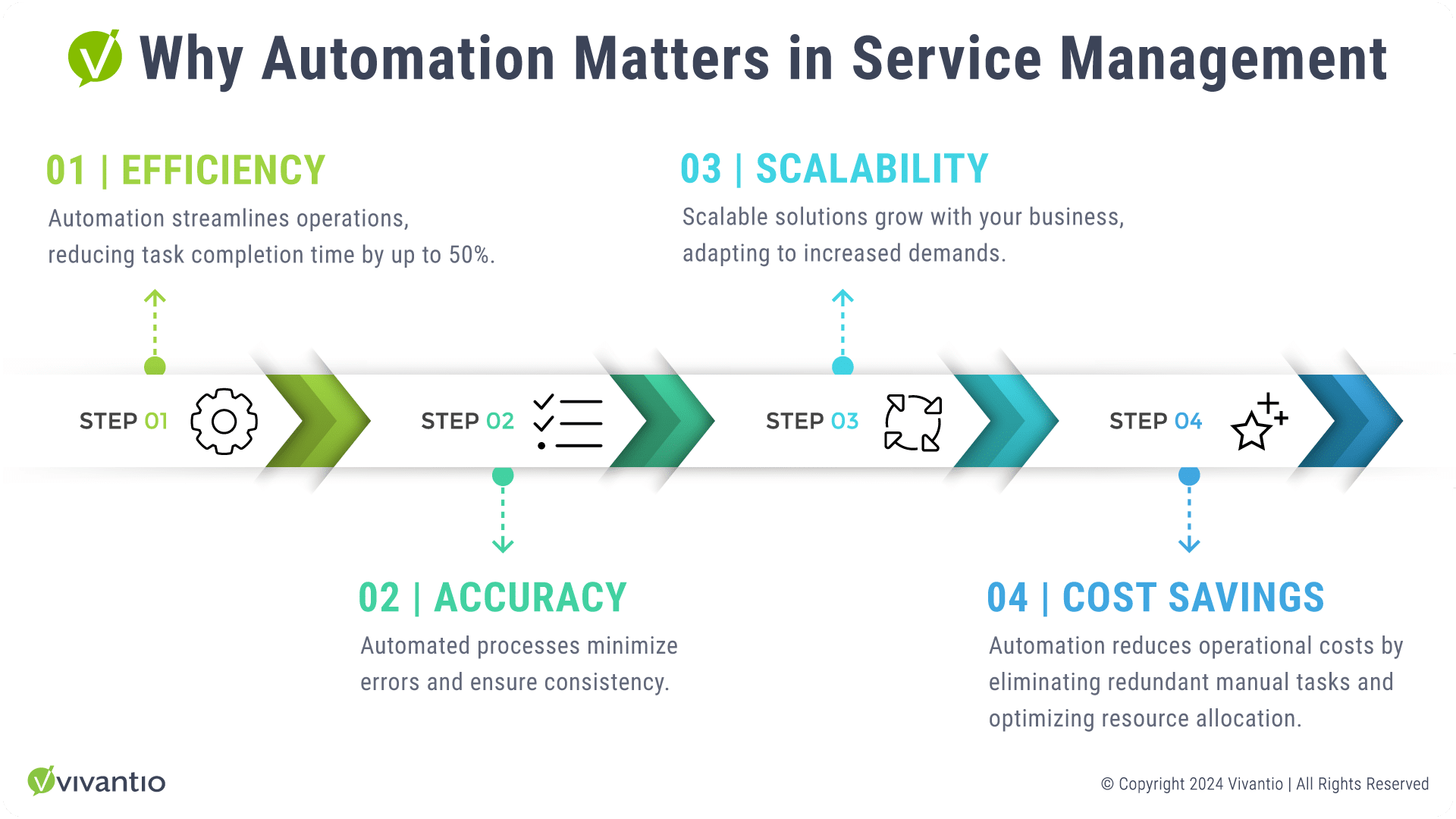
Automation plays a crucial role in reducing manual tasks, streamlining processes, and boosting service quality. By implementing advanced automation tools, service providers can focus on strategic initiatives rather than routine tasks, leading to faster product releases, reduced errors, and overall improved service quality.
Steps to Integrate Automation for Maximum Impact:
-
Assess and Optimize Current Processes:
- Evaluate current workflows using Agile principles to identify bottlenecks and inefficiencies.
- Use AI tools to analyze processes and generate insights for improvement.
-
Select the Right Automation Tools:
- Choose automation tools that align with DevOps practices for seamless integration.
- Utilize AI-driven platforms to select tools that fit specific needs, ensuring scalability for future growth.
-
Implement and Test Automation Solutions:
- Begin with pilot projects to validate automation’s effectiveness.
- Use AI in testing to automate test case generation and bug identification, leading to faster and more accurate testing phases.
-
Monitor, Measure, and Optimize Performance:
- Establish Key Performance Indicators (KPIs) to continuously monitor and optimize automated workflows.
- Leverage AI-powered monitoring tools for real-time insights and proactive improvements.
Our Technology Service Management solutions offer scalable automation tools designed to maximize efficiency and ROI.
Strategies to Maximize Time-to-Value
Practical Tips for Service Providers
Streamline Onboarding:
- Detailed Documentation: Create comprehensive user manuals and FAQs that address common queries. Consider using multimedia resources such as video tutorials and interactive guides to make the onboarding process more engaging and accessible.
- Personalized Training Programs: Tailor training sessions to different roles within the organization. This ensures that each team member understands how to use the new systems effectively in their specific context, enhancing overall adoption rates.
Leverage Automation:
- Identify Key Areas for Automation: Conduct a thorough analysis of your current processes to identify repetitive and time-consuming tasks that can be automated. Focus on areas where automation will have the most significant impact on efficiency and time-to-value.
- Invest in Scalable Solutions: Choose automation tools that can grow with your business, offering flexibility to adjust as your needs change. Scalable solutions help future-proof your operations and maintain efficiency as your business evolves.
Set Clear Goals:
- SMART Goals: Utilize the SMART framework (Specific, Measurable, Achievable, Relevant, Time-bound) to set clear and actionable goals. This approach ensures that objectives are well-defined and progress can be easily tracked and evaluated.
- Regular Review Sessions: Schedule regular check-ins to assess progress toward your goals. These sessions provide an opportunity to celebrate achievements, address challenges, and make necessary adjustments to stay on track.
Best Practices for Implementation and Adoption
Engage Stakeholders:
- Stakeholder Mapping: Identify all relevant stakeholders and understand their interests and influence on the project. This allows you to engage them appropriately and ensure their needs and expectations are addressed throughout the implementation.
- Regular Communication: Establish a communication plan that includes regular updates and feedback loops with stakeholders. This keeps everyone informed and engaged, promoting transparency and collaboration.
Monitor Progress:
- Use Project Management Tools: Implement tools that allow for real-time tracking of project milestones and deliverables. These tools can provide dashboards and reports to keep the team and stakeholders informed of progress.
- Adapt and Iterate: Be prepared to make adjustments based on feedback and changing circumstances. Agile methodologies can be beneficial in allowing teams to respond flexibly to challenges and opportunities.
Provide Ongoing Support:
- Dedicated Support Channels: Establish support channels such as help desks, chat support, and dedicated account managers to provide continuous assistance to users.
- Feedback Mechanisms: Implement systems to collect user feedback regularly. This information can be invaluable for identifying areas for improvement and enhancing user satisfaction with the solution.
Addressing Key Challenges and Enhancing Success in Service Management
What are the common challenges in reducing time-to-value, and how can they be overcome?
Service providers often face several challenges in reducing time-to-value, including complex onboarding processes, resistance to change, and inefficient workflow management. To overcome these hurdles, providers can streamline onboarding by offering clear documentation and comprehensive training.
A recent survey indicated that 67% of companies that invested in robust training saw a 48% faster implementation rate. Additionally, adopting agile methodologies and leveraging automation can significantly cut down the time required to see results.
How can service providers accurately measure time-to-value?
Accurately measuring time-to-value involves setting clear, achievable goals and using KPIs to track progress. Common KPIs include the time from the start of the implementation to the first realized benefit and customer satisfaction scores post-implementation.
According to a 2023 report by Gartner, companies that meticulously tracked these KPIs experienced a 30% increase in implementation efficiency. Utilizing software tools that provide real-time analytics and reporting can aid in maintaining accurate and up-to-date measurements.
What factors influence time-to-value across different service management solutions?
The time-to-value for service management solutions is influenced by several factors, including solution complexity, customization needs, and existing infrastructure. Cloud-based solutions often have a quicker time-to-value compared to on-premises solutions due to easier deployment and lower initial setup costs.
A 2022 IDC study found that cloud-based service management solutions achieved a 40% faster time-to-value than traditional systems.
In which industries does time-to-value have the most significant impact on ROI?
Time-to-value has a profound impact on ROI across various industries, with some sectors experiencing more significant benefits. In healthcare, reducing time-to-value can lead to faster patient care improvements and increased efficiencies. Similarly, in financial services, quicker implementations can lead to faster compliance and improved customer service, driving higher profitability and customer retention rates.
A recent case study showed that a healthcare provider reduced time-to-value by 50% through optimized workflows, resulting in a 35% increase in ROI.
How does stakeholder engagement play a role in minimizing time-to-value?
Stakeholder engagement is crucial in minimizing time-to-value as it ensures all relevant parties are aligned and committed to the implementation process. Effective collaboration among stakeholders can help identify potential bottlenecks and streamline decision-making. Providers can foster engagement by involving stakeholders early, maintaining transparent communication, and regularly updating them on progress.
A McKinsey study in 2023 revealed that projects with strong stakeholder engagement were 35% more likely to be completed on time and within budget.
Empowering Your Service Management with Automation and ROI Focus
Integrating automation and focusing on minimizing time-to-value are powerful strategies that can transform service management operations. By streamlining onboarding, leveraging automation, and setting clear goals, service providers can achieve quicker implementations and substantial ROI improvements. However, the path to maximizing these benefits is not always straightforward.
What unique challenges might your organization face in this journey, and how can you tailor these strategies to your specific needs?
Take the Next Step Toward Transformation
Discover how partnering with Vivantio’s experts can provide tailored insights and solutions, ensuring your service management success in an ever-evolving market.
Contact us for a personalized demo or consultation today.
Read more
Browse all resources

Ready to see it?
See Vivantio in action
Step your team up to real service management, without the leap to enterprise. Get a walkthrough tailored to your workflows.