






Automated Patch Management Process: Streamline Security and Compliance
Manual patching is tedious and risky. Automated patch management transforms this process, reducing vulnerabilities, saving time, and ensuring compliance.…

Jump to section
Introduction
Why Patch Management Matters
Imagine this: you’re responsible for keeping your organization’s systems and software up to date, secure, and running smoothly. It’s no small task. The process of keeping track of security updates, managing patches for hardware and software, and ensuring patch compliance can feel like an endless cycle of frustration. Manual steps from the patching process often lead to errors, missed updates, and a lack of visibility into the patching lifecycle, leaving your network vulnerable to threats.
That’s where automated patch management software comes in. With tools designed to automate the patch process, you can streamline patch deployment, simplify patch approval, and maintain endpoint management with ease. The right management platform not only eliminates repetitive tasks but also improves your ability to handle patch types for both operating systems and third-party patch management.
Using features like remote management, automated deployment, and patch reporting, an automated system can help you address software vulnerabilities, schedule updates during defined patch windows, and reduce security risks. Whether you’re dealing with cloud-based patch management or on-premise solutions, automation enables you to manage patches and patch endpoints efficiently, minimizing downtime and keeping your systems secure.
Automated patch management tools are transforming the way organizations address vulnerabilities by integrating seamlessly with IT service management (ITSM) frameworks, asset management systems****, and vulnerability scanners. These tools eliminate the inefficiencies of manual patching by automating the identification, testing, and deployment of updates across diverse environments. When paired with systems that track assets and monitor compliance, automated patch management enables teams to prioritize critical updates, reduce downtime, and proactively mitigate risks. This integration not only enhances security but also aligns patching efforts with broader organizational goals for compliance and operational efficiency.
What is Patch Management?
Patch management involves systematically identifying, acquiring, testing, and applying updates to software and systems to address vulnerabilities, enhance performance, and ensure compliance with security standards. Unpatched systems pose a significant risk, serving as potential entry points for cyberattacks. By prioritizing and deploying updates across diverse devices, applications, and operating systems, patch management helps safeguard your organization against these threats while maintaining operational efficiency. An effective solution simplifies this complex process, making it a cornerstone of robust endpoint security.

The Challenges of Manual Patch Management
If you are the person we imagined at the top of this article and you’ve ever managed patches manually, you know how tedious it can be. Tracking patch availability, scheduling updates, and ensuring compliance are just the beginning. Add to that the potential for human error, and it’s no wonder so many organizations struggle with failed patch deployments and security gaps.
Some common issues include:
- Time-consuming processes: Manually identifying and deploying patches takes valuable time away from other critical tasks.
- Inconsistent compliance: Staying up to date with regulatory requirements can feel like chasing a moving target.
- Security risks: Missed patches leave your systems vulnerable to cyber threats.
In addition to these challenges, organizations often overlook the potential support offered by their Independent Software Providers (ISPs). Many ISPs offer tools, resources, and expertise to enhance patch management processes. With their advanced monitoring capabilities and dedicated security solutions, ISPs can help identify vulnerabilities, ensure secure connections during patch updates, and support compliance efforts. Partnering with an ISP can alleviate some of the burden of manual patch management and provide an additional layer of protection for your systems.
The Benefits of Automating Patch Management
Now, imagine a patch management process that works seamlessly in the background, reducing the risk of vulnerabilities while giving you time back in your day. That’s the power of automation.
With an automated patch management solution, you can:
- Save time: Automation eliminates manual steps, allowing patches to be deployed quickly and efficiently.
- Improve compliance: Stay up to date with the latest security requirements and generate detailed patch compliance reports for audits.
- Reduce risks: Automated tools identify and address known endpoint vulnerabilities, strengthening your organization’s security posture.
ISPs can further enhance these benefits by integrating their services with automated patch management tools. They can provide real-time alerts, secure data transmission, and 24/7 monitoring to ensure updates are deployed without disruption. By leveraging ISP resources alongside automation, organizations can achieve a streamlined, secure, and proactive patch management process.
Automation doesn’t just make your life easier—it also ensures that your systems and software are always protected.
Key Features of Automated Patch Management Tools
When choosing the best patch management software, look for these essential features:
- Patch scheduling: Automate patch deployments during predefined windows to minimize disruptions.
- Endpoint visibility: Gain real-time insights into patch compliance status and vulnerabilities.
- Integration: Connect with asset management and inventory management tools for seamless patching.
- Support for third-party applications: Ensure comprehensive patch coverage across all your devices.
- Reporting capabilities: Generate detailed reports to track patch deployment and compliance.
In addition to these features, consider the value of partnering with trusted experts, such as Independent Software Providers (ISPs) or industry specialists, to maximize the effectiveness of your patch management efforts. ISPs can provide secure, reliable connections for patch deployments, advanced monitoring tools, and around-the-clock support, while industry experts can offer tailored advice and best practices for managing complex patching environments. These partnerships can complement the functionality of your chosen tool, ensuring a robust, comprehensive approach to patch management.
How Automated Patch Management Ensures Security
Automating patching doesn’t just simplify the process—it actively reduces your exposure to cyber threats. By addressing vulnerabilities quickly and consistently, you can stay one step ahead of attackers.
Automated patch management tools:
- Detect vulnerabilities: Proactively scan for security risks and prioritize patches based on severity.
- Streamline patch deployment: Ensure patches are deployed accurately and consistently across your network.
- Enhance endpoint security: Protect devices from known threats with minimal manual intervention.
For example, many organizations rely on automated tools to manage patches across diverse operating systems, ensuring comprehensive protection for critical infrastructure and endpoint devices. Advanced tools, like those integrated into broader IT service management (ITSM) platforms, provide a centralized approach that streamlines patch scheduling, compliance tracking, and deployment workflows.
These solutions can seamlessly update systems such as Windows, macOS, and Linux, as well as third-party applications, while offering detailed reporting and real-time insights to optimize decision-making. The ability to integrate with asset management systems and service desks ensures that all vulnerabilities are tied to actionable tasks, improving visibility and accountability. With the added benefit of customizable workflows and automation, organizations can efficiently address zero-day vulnerabilities and critical security updates, keeping their systems secure and operations uninterrupted. This proactive approach not only reduces risks but also aligns with strategic goals for operational excellence and compliance, making it an ideal solution for businesses aiming to enhance their IT capabilities.
Compliance Made Easy with Automation
Regulatory compliance is a growing concern for businesses across industries. Whether you’re dealing with data protection laws or industry-specific standards, keeping your systems secure and compliant is non-negotiable.
Automated patch management solutions simplify compliance by:
- Streamlining processes: Automating patching ensures your systems meet regulatory requirements efficiently, reducing the manual oversight needed to stay compliant.
- Providing visibility: Integrated real-time dashboards offer a comprehensive view of patch compliance across all devices, enabling IT teams to quickly identify and address gaps.
- Generating reports: Automated tools generate detailed, audit-ready reports that provide the documentation required for compliance reviews and certifications.
When paired with an ITSM platform that supports robust reporting, ticketing workflows, and asset management, automated patch management becomes a key driver of compliance success. These systems allow organizations to centralize oversight, connect compliance tasks to actionable service tickets, and track progress in real-time, ensuring all regulatory obligations are met proactively. This integration empowers businesses to stay ahead of evolving standards while maintaining seamless operations, showcasing a commitment to security and excellence.
Outsourcing Patch Management Services
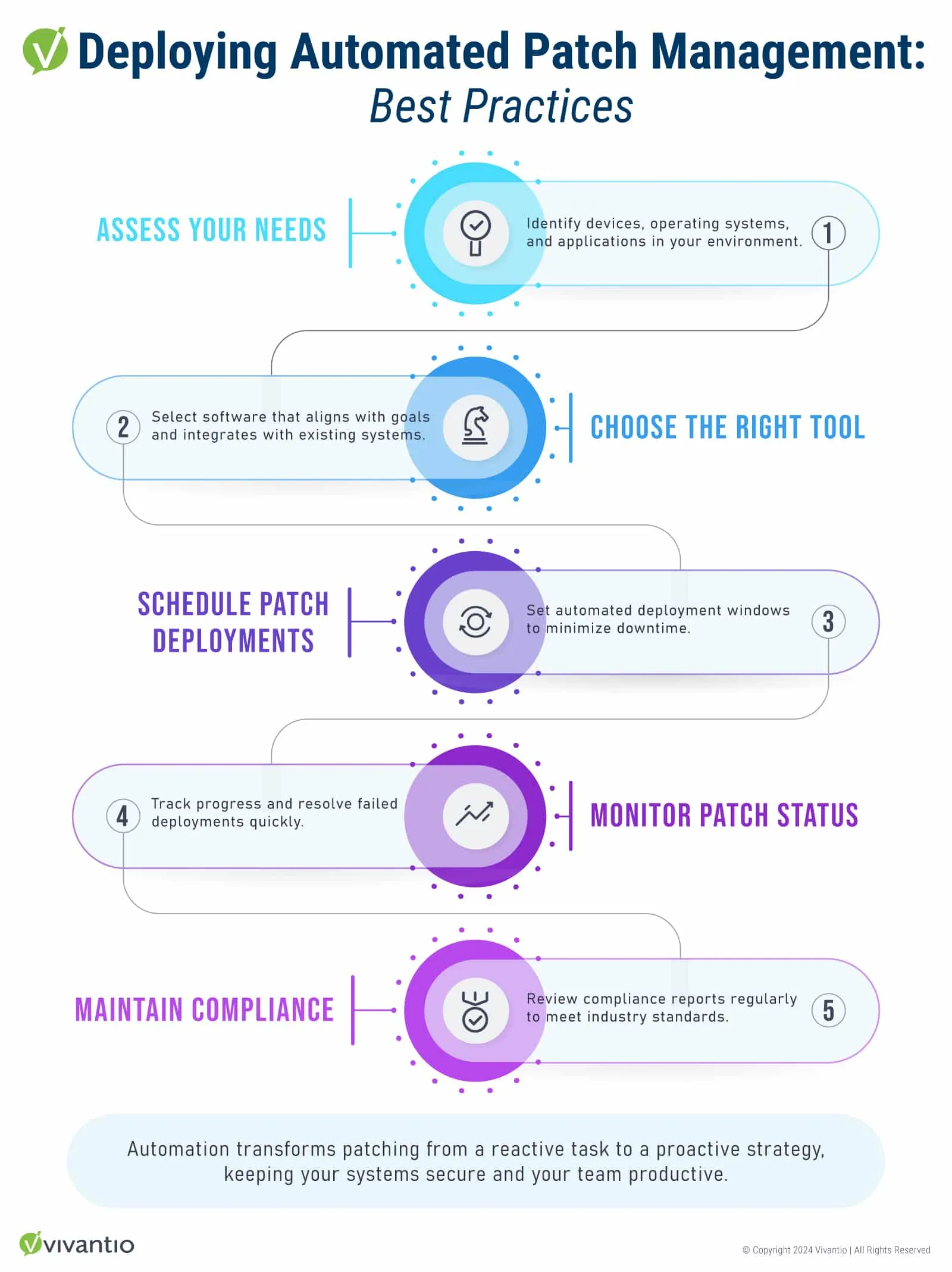
For organizations with limited resources, partnering with an Independent Software Provider (ISP) that offers security and IT support services can be a game-changer. Many ISPs provide automated patch management solutions as part of their broader service offerings, helping to reduce the burden on your internal IT team. With advanced network monitoring, secure data transmission, and real-time vulnerability detection, ISPs can ensure patches are deployed efficiently and securely. By leveraging their expertise, your organization can maintain compliance, reduce security risks, and focus on core business goals.
Benefits of Outsourcing:
- Access to expert knowledge and tools: Leverage the specialized skills and resources of the service provider to address complex IT challenges.
- Improved efficiency and cost savings: Reduce operational overhead and optimize resource allocation while cutting costs on hiring and training in-house staff.
- Enhanced security with proactive monitoring and management: ISPs provide 24/7 network monitoring and immediate response to vulnerabilities, reducing risk exposure.
- Scalability and flexibility: Easily adapt services to meet your organization’s changing needs without overextending internal resources.
- Faster implementation and updates: Service providers can implement solutions and deploy patches more quickly, minimizing downtime and disruptions.
- Regulatory compliance support: ISPs are often well-versed in industry standards and can help your organization meet evolving compliance requirements.
Focus on strategic priorities: Outsourcing frees up internal teams to concentrate on innovation and core business objectives rather than routine IT maintenance.
Transform Your Patch Management with Vivantio’s Integration Capabilities
Is your organization ready to streamline its patch management process and strengthen its security posture? With Vivantio’s robust integration capabilities, you can connect your ITSM platform to leading patch management solutions, creating a unified system that enhances efficiency and compliance.
Optimize Patch Management Workflows: Seamlessly integrate Vivantio with automated patch management tools to centralize ticketing, prioritize vulnerabilities, and track resolutions.
Enhance Visibility and Reporting: Use Vivantio’s advanced reporting and dashboard features to gain real-time insights into patch compliance and system security.
Improve Collaboration: Connect IT operations and patch management efforts with Vivantio’s intuitive workflows, enabling teams to work more effectively together.
Take the next step toward smarter, more integrated patch management:
- Schedule a Free Consultation: Learn how Vivantio can help you streamline patch management through powerful integrations.
- Request a Demo: Discover how Vivantio’s software integrates with your existing tools to enhance your IT operations.
By leveraging Vivantio’s integration capabilities, you can simplify your patch management process, reduce risks, and ensure compliance—all while empowering your team to focus on strategic priorities. Explore how Vivantio can be the bridge to a more efficient, secure IT environment today.
Read more
Browse all resources
Ready to see it?
See Vivantio in action
Step your team up to real service management, without the leap to enterprise. Get a walkthrough tailored to your workflows.