





ITIL Service Management Best Practices and Support Processes
ITIL’s best practices offer a structured framework to enhance IT service management, aligning IT operations with business goals and improving customer…

Jump to section
Introduction
Exploring IT service management (ITSM) reveals the importance of ITIL, a framework of best practices for service management. It provides a structured service management strategy that enhances IT service delivery. By adopting ITIL best practices, companies can work more efficiently, improve service level management, and meet their business goals with effective practices and processes.
ITIL helps your ITSM practices grow. It’s more than just a method; it’s a comprehensive framework for continual service improvement. This approach to ITSM supports better desk management, enabling modern IT service management to stay up-to-date. See how ITIL can help improve your service management platform and drive quality of service for better customer satisfaction.
Understanding ITIL Framework for ITSM
The ITIL framework began in the 1980s when the British government’s Central Computer and Telecommunications Agency (CCTA) sought to create a set of best practices for IT service management (ITSM). The goal was to address inconsistencies and inefficiencies in IT services within government agencies, providing a structured, standardized approach for effective management of IT resources and services.
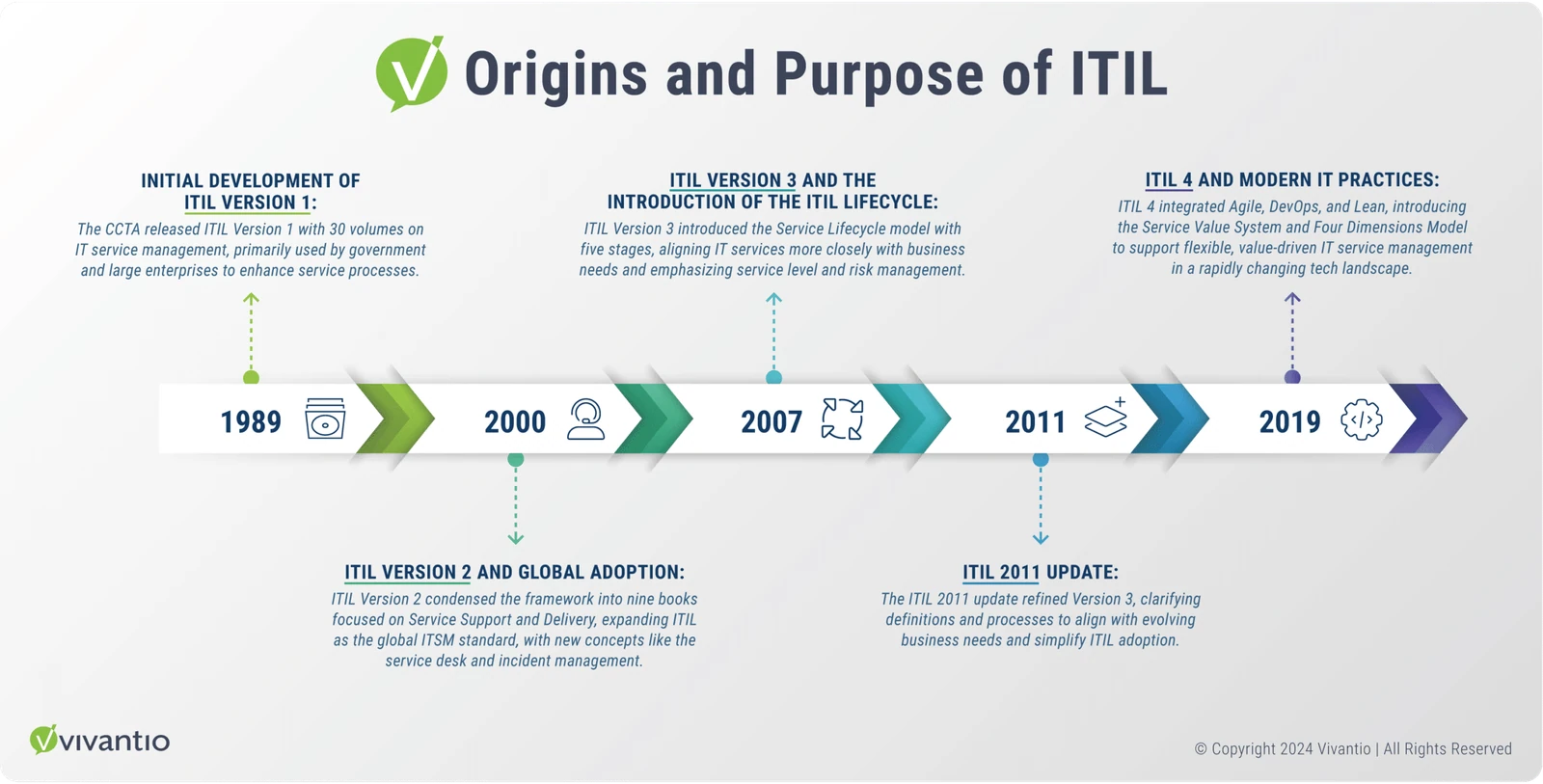
Today, ITIL continues to be a comprehensive framework used worldwide, helping organizations enhance their ITSM capabilities, support service desk management, and achieve quality of service standards that meet both operational and business goals.
Core Components of ITIL Framework
The ITIL framework consists of several essential components that support a robust ITSM strategy. Two of the main elements are the Service Value System (SVS) and the Four Dimensions Model. ITIL 4 builds on previous versions by offering a more comprehensive approach to service management, incorporating modern practices like Agile, DevOps, and Lean.
Service Value System (SVS)
In ITIL 4, the Service Value System (SVS) ensures that value is consistently delivered to customers. The SVS is composed of:
- Guiding principles
- Governance
- Service value chain
- Practices
- Continual improvement
These elements work together to streamline processes, encourage innovation, and enhance service delivery.
Four Dimensions Model
The Four Dimensions Model provides a balanced approach to service management by examining four critical areas:
- People and organizations
- Information and technology
- Partners and suppliers
- Value streams and processes
This model helps organizations align their ITIL framework with business objectives, ensuring effective IT service management that supports both operational and strategic goals.
ITIL Service Management Best Practices and Support Processes
Imagine your organization struggling with disorganized IT processes, frequent service disruptions, and frustrated customers—all because best practices weren’t in place.
- How would constant service issues affect your business reputation?
- What impact would unresolved technical problems have on your customer relationships and trust?
- How much profitability would you lose due to inefficiencies and downtime?
- Could your team sustain productivity and morale amid constant fire-fighting?
- Would your business be able to compete if your IT services were unpredictable and inconsistent?
The ITIL framework is essential not only for enhancing IT service management but also for driving profitability, supporting business growth, and ensuring competitiveness in today’s marketplace. By offering a structured set of best practices and support processes, ITIL enables efficient, consistent service delivery that keeps operations smooth and predictable. This framework allows organizations to maintain a customer-focused approach while optimizing resources, ultimately strengthening their market position and supporting long-term success.
Key Components of ITIL Framework
- Knowledge Management**
**Knowledge management focuses on effectively sharing and using information within the team. This approach speeds up problem-solving and improves overall productivity.
- Service Catalog Management**
**Managing your service catalog is crucial. A well-organized service catalog displays all IT services, their statuses, and associated service levels. This clarity helps set realistic expectations and leads to higher customer satisfaction.
- Incident Management**
**Incident management aims to resolve service issues quickly, keeping the business running smoothly. Applying ITIL best practices in incident management enables efficient handling of incidents and minimizes disruptions.

Integrated Approach
There are benefits to adopting these processes collectively, as they strengthen ITIL service management. Implementing these best practices ensures that your operations become standardized, more efficient, and better aligned with organizational goals.
Imagine the resources that could be freed up for creativity, strategic development, and designing a curated customer experience if ITIL best practices were in place. With reduced disruptions and greater operational efficiency, your team could shift focus from managing issues to innovating, enhancing service offerings, and building stronger customer relationships. By streamlining processes, ITIL provides the flexibility to invest in initiatives that support growth and set your business apart in the marketplace.
Following is an example showing how these practices can help achieve ITIL service management excellence:
| ### Practice | ### Key Benefit | ### Impact on Service Management |
|---|---|---|
| Knowledge Management | Improves information accessibility | Reduces incident resolution time |
| Service Catalog Management | Increases service transparency | Enhances customer satisfaction |
| Incident Management | Ensures swift incident response | Minimizes service disruptions |
Leveraging a Service Management Platform for ITIL Best Practices Implementation
A powerful service management tool is integral to fully realizing the benefits of ITIL’s best practices. With key features like automated workflows, real-time monitoring, and data-driven analytics, such a tool not only supports ITIL processes but also enhances and scales them, ensuring they’re applied consistently across the organization. This approach aligns well with ITIL’s principles and its framework for IT service.
🗹 Automation for Incident and Problem Management
Automation capabilities streamline incident and problem management, key areas of the ITIL framework, by providing efficient delivery of IT service. Through automated ticketing and service request handling, recurring issues are flagged and categorized instantly, allowing IT teams to address them proactively and efficiently. Automated workflows also ensure that incidents are assigned to the appropriate service desk team or individuals, minimizing resolution time and improving overall productivity.
🗹 Service Catalog Management for Clearer Service Expectations
A robust ITSM solution helps create and maintain a comprehensive service catalog—a critical component for setting clear expectations with end users. With features that allow real-time updates and status tracking, the service catalog ensures that users have visibility into available IT services, their status, and expected service levels through established service level agreements (SLAs). This transparency improves user satisfaction and reduces confusion or miscommunication about service offerings.
🗹 Knowledge Base Integration for Faster Issue Resolution
Integrating a knowledge base within the ITSM software enhances knowledge management practices by providing a centralized resource for solutions, troubleshooting guides, and FAQs. When support teams have immediate access to a well-curated knowledge base, they can resolve common issues faster, leading to increased productivity and a more consistent user experience. Such practices help in establishing a best practice framework within ITIL.
🗹 Change Management with CAB Support and Compliance Tracking
The platform’s change management process supports the ITIL best practice of tracking changes from proposal through implementation. Through features like automated approval workflows and support, teams can assess risks and impacts in a streamlined manner. A formal change management process with compliance tracking ensures that all changes are logged and auditable, helping the organization meet regulatory requirements and maintain service stability. This well-thought-out change management strategy aligns with ITIL’s comprehensive approach to managing change.
🗹 Real-Time Monitoring and Analytics for Continual Service Improvement
Real-time monitoring tools within the platform allow organizations to measure and analyze service performance against ITIL best practices. Detailed reporting and analytics provide insights into service metrics and user satisfaction, identifying areas for continual improvement. By regularly evaluating performance data, IT teams can proactively make adjustments to improve effective service quality, maintain operational efficiency, and ensure alignment with business goals.
By integrating a feature-rich ITSM tool, organizations can operationalize ITIL best practices more effectively. The platform not only supports process standardization but also empowers teams to work more efficiently, delivering higher quality and consistency in every aspect of IT service management. This integration ultimately drives customer satisfaction, operational agility, and a stronger alignment with business objectives, helping organizations enhance their IT service management capabilities and adopt a set of practices that support long-term success.
Take the Next Step Toward Excellence in ITIL Service Management Best Practices and Support Processes
Schedule a Free Consultation: Discover how Vivantio’s solutions can elevate your IT service management strategy, helping your team implement ITIL best practices to enhance performance and meet operational goals.
Request a Personalized Demo: See how Vivantio can streamline your ITSM processes with features like:
- Advanced Analytics and Insights: Unlock comprehensive insights into service performance, allowing you to identify key areas for continual improvement and drive better decision-making.
- Service Management for Every Process Stage: From service requests to incident management, Vivantio’s platform ensures smooth, efficient operations that align with your business objectives.
- Support from Dedicated Success Managers: Receive hands-on guidance from success managers committed to helping you effectively apply ITIL best practices and optimize your service management processes.
Choose Vivantio to build a service management strategy that enhances efficiency, improves customer satisfaction, and positions your organization for sustainable success.
Read more
Browse all resources
Ready to see it?
See Vivantio in action
Step your team up to real service management, without the leap to enterprise. Get a walkthrough tailored to your workflows.