





Top Strategies to Identify Asset Management Cybersecurity Risks
Unmanaged assets pose significant cybersecurity threats, with breaches taking 24.7% longer to detect and contain. Learn how effective asset management…

Jump to section
Introduction
Did you know that unmanaged digital assets pose a serious security threat? Breaches involving these unmonitored assets take an average of 291 days to identify and contain—24.7% longer than breaches involving managed data. This delay highlights the critical importance of effective asset management in cybersecurity to mitigate potential threats (phoenixnap.com).
In this article, we’ll cover the basics of asset management in IT Service Management (ITSM) and cybersecurity. You’ll learn how effective asset management can boost your security and improve incident handling. We’ll show you strategies to manage your assets effectively, helping to keep your organization safe from cyber threats.
Understanding the Basics of Asset Management in Cybersecurity
Asset management in cybersecurity is like keeping an inventory of valuables in your home—it’s essential for a strong defense. Just as you’d want to know everything worth protecting, asset management helps you identify all valuable assets in your organization, from digital to physical. Keeping detailed records of these assets creates a clear line of defense, making it easier to spot and guard against cyber threats.
Asset Management in Cybersecurity: Definition, Importance, and Role in Protection
In cybersecurity, managing assets means identifying and overseeing all elements that could impact the safety of your data and systems. This includes hardware, software, data, and personnel. Maintaining a detailed inventory helps uncover vulnerabilities and strengthen defenses.
Think about it like this—you can’t protect what you don’t know is there. Without a clear understanding of your assets, effective protection becomes nearly impossible. A detailed inventory acts like a map, allowing you to make smarter security choices and respond to threats swiftly.

6 Steps and Best Practices to Strengthen Cybersecurity with Robust Asset Management
Following is a six step asset management checklist and their corresponding best practices to keep in mind at each step. These practices will help ensure a thorough, proactive approach to cybersecurity, enhancing your defenses and making your asset management efforts more resilient.
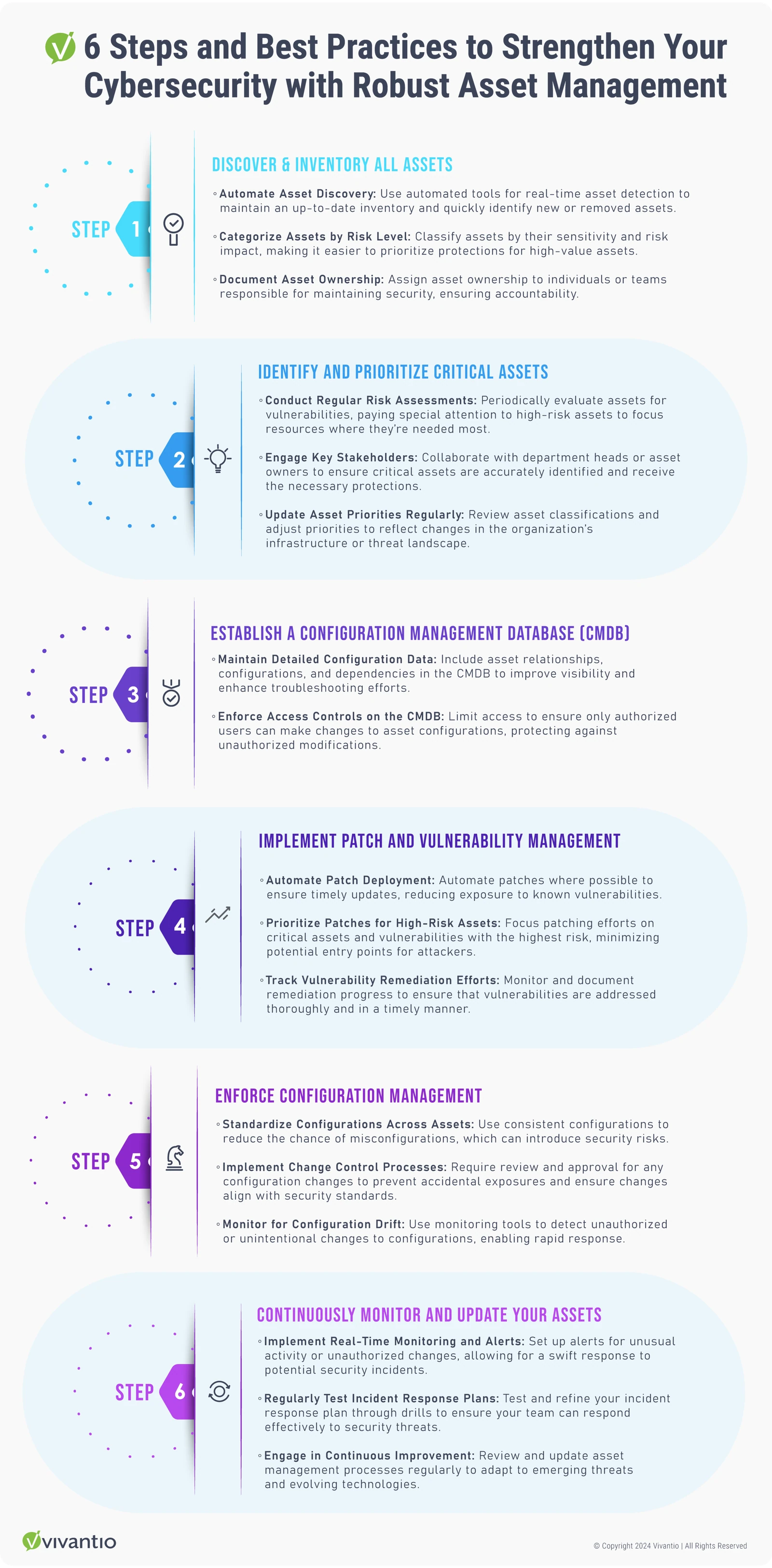
By integrating these best practices within each step of the asset management process, your organization can create a proactive, resilient approach to cybersecurity. This layered approach not only safeguards your assets but also ensures that your security measures are agile and responsive to new challenges.
| ### Component | ### Description | ### Importance |
|---|---|---|
| Asset Discovery and Inventory | Cataloging all hardware and software assets | Provides comprehensive visibility of assets |
| Configuration Management Database | Centralized repository for asset data | Improves oversight and incident response |
| Patch and Vulnerability Management | Regular application of security patches | Mitigates security risks |
Common Security Risks Associated with Poor Cybersecurity Asset Management
Without a robust asset management solution, organizations expose themselves to significant security risks. Unmonitored and unmanaged assets create vulnerabilities that leave an organization open to cyber threats. By utilizing an asset management platform with features like real-time monitoring, automated workflows, and customizable dashboards, organizations can better track and protect critical assets.
Key security risks associated with poor asset management include:
Unmonitored and Unmanaged Assets:
When assets aren’t tracked effectively, the attack surface expands, offering attackers more entry points. Asset management solutions with real-time tracking and automated workflows ensure that all assets are accounted for, helping teams monitor and protect each asset consistently.
Patch Management Delays:
Failing to keep systems and software updated leaves assets vulnerable. Automated workflows streamline **patch managemen**t, enabling organizations to deploy critical updates promptly, which helps prevent security lapses.
Data Breaches:
Poor asset tracking often results in data exposure. By implementing a system with real-time monitoring and centralized reporting, organizations can maintain visibility over sensitive data and quickly identify and secure any exposed assets.
Compliance Challenges:
Keeping up with regulatory requirements is difficult without an organized asset management system. Detailed reporting capabilities ensure easy access to asset records and audit trails, helping organizations meet compliance standards more efficiently.
The Impact of Strong vs. Poor Cybersecurity Asset Management
| ### Factors | ### Strong Management | ### Poor Management |
|---|---|---|
| Security Risk | Reduced through automated tracking and alerts | High due to untracked vulnerabilities |
| Vulnerability Management | Efficient and timely with automated workflows | Delayed and manual, increasing risk |
| SCADA Systems | Secure and consistently monitored | Exposed and at greater risk of breaches |
| Compliance | Simplified with automated reporting and dashboards | Prone to non-compliance due to oversight |
An effective asset management program with real-time monitoring, automated workflows, and comprehensive reporting capabilities enhances cybersecurity. By streamlining processes and ensuring visibility, organizations can proactively manage risks, meet compliance standards, and create a more resilient security framework.
Choosing the Right Software to Enhance Asset Management in Your Cybersecurity Framework
Incorporating effective asset management into your cybersecurity framework is essential for managing risks, meeting compliance standards, and strengthening your defenses. Selecting the right software to support this process can make all the difference, allowing you to achieve robust asset management in a cost-effective, streamlined manner.
Key Benefits of a Comprehensive Asset Management Solution
Proactive Risk Management
With a software solution that includes real-time monitoring and automated workflows, IT teams can quickly detect vulnerabilities and respond to potential threats. Features like these enable your organization to identify and protect critical assets before risks escalate, ensuring optimal security.
Efficient Resource Allocation
A customizable asset tracking system provides a complete overview of your assets, allowing you to allocate resources wisely. By pinpointing assets that need the most protection, you ensure that your team’s efforts focus on high-impact areas, enhancing the overall efficiency of your cybersecurity program.
Compliance and Standardization
Following cybersecurity standards, such as the NIST Cybersecurity Framework, is simplified with built-in reporting tools and compliance-friendly features. Centralized reporting ensures you have easy access to asset records and audit trails, helping you meet regulatory standards and avoid potential fines.
Streamlined Operations for Cost Efficiency
Automated workflows and customizable dashboards make asset management simpler and more efficient, reducing manual work and minimizing operational costs. By choosing a solution with robust automation, you free up valuable resources to focus on strategic security efforts rather than routine tasks.
Enhanced Visibility and Control
A comprehensive asset management solution provides full visibility into your IT environment, making it easy to monitor, update, and secure your assets. With features such as real-time alerts and centralized tracking, you stay one step ahead of emerging threats and maintain greater control over your cybersecurity defenses.
Incorporating asset management into your cybersecurity framework with the right software solution brings long-term value, improving security, efficiency, and compliance. By choosing a platform that combines proactive monitoring, automated workflows, and cost-effective resource management, your organization is equipped to manage and protect critical assets effectively, creating a more resilient defense against cyber threats.
Take the Next Step Toward Effective Cybersecurity Asset Management with Vivantio
Choosing the right software for cybersecurity asset management can transform your approach to IT Service Management (ITSM). With Vivantio’s advanced tools, you can manage assets securely, minimize vulnerabilities, and streamline compliance—allowing your team to focus on delivering strategic, secure IT services.
Schedule a Free Consultation – click here:
Learn how Vivantio’s robust asset management tools can empower your cybersecurity framework, helping you maintain full visibility over critical assets and protect against emerging threats.
Request a Personalized Demo – click here:
Discover how Vivantio’s platform can transform your ITSM processes with features such as:
- Advanced Asset Tracking and Insights: Access powerful analytics to monitor asset status, identify potential risks, and make proactive, informed decisions to enhance security.
- Automated Workflows for Vulnerability Management: Streamline patching, updates, and vulnerability tracking across assets, ensuring that no critical security measures are overlooked.
- Centralized Reporting and Compliance Tools: Simplify regulatory compliance with centralized asset records, customizable dashboards, and audit-ready reports that keep you aligned with standards.
- Dedicated Success Managers: Get hands-on support from success managers who provide expert guidance on maximizing the benefits of Vivantio’s platform, ensuring a proactive and efficient approach to cybersecurity asset management.
By choosing Vivantio, you’re investing in an ITSM solution that enhances cybersecurity, operational efficiency, and ongoing support. Empower your team to protect critical assets effectively and ensure your organization’s long-term security and success.
Read more
Browse all resources

Ready to see it?
See Vivantio in action
Step your team up to real service management, without the leap to enterprise. Get a walkthrough tailored to your workflows.