






What is an API Ecosystem
An API ecosystem is the backbone of seamless integration and innovation across industries. It enables businesses to streamline operations and improve…

Jump to section
Introduction
An API ecosystem is crucial for businesses and service providers to achieve smooth integration and drive innovation. For instance, consider a healthcare provider that needs to connect its patient management system with various third-party services, such as electronic health records (EHR), billing platforms, and appointment scheduling tools. An effective API ecosystem allows these different systems to seamlessly communicate and share data, ensuring that patient information is updated in real-time across all platforms. This not only improves operational efficiency but also enhances the quality of care by providing healthcare professionals with accurate and timely information.
This level of operational efficiency isn’t limited to the healthcare industry; it’s a critical advantage across all sectors. Whether in finance, retail, logistics, or any other service-oriented business, an API ecosystem enables different software systems to work together seamlessly. The API ecosystem is crucial for staying competitive in today’s market.
However, the API ecosystem is more than just APIs. It includes developers, businesses, and users who use these interfaces. This community is key to customer experience and supports digital change. If you’re a developer or a business looking to improve, knowing about the API ecosystem is vital. It opens up new chances for growth and keeps you ahead in the digital world.

Understanding the API Ecosystem
The API ecosystem is key to modern software development. It’s a complex system with many parts working together. These parts help create, deploy, and manage APIs. It’s crucial for developers and businesses to understand this ecosystem to use APIs fully.
What is an API System?
An API system includes protocols, tools, and best practices for sharing data and functions between apps. It’s essential for making APIs. APIs let different apps talk to each other, making it easy to share data and services.
Components of an API Ecosystem
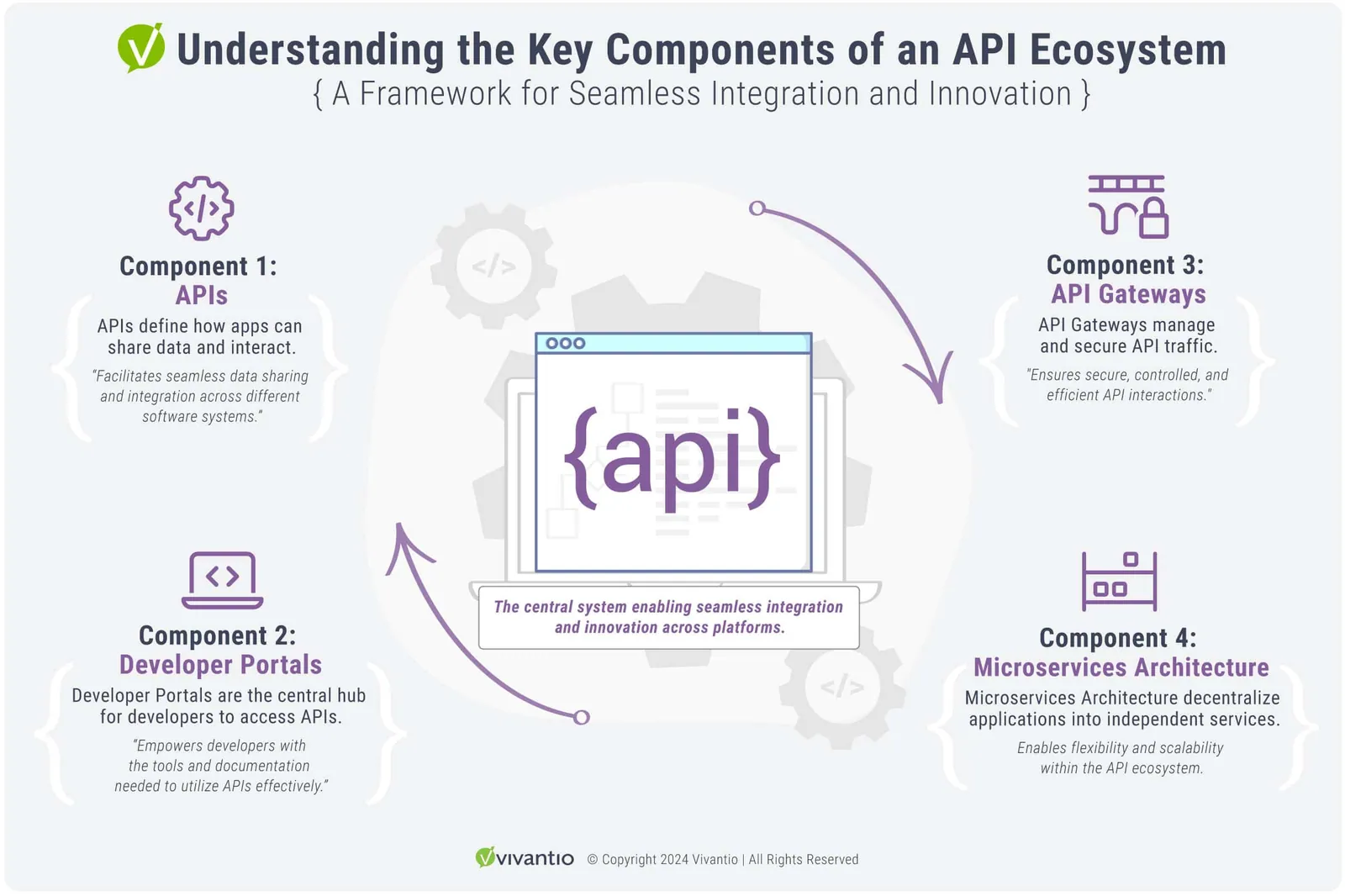
The API ecosystem has several important parts:
- APIs: These are the main parts that let different apps work together. They set the rules for how apps should share data and interact.
- Developer Portals: These are places where developers can find and use APIs. A good developer portal makes using APIs easier.
- API Gateways: These are middlemen that handle API traffic. They do things like route traffic, control how much data is sent, and check if users are allowed to access.
- Microservices Architecture: This means breaking down big apps into smaller, independent services. It makes apps more flexible and easier to change, letting different parts of the API ecosystem grow and change on their own.
The table below shows the main parts of the API ecosystem:
| ### Component | ### Description | ### Key Benefit |
|---|---|---|
| APIs | Defines how apps can share data and interact | Makes sharing data and integrating apps easier |
| Developer Portals | Places where developers can use APIs | Makes using APIs better and easier to find |
| API Gateways | Help manage and keep API traffic safe | Makes managing and securing APIs better |
| Microservices Architecture | Breaks apps into smaller, independent parts | Makes apps more flexible and scalable |
These parts work together to publish, document, and use APIs within an organization and by outside developers. They create a strong ecosystem that supports using APIs widely and encourages working together. This leads to more innovation in different areas.
Building an API Ecosystem: A Step-by-Step Guide
Creating a strong API ecosystem needs a detailed plan and a clear strategy. Start by looking at your business needs and setting clear goals for your APIs. This helps align your APIs with your business goals and sets the stage for success.
Planning and Strategy
Planning is key to building an API ecosystem. First, figure out who will use your APIs and what they need. Talk to stakeholders to get their input and decide on the must-have features. Having a roadmap for API development helps keep things organized and on track.
- Assess Business Needs
- Define API Goals
- Identify Target Audience
- Create a Development Roadmap
API Development and Deployment
After planning, it’s time to start building and deploying your APIs. Make sure your API interfaces are easy to use and fast. Use API lifecycle management to handle every stage from start to end. When you’re done, deploy your APIs securely and make sure they’re monitored closely.
- Design User-Friendly Interfaces
- Implement API Lifecycle Management
- Secure and Deploy APIs
- Monitor and Analyze Performance
Creating an Effective Developer Portal
An effective developer portal is key to your API ecosystem’s success. It should have detailed documentation, tools, and support resources. A good portal makes it easy for developers to use your APIs, which leads to more adoption and innovation.
Here are the main parts of a great developer portal:
| ### Element | ### Description |
|---|---|
| Comprehensive Documentation | Detailed guides and references to help developers understand and utilize APIs effectively. |
| API Tools | Access to essential tools for testing and integration. |
| Support Resources | FAQs, forums, and customer support to assist developers in troubleshooting issues. |
| Interactive Consoles | Hands-on tools to let developers experiment with APIs directly on the portal. |
By following these steps to a successful API ecosystem, your API ecosystem will be not just working well, but also competitive and friendly to developers.

The Role of APIs in Digital Transformation
APIs are key to digital transformation, helping companies innovate and grow. They make it easy to add new features and change old business models. A strong API strategy lets businesses reach more customers and work better with partners.
Seeing APIs as products opens up new ways to make money and shape your business plan. This new view moves away from old ways to more creative solutions. Seeing APIs as a key business tool helps your company stay competitive and quick to change.
| ### Feature | ### Benefit |
|---|---|
| Seamless Integration | Facilitates the incorporation of new functionalities into existing systems. |
| Extended Reach | Enables services to be available across various platforms, broadening market presence. |
| Revenue Generation | API products can create additional revenue streams for the business. |
| Increased Collaboration | Allows for improved partnerships with other companies. |
| Agility | Helps businesses rapidly adapt to changing market demands. |
The Importance of API Management Tools
As APIs become more prevalent across industries, effective API management tools and platforms are essential. These tools help businesses securely manage and scale their API interactions, ensuring seamless integration and communication across various systems. Additionally, they provide the necessary governance to maintain consistency, security, and reliability, which are critical for sustained digital growth.
Choosing the Right API Management Platform
It’s vital to pick the right API management platform for the API lifecycle. Businesses should look for a tool that is:
- Easy for developers to use
- Has strong API governance
- Offers top-notch security
Scalability, support for different API protocols, and a user-friendly interface are also crucial. A good platform makes managing APIs easy and efficient.
Essential Features of API Management Tools
API management tools must have key features for efficient API lifecycle management. Important features include:
- Analytics: Tools with detailed analytics track API usage and performance.
- Security: Features like API gateways, rate limiting, and authentication protect APIs from threats.
- Developer Collaboration: Easy-to-use interfaces for API documentation and collaboration improve communication and development.
These platforms help manage and oversee many APIs. They ensure secure and efficient operations that meet business goals. By using these features, businesses can manage APIs well and keep processes smooth.
API Security Best Practices
Security is key in any API world. It keeps sensitive data safe and services running smoothly. Using strong security steps and best practices keeps users trusting you and stops unauthorized access. A big part of API security is using strong ways to check who can get in and what they can do.
Robust Authentication and Authorization
Making sure your API is secure starts with strong checks to see who you are and what you can do. Using things like tokens, API keys, and OAuth makes sure only the right people can get into your API. These steps check who you are and what you can do. This way, you can greatly lower the chance of someone getting in who shouldn’t and stealing data.
Regular Security Audits
Checking your API for security regularly is a must. These checks help you spot weak spots and make sure your ways of checking who can get in are current. By doing these checks often, you can find and fix problems before they turn into big issues. Keeping up with these security steps is key to keeping your API safe and trustworthy.
Ready to optimize your API ecosystem and drive innovation across your business? Contact Vivantio today!
-
Schedule a Free Consultation: Discuss your specific needs and explore how our API ecosystem solutions can enhance integration, boost innovation, and keep you ahead of the competition.
-
Request a Personalized Demo: Discover how our advanced API ecosystem management can transform your digital strategy with:
- Effortless Automation: Streamline API interactions and automate routine tasks to focus on critical business objectives.
- Centralized Control: Manage all your APIs from a single platform, ensuring consistent performance and scalability.
- Enhanced Security: Protect your data and ensure compliance with robust API security features and proactive monitoring.
- Improved Efficiency: Accelerate time-to-market and reduce operational overhead with seamless API integration and management.
With our comprehensive API ecosystem management and guidance on when and how to use Vivantio API, you can achieve both technological excellence and operational efficiency.
Read more
Browse all resources

Ready to see it?
See Vivantio in action
Step your team up to real service management, without the leap to enterprise. Get a walkthrough tailored to your workflows.