





Predictive Analytics: Allowing Agents to Anticipate Customer Needs
Predictive analytics revolutionizes service management by helping teams anticipate customer needs before they arise. This data-driven approach enables…


Jump to section
Introduction
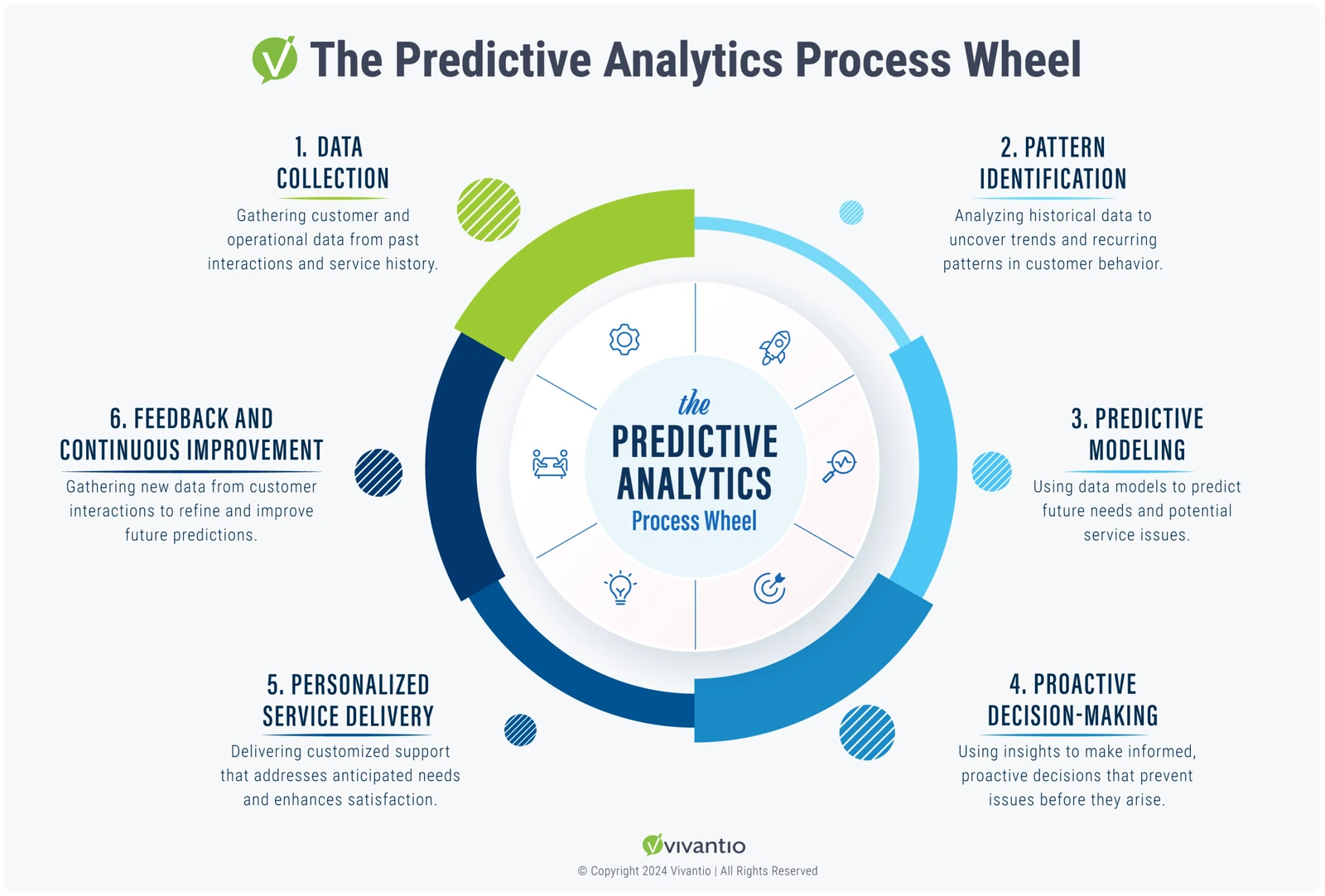
Predictive analytics is transforming IT Service Management (ITSM) and customer service by enabling businesses to anticipate customer needs and deliver proactive solutions. Through advanced algorithms, predictive analytics evaluates past and real-time data, allowing ITSM teams and customer service agents to detect trends and identify potential issues before they escalate. This foresight enables teams to design tailored experiences for each customer, significantly improving the overall customer experience.
Research shows that predictive analytics could influence up to 25% of service interactions by 2025, enabling companies to curate highly personalized services and reduce response times (Gartner, 2023). By leveraging predictive analytics, ITSM teams can meet customer needs preemptively, boosting customer satisfaction and maintaining a competitive edge. Ultimately, predictive analytics fosters long-term, resilient customer relationships by addressing potential issues and needs before they emerge.
How Does Predictive Analytics Transform Customer Relationships?
As we look toward the future, it’s intriguing to consider how predictive analytics could fundamentally reshape the bond between IT Service Management (ITSM) teams and their customers. What happens when a business can foresee customer needs and seamlessly address them, often before customers are aware of a potential issue? This transition from reactive service to proactive care represents more than just operational efficiency; it’s a shift toward a truly customer-centric approach that builds deeper connections. Predictive analytics encourages teams to not only respond to immediate needs but to imagine and prepare for the next, allowing service to feel more personalized, thoughtful, and responsive.
So, how exactly does this transform the customer relationship?
-
How Does It Build Trust with Customers?
- Customers gain confidence in a company that anticipates their needs, building a sense of trust. Predictive analytics enables teams to resolve issues before they escalate, showing customers that their experience is a priority. This proactive care reassures customers, fostering a sense of reliability and loyalty.
-
How Does It Increase Customer Satisfaction?
- With predictive insights, ITSM and customer service teams can preemptively address customer needs, leading to faster resolutions and fewer service disruptions. This not only enhances customer satisfaction but also minimizes the frustration and effort that customers would typically experience if issues weren’t addressed proactively.
-
How Does It Personalize the Customer Experience?
- Predictive analytics helps teams understand each customer’s unique preferences, patterns, and likely needs. By leveraging these insights, ITSM teams can craft personalized experiences, tailoring solutions to individual customers and making them feel valued. This personalization deepens customer connections, showing that their specific concerns are being considered.
-
How Does It Optimize Team Efficiency and Resource Allocation?
- By predicting peak service times and identifying common issues in advance, teams can better allocate resources, improving service efficiency. This means faster response times, reduced wait times for customers, and more effective use of personnel—ensuring that customer needs are met promptly.
-
How Does It Enhance Strategic Decision-Making?
- With a wealth of predictive data, ITSM and customer service teams can make better strategic decisions. By analyzing patterns and trends, teams can proactively address recurring issues, improve product offerings, and adapt service strategies to meet future demands. This continuous improvement loop leads to a better long-term experience for customers.
By shifting the relationship from reactive problem-solving to proactive, tailored solutions, predictive analytics strengthens customer trust, satisfaction, and loyalty. This advanced approach in ITSM creates a lasting competitive advantage, as customers increasingly appreciate businesses that address their needs before they even have to ask.
Analyzing Customer Behavior to Anticipate Needs
Anticipating customer needs ahead of time is becoming a crucial area of focus for businesses, especially now that advanced tools make this level of insight more attainable than ever. Predictive analytics is changing the game, allowing companies to use past data to stay a step ahead of customer needs and create smoother, more rewarding experiences.
How Predictive Analytics Uses Historical Data to Predict Customer Actions
-
Leveraging Past Data for Future Predictions
- Companies analyze vast datasets from past customer interactions, browsing behavior, and purchase histories. By identifying recurring patterns, they can predict future customer actions with a high degree of accuracy. For example, Netflix’s recommendation engine, powered by predictive analytics, drives 80% of its content consumption by suggesting relevant shows and movies based on viewing history (Netflix, 2023).
-
Increasing Sales and Customer Satisfaction
- Predictive insights help companies offer products or services that resonate with customers’ tastes and needs, leading to higher satisfaction and increased sales. Amazon’s recommendation system, which suggests products based on past purchases, accounts for 35% of its revenue (McKinsey, 2023).
Identifying Patterns in Customer Interactions
Analyzing customer interaction patterns allows companies to refine their marketing and proactively address potential issues.
-
Tailoring Marketing Strategies
- By studying interaction data, companies can deliver highly personalized marketing messages. For instance, Starbucks uses predictive analytics to send personalized offers based on a customer’s buying habits and location, which has boosted loyalty program enrollment by 30% (Starbucks, 2023).
-
Predicting and Reducing Customer Churn
- Predictive analytics helps businesses identify customers who may be at risk of leaving. By analyzing engagement patterns and potential dissatisfaction indicators, companies can proactively offer solutions, such as special discounts or personalized support, to retain these customers. This approach increases customer retention and long-term loyalty.
Key Benefits of Predictive Analytics in Anticipating Customer Needs
| Benefit | Description | Example |
|---|---|---|
| Personalized Experiences | Tailors content and product recommendations to each customer’s preferences and behaviors. | Netflix’s tailored show recommendations |
| Increased Sales | Suggests relevant products, which improves conversion rates and boosts sales | Amazon’s recommendation engine contributes to 35% of revenue |
| Enhanced Customer Loyalty | Predicts and addresses customer dissatisfaction, improving loyalty and reducing churn. | Starbucks’ targeted loyalty offers |
| Proactive Issue Resolution | Anticipates problems before they impact the customer, fostering satisfaction and trust. | Telecom companies addressing service issues proactively |
Through these techniques, predictive analytics enables businesses to anticipate and meet customer needs more effectively, creating a seamless and personalized customer experience that fosters lasting loyalty.

Enhancing Customer Experience Through Predictive Modeling
As shared above, predictive modeling empowers IT Service Management (ITSM) teams to elevate customer experiences by anticipating needs based on historical data. This capability goes beyond providing precise and timely support; it also enhances key ITSM functions—such as incident, problem, change****, and request management—by enabling a proactive approach to each interaction.
Key Benefits of Predictive Modeling in ITSM
-
Creating Personalized Customer Journeys
- Predictive modeling enables ITSM teams to analyze past interactions and craft tailored journeys for each customer. This approach not only enhances request management by anticipating and addressing specific needs but also fosters a customer experience that feels unique and relevant.
- Example: Sending timely service updates or product recommendations based on customer history ensures interactions are meaningful and improve overall satisfaction.
-
Anticipating Customer Preferences and Expectations
- Beyond handling immediate requests, predictive modeling helps ITSM teams anticipate future needs. By identifying patterns in customer usage, ITSM can streamline incident and problem management, delivering proactive solutions that reduce service interruptions and align closely with customer expectations.
- Example: Identifying potential system issues based on past data and proactively notifying customers of upcoming maintenance prevents downtime, demonstrating a proactive approach to incident management.
-
Supporting Change Management Decisions
- Predictive insights enable data-driven decisions in change management, helping ITSM teams understand the potential impact of changes on customer experience. By anticipating customer reactions to service updates or new features, ITSM can implement changes with minimal disruption.
- Example: Before deploying updates, analyzing user data helps predict which customers might be affected, allowing for targeted notifications or support materials to ensure a smooth transition.

-
Data-Driven Strategies for Customer Satisfaction
-
-
- Predictive analytics enables ITSM to refine its strategy for long-term customer engagement by informing problem management and self-service resources. Leveraging insights from past interactions, ITSM teams can create targeted knowledge base articles, FAQs, or self-help resources that empower customers to resolve issues independently.
- Example: Analyzing common support issues allows ITSM to develop proactive resources, reducing the need for repeated support requests and enhancing customer self-sufficiency.
-
Applications of Predictive Analytics Across ITSM Functions
| ### Application | ### Description | ### Example |
|---|---|---|
| Proactive Incident Management | Predicts potential issues, enabling preemptive actions to prevent customer disruptions. | Notifying customers of potential service outages |
| Personalized Request Management | Uses data to provide customized support that meets unique customer needs. | Offering tailored support plans based on usage history |
| Informed Change Management | Anticipates customer reactions to changes, ensuring smooth implementation. | Proactively informing affected users before updates |
| Strengthened Problem Management | Identifies recurring issues, enabling ITSM to address root causes and prevent recurrence. | Creating solutions for commonly reported issues to reduce complaints |
| Building Customer Loyalty | Consistent, proactive service fosters long-term relationships and loyalty. | Delivering proactive service experiences across touchpoints |
Predictive modeling allows ITSM teams to move beyond reactive support, fostering an environment where every interaction is intentional and customer-centric. By applying predictive analytics across ITSM functions, businesses achieve higher satisfaction, build stronger loyalty, and gain a competitive edge by consistently meeting—and even exceeding—customer expectations.
Choosing Software for Predictive Analytics: Key Features for Success
Selecting software for predictive analytics is crucial for organizations looking to anticipate customer needs and optimize IT service management (ITSM). The right solution enables businesses to leverage historical data, analyze trends, and generate actionable insights that elevate customer satisfaction and operational efficiency. Here’s what to look for when choosing software for predictive analytics and modeling:
1. Advanced Analytics and Reporting Capabilities
Predictive analytics requires software that offers robust analytics and real-time reporting. Look for platforms with built-in dashboards and detailed reporting tools that allow users to track performance, spot trends, and generate insights effortlessly. These features empower ITSM teams to make proactive decisions, tailoring support to evolving customer needs.
Example benefit: Comprehensive reporting lets teams see patterns and predict future needs, helping them address potential issues before they escalate, leading to improved incident and problem management.
2. Customizable Data Models for Tailored Insights
Predictive analytics software should allow users to create and customize data models to fit their unique business requirements. Customizable models ensure that analytics align with specific industry needs, enabling teams to build predictive scenarios that are relevant and impactful.
Example benefit: By tailoring data models, ITSM teams can set parameters that align with their service goals, allowing them to forecast demand, optimize staffing, and deliver timely customer support.
3. Automation for Proactive Issue Resolution
Automated workflows are essential for predictive analytics to function efficiently. With automation, teams can set up triggers for common issues, like automatically notifying customers of maintenance or potential service interruptions. This proactive approach reduces service disruptions and demonstrates a commitment to customer satisfaction.
Example benefit: Automated alerts for predictive insights allow teams to resolve potential issues before they become service interruptions, enhancing both customer experience and operational efficiency.
4. Seamless Integration with ITSM and CRM Systems
For predictive analytics to be effective, the software should integrate seamlessly with ITSM and CRM systems. This integration enables a holistic view of customer data and past interactions, allowing teams to accurately predict future needs and deliver proactive service.
Example benefit: With CRM integration, ITSM teams can access a complete customer history, making it easier to anticipate needs and personalize support, which improves customer loyalty and retention.
5. Comprehensive Knowledge Base and Self-Service Support
Software that offers an integrated knowledge base and self-service options adds tremendous value. Predictive analytics can identify common customer queries, allowing teams to create knowledge base articles or FAQs that address frequent issues. Self-service options enable customers to find answers independently, improving satisfaction and reducing workload.
Example benefit: By providing a self-service portal with predictive insights, customers can access relevant resources instantly, leading to higher satisfaction and reduced support tickets.
6. Scalable Platform with Dedicated Support
The ability to scale as your business grows is crucial when choosing software for predictive analytics. Look for a platform that offers dedicated support teams or success managers who are available to assist with implementation, troubleshooting, and best practices.
Example benefit: A dedicated support team helps ensure that the predictive analytics tools are used to their full potential, enabling consistent improvements in customer experience and operational performance.
7. Focus on Security and Compliance
Predictive analytics involves sensitive customer data, so security and compliance features are non-negotiable. Choose software that prioritizes data protection through secure encryption, role-based access control, and compliance with industry standards.
Example benefit: Strong security protocols instill confidence in both ITSM teams and customers, ensuring data integrity while allowing for deep, data-driven insights that improve service quality.
Choosing the right software for predictive analytics can transform ITSM operations, enabling teams to anticipate needs and elevate customer experience through proactive and personalized service. Look for a solution that combines advanced analytics, automation, integration capabilities, and robust support to ensure your organization achieves both operational efficiency and customer satisfaction.
Take the Next Step Toward Proactive Service Management with Predictive Analytics
Choosing the right predictive analytics software can revolutionize your approach to IT Service Management (ITSM). With advanced tools, you can anticipate customer needs, improve response times, and enhance the overall service experience—allowing your team to focus on strategic growth.
Schedule a Free Consultation:
Discover how predictive analytics can empower your ITSM strategy, helping you deliver proactive, data-driven service that meets customer expectations.
Request a Personalized Demo:
Explore how a robust predictive analytics platform can transform your ITSM processes with features like:
- Advanced Analytics and Insights: Access powerful analytics to identify trends, anticipate issues, and make informed decisions that drive continuous improvement.
- Integrated Service Management Solutions: Streamline every stage of IT service delivery, from incident management to proactive maintenance, ensuring smooth and reliable operations.
- Dedicated Success Managers: Receive personalized guidance from success managers focused on maximizing the impact of predictive analytics for your team.
By choosing a platform designed with advanced predictive capabilities, you’re investing in ITSM solutions that enhance operational efficiency, improve customer satisfaction, and position your organization for sustained success.
Read more
Browse all resources
Ready to see it?
See Vivantio in action
Step your team up to real service management, without the leap to enterprise. Get a walkthrough tailored to your workflows.