






Understanding Your Customer Experience Lifecycle
Building strong customer relationships goes beyond sales. By optimizing each stage of the customer experience lifecycle, your brand can turn every…

Jump to section
Introduction
Imagine walking into your favorite coffee shop: The smell of coffee and the baristas’ smiles welcome you. You order your usual, a caramel latte, and the barista knows your name and asks about your vacation. This is what businesses aim to achieve by understanding the customer journey.
From finding the coffee shop to enjoying your latte, your experience is made better at every step. This is what businesses aim for when they understand the customer journey.
In business, it’s not just about making sales. It’s about building lasting relationships and increasing customer value. Every interaction with your brand should strengthen their connection and turn them into advocates. Whether it’s attracting new customers or keeping loyal ones, each stage of the customer experience offers a chance to meet their evolving needs.
By understanding the customer lifecycle, you can make interactions more personal and impactful. This leads to happier customers and helps your brand grow in a competitive market. Let’s see how to improve each stage of the customer journey and build strong, lasting relationships with your customers.
The Importance of Customer Experience Lifecycle
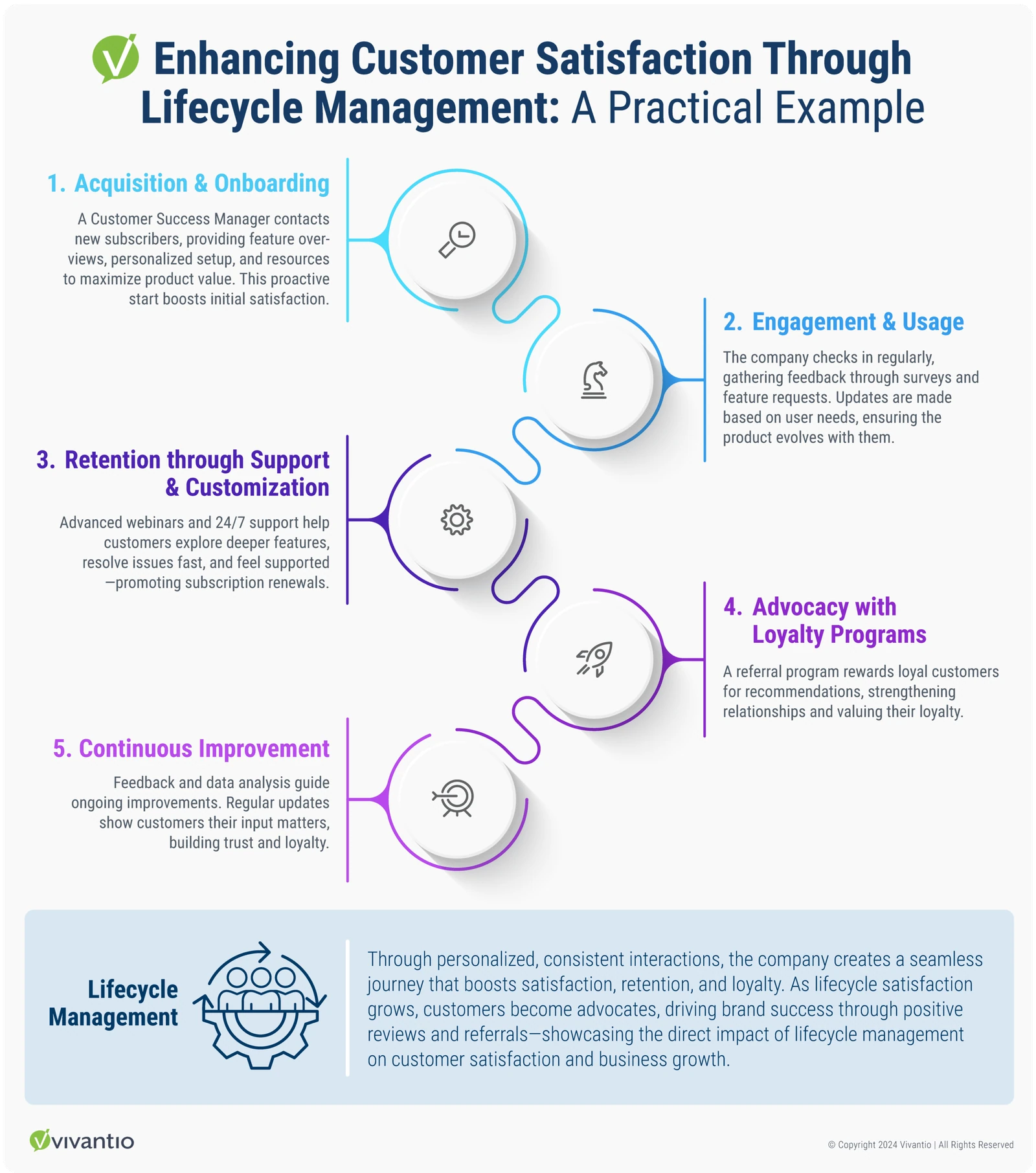
The customer experience lifecycle plays a vital role in managing your customer relationships and achieving brand success. This process is about creating a seamless journey that engages customers and fosters customer loyalty at every touchpoint. By breaking down the lifecycle into five stages, you gain a complete view of how customers interact with your brand, enabling you to enhance every step of their experience.
Understanding CX personalization is critical. Each stage of the customer lifecycle offers unique insights into customer behaviors, allowing you to tailor your approach to meet their needs and preferences. With a clear customer lifecycle map, businesses can develop a focused lifecycle management strategy to optimize interactions and drive satisfaction across various customer segments. Knowing what each stage of the lifecycle entails is essential to building and sustaining strong customer engagement.
When we think of the customer experience lifecycle model, we see that it begins with customer acquisition, which is the initial step in drawing in potential customers and introducing them to your product or service. But the journey doesn’t end here. Once a customer first becomes part of your brand community, the focus shifts to nurturing them into a repeat customer and, ultimately, a loyal advocate. In each phase, the customer lifecycle management process helps identify ways to ensure that the customer feels valued, encouraging them to stay engaged with your brand.
Customer Lifecycle Management: A Key to Success
Lifecycle management is the process of actively monitoring and refining each stage of the customer lifecycle to drive better results. By implementing a customer lifecycle management strategy, businesses can guide customers through their journey in a way that boosts customer loyalty and maximizes customer lifetime value. This proactive approach to managing the customer lifecycle allows companies to engage with their current customer base more effectively, helping each customer become a lasting part of the brand’s story.
A strong lifecycle management strategy includes collecting customer feedback to understand what’s working and where improvements are needed. By continuously monitoring and optimizing their lifecycle management strategy, companies ensure they are aligned with customer expectations at every stage. As lifecycles are an ongoing process, the model must evolve with customers’ needs and adapt to changes in the market.
Driving Customer Satisfaction and Brand Success
When companies understand the customer lifecycle, they can identify opportunities to improve their experience and build lasting relationships with their current customer base. Each stage represents a chance to exceed customer expectations, ensuring that customers are satisfied with their experience and continue to engage with your brand. By focusing on each stage of the lifecycle—from initial acquisition to the final stage of the customer journey where lifecycle is advocacy—brands can achieve higher satisfaction and foster long-term loyalty.
Having a dedicated customer success manager or supportive customer service teams can further enhance customer experience by addressing specific needs and providing personalized support. This strategy doesn’t only improve satisfaction but also encourages customer reviews and referrals, contributing to great customer experience for others in their network.
Understanding and optimizing the customer experience lifecycle is essential for businesses that want to improve customer satisfaction, loyalty, and overall success. From the initial touchpoint to long-term advocacy, effective customer experience lifecycle management allows businesses to create meaningful, lasting connections with their customers.
Why Understanding Customer Lifecycle Matters
Knowing the customer lifecycle helps you analyze and predict how customers interact with your brand. This knowledge lets you create more effective strategies to grab their attention and meet their needs. Each stage gives you insights into what customers like and dislike.
This information helps you tailor your approach for a better experience. Using this knowledge boosts customer satisfaction and loyalty.
Improving Customer Experience at Every Stage of the Journey
Enhancing the customer experience at every stage requires a deep understanding of customer needs, behaviors, and expectations. By building a clear customer journey map and using customer feedback and data strategically, companies can create tailored experiences that foster satisfaction and loyalty.
Step 1: Understanding Customer Needs and Behaviors
The foundation of any strong customer experience strategy is a thorough understanding of who the customers are and what they need at each stage of their journey. Here’s how to approach this process:
- Collect Behavioral Data: Gather insights from sources like website analytics, customer surveys, and social media interactions to understand how customers behave at different touchpoints.
- Analyze Preferences and Pain Points: Use this data to identify common preferences, needs, and pain points, which help in crafting experiences that address specific customer desires and issues.
Benefit: By analyzing customer behavior, companies can create personalized experiences that increase satisfaction and keep customers engaged.
Step 2: Collecting Customer Feedback Effectively
To improve products, services, and support, gathering actionable feedback is crucial. Successful feedback collection involves:
- Implementing Multiple Feedback Channels: Use surveys, focus groups, and direct messaging to ensure that customers can easily share their thoughts.
- Incorporating Feedback Loops: Show customers that their feedback has value by sharing updates or changes that resulted from their input, which increases their trust and loyalty.
Benefit: Effective feedback collection provides actionable insights that drive continuous improvement, ensuring the company adapts to customer needs over time.

Creating an Effective Customer Journey Map
A comprehensive customer journey map serves as a blueprint for understanding and improving customer experiences. This map provides an end-to-end view of how customers interact with the brand, identifying each point where enhancements can be made.
Steps in Mapping the Customer Journey
- Identify All Stages of the Customer Experience Lifecycle: Define each lifecycle stage—awareness, consideration, purchase, retention, and advocacy.
- Gather Data from Diverse Sources: Collect qualitative and quantitative data from website analytics, customer service records, and customer feedback.
- Visualize Customer Touchpoints: Create a visual map that shows each touchpoint, detailing customer needs, behaviors, and emotions at each stage.
- Pinpoint Improvement Areas: Based on data and feedback, identify specific touchpoints that need enhancement to meet customer expectations better.
Benefit: A customer journey map aligns the brand’s strategies with customer expectations, improving the experience at every stage and strengthening customer relationships.
Benefits Summary:
| ### Strategy | ### Benefits |
|---|---|
| Understanding Customer Needs and Behaviors | Personalized experiences, increased satisfaction |
| Effective Customer Feedback Collection | Actionable insights, continuous improvement |
| Using Customer Data to Enhance Experience | Data-driven decisions, proactive service |
| Creating a Customer Journey Map | Alignment with customer expectations, better touchpoint management |
By understanding each stage of the customer lifecycle, gathering insights through feedback, and using data effectively, companies can create a cohesive experience that meets customer expectations at every turn. This lifecycle management strategy not only boosts customer retention and loyalty but also establishes a strong foundation for long-term brand success.
Aligning Your Strategy with Customer Expectations
Aligning your strategy with customer expectations is essential for creating a seamless experience across all stages of the customer lifecycle. By conducting a customer lifecycle analysis, you can understand the unique needs at each stage in the customer journey and tailor your approach accordingly. This process ensures that your strategies are flexible and adaptive to any issues that arise, ultimately leading to a more unified experience that resonates with customers.
For example, at the awareness stage, the focus should be on helping potential customers become aware of the customer value your brand provides. As the customer reaches the consideration and purchase stages, you need to ensure that every interaction based on the customer’s needs adds value and moves them toward a purchase.
As customers progress, their expectations change, and by keeping your strategy aligned with each stage of the customer’s lifecycle, you enhance their experience. The experience lifecycle is a continuous process that requires ongoing adaptation to meet evolving needs. Ultimately, a well-aligned strategy increases customer lifetime value and encourages lifecycle advocacy, building long-lasting relationships that benefit both the customer and the brand.
Here’s how these concepts integrate within a strategic framework:
| ### Customer Lifecycle Stage | ### Key Touchpoints | ### Common Pain Points | ### Strategy Alignment |
|---|---|---|---|
| Awareness | Website, social media | Information Overload | Streamline Content Delivery |
| Engagement | Email Campaigns, Webinars | Poor Communication | Personalized Messaging |
| Acquisition | Sales Calls, Trial Offers | Complex Signup Process | Simplify Signup Flow |
| Retention | Customer Support, Follow-Up Emails | Delayed Responses | Enhance Support Systems |
| Loyalty & Advocacy | Rewards Programs, Social Proof | Lack of Reward Variety | Diversifying Reward Options |
Tools and Strategies for Managing the Customer Experience Lifecycle
Selecting the right software for managing the customer experience lifecycle is essential to keeping your customers happy, loyal, and engaged. Vivantio’s customer experience software gives you all the data and analytics you need to effectively track, analyze, and enhance each stage of the customer journey.
With Vivantio, each phase of the customer life cycle is optimized to ensure every interaction with your brand is valuable and seamless. The platform combines powerful technology with a personal touch through dedicated customer success managers who work alongside you to build lasting relationships, quickly solve challenges, and ensure every customer has an exceptional experience.
Regular customer lifecycle analysis is built into Vivantio’s system, empowering you to adapt in real time to evolving customer needs and strengthen satisfaction and loyalty with every touchpoint.
Take the Next Step Toward Exceptional Customer Experience Lifecycle Management
Schedule a Free Consultation: – Discover how Vivantio’s solutions can elevate your customer experience strategy, ensuring you meet and exceed customer expectations at every stage.
Request a Personalized Demo: – See how Vivantio can streamline your customer lifecycle with features such as:
- Advanced Analytics and Insights: Unlock deep understanding of customer behaviors to tailor experiences that resonate.
- Lifecycle Management for Every Stage: Guarantee smooth, impactful interactions that enhance customer loyalty.
- Support from Dedicated Success Managers: Receive hands-on support from a team committed to helping you deliver outstanding customer service.
Choose Vivantio to build a customer experience that fosters loyalty, boosts satisfaction, and positions your business for sustainable success.
Read more
Browse all resources

Ready to see it?
See Vivantio in action
Step your team up to real service management, without the leap to enterprise. Get a walkthrough tailored to your workflows.